m

Monday, January 18, 2010

Massachusetts Senate Race: A Referendum on Health Care Reform
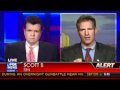
Who would have guessed that a seat held by the Kennedys since the 1950s may find itself in the Republican column? A state wide seat in which registered Democrats out number Republicans 3 to 1? The news media is attributing these amazing turn of events -- with the Republican challenger leading in some polls -- to the general discontentment towards the party in power in both the White House and the Congress. Maybe, but I do not think so. I think it is much more personal than that.

One of the main reasons why voters are entertaining turning over one of its Senate seats to a Republican is that the people of Massachusetts have seen the future of socialized medicine and they know it doesn't work. They have been under a health care bill since 2006 that mirrors, in many respects, the Obama plan navigating through the Senate.

Forbes magazine has pointed out that many of the voters of Massachusetts are unhappy with the plan and for several good reasons. In an article titled "MAss Disaster," writer Sally Pipes exposes some of the ugly truths surrounding the socialized health care bill that has plagued the state.

Pipes reminds the reader of some words that have haunted then Governor Mitt Romney. "'Will Commonwealth care cost taxpayers more? No!' So wrote Massachusetts Gov. Mitt Romney in November 2004, the economy then still in full bloom. 'Neither the state nor the taxpayers can afford to pay more.' She goes on to point out that "It's worth pondering ex-Gov. Romney's promises just over three years after he crossed partisan lines to reform health care in the Bay State. The Obama administration and congressional Democrats are modeling reform on the Massachusetts model, promoting bureaucratic health exchanges, increased restrictions on health insurance and vastly expanded taxpayer-subsidized care. Like Romney, they promise more coverage at lower cost, even as the evidence suggests otherwise."

So what do the people of Massachusetts think about the socialized health care experiment they have been a part of? The Forbes piece notes that "Only one in four considers the reform a success. Just one in five thinks it has made health care more affordable." I'm sure that many of the one-fourth work in government or they are among those that had no health insurance before and do not know quality care when they see it. They certainly are not seeing it in their own state.

A plan that was touted as a way to increase coverage without excessive government spending has had the exact opposite effect:


  • Medicaid has increased by 76,000 enrollees and the subsidized plans by 177,000.

  • Forty-six percent pay no premium, and

  • another 12% are highly subsidized.

  • A mere 19,000 have signed up for the non-subsidized private plans offered through the Commonwealth Health Insurance Connector. These were the plans that Romney and others said would help contain costs.


To make matters worse, the bill is very costly. Most citizens are looking at spending 10 percent of their incomes on premiums or face impressive fines. So high, in fact, are the premiums, 20 percent of the state's residents have become exempt from the coverage. Many of these moved to Medicaid (as seen above), but at least 3 percent of the population are still without coverage. Instead of reducing costs, like the politicians promised as the bill navigated through the legislative process, it has significantly increased costs and has the government scrambling for revenues. Recently the state has taken a page out of Obama's book and has put a hit on smokers at the tune of $1 a pack.

So how will the state fight the growth in health care costs? The same way socialist health care systems have fought such runaway costs for years; through a bureaucracy that will cut doctors' income, moving patients into manage care, and the establishment of price controls. In other words, through the development of the same type of rationed care that dominates much of the world today. These are the exact type of approaches Massachusetts is pursuing.

The people of Massachusetts already know this type of health care does not work and that is why they are so close to electing a Republican like Scott Brown to the US Senate.
Kevin Price is a syndicated columnist whose articles frequently appear at ChicagoSunTimes.com, Reuters.com, USAToday.com, and other national media. Kevin Price is Host of the Price of Business (M-F at 11 AM on CNN 650) and Publisher of the Houston Business Review. Hear the show live and online at PriceofBusiness.com. Visit the archive of past shows here.

Labels: , , , , ,

Monday, September 22, 2008

The 50 Richest Members of Congress Might Surprise You

Recently, while taking my boys to Scouts, I indulged in one of my favorite guilty pleasures -- listening to Michael Savage. I admit, I can't handle him in massive doses, but his depth of knowledge is amazing and his candor is off the chart. I often get the next blog idea from listening to his show. Tonight he spent some time discussing the 50 richest members of Congress (source: Roll Call). He focused on how these politicians (whom he referred to as "mobsters") were rich and planning on staying that way through the policies they perpetuate to bail out financial institutions. I will make a few different observations.


  • The top ten may come as a surprise to many. Seven of the top ten were Democrats and not Republicans. This included number one, former Democratic nominee for President John Kerry (D-Mass). So much for the "party of the poor" mantra that the Democrats love to rally around. No wonder the American voters had a difficult time buying Kerry's case that he was "for the poor" and worth close to a quarter of a billion dollars ($230.98 million).


  • Twenty-one of fifty are in the Senate, although the house out numbers them four to one. The Senate is a millionaires boys club if there ever was one, with one-fifth of them worth at least 7 digits. The list ends at 50, there are probably several more between $999K and $5 million (the bottom of the list) that are among these numbers.


  • Some of the richest might surprise you. I would think most Americans had not heard of Jane Harman, Darrell Issa, Robin Hayes, Vern Buchanan, and Gordon Smith. Each are worth $28 million or more.


  • Others are household names. John Kerry (mentioned before, the former Democratic nominee), Rockefeller (yes, from that family, a great grandson of the financial giant), and Edward Kennedy (who also enjoys family money).

The bottom line is that both Houses of Congress are homes of enormous affluence and neither party can accurately argue that they are some how "for" the poor because of their personal lives. The Democrats have been postured as the party "for the poor" by both their own communications and by the media for decades. The only true measure is in the policies they promote. And then it isn't money going to the poor or tax breaks for particular groups, it is measured by the impact policies have on poverty.


Ironically the best example of fighting poverty happened when both parties worked together. A Republican Congress and a Democrat President essentially wiped out "poverty as we knew it" by signing bills that put strict limits on how long one could be depended on government, which provided incentive for people to move towards higher incomes and work. As a result of that policy the percentage of poor has declined over the last decade after years of growing in number.


Kevin Price articles frequently appear at ChicagoSunTimes.com, Reuters.com, USAToday.com, and other national media.


Kevin Price is Host of the Price of Business (M-F at 11 AM on CNN 650) and Publisher of the Houston Business Review. Hear the show live and online at HoustonBusinessShow.com. Visit the archive of past shows here.

Labels: , , , , , , , , ,

Monday, February 12, 2007

In Spite Being Marketed as "New", Obama Sounds Like Old Time Democrat

If you were listening to a radio and the voice didn't tune in very well and sounded distorted, Sen. Barack Obama's announcement could easily be confused with a campaign speech from Jesse Jackson's earlier failed campaigns. Obama talks about a "new day" and a "new chapter" in our history, but his rhetoric is largely stuck in America's past.

He discusses racism and discrimination as if it were as prominent today as when he was born in the 1960s. Frankly, his neighborhood must have been much rougher than mine because we were born the same year and this little white boy's best friend was an African American named Joe Cosby through most of our elementary years. Marty White became one of my best friends in Junior High and he, too, was African American. I'm not saying that America hasn't struggled with racism, but I get the sense that many African Americans of a liberal persuasion want to throw our grandparents racism in our face as means of using guilt to get their ends. Obama is going to find this a dangerous and unproductive trail to take, in my opinion. He needs to become a candidate for all the people and not a man looking for revenge from the past.

His views of the economy are stuck in the past as well. Thomas Friedman has persuasively pointed out that "the world is flat," which means that through technology anyone in the world can compete with anyone else. That is why China and India have become such major economic players in the last few years. Obama acts as though he doesn't live in the same world as we do. He attacks free trade, argues for raising salaries to artificial highs, and taxing businesses into oblivion. Unfortunately, in our world, that would translate to shabby American products, the exportation of jobs, and the demise of job creation. The world we live in requires being competitive, not living in a fantasy world of how it "should" be.

Furthermore, Obama wants to talk about socialized medicine (AKA, universal health care) as a panacea to our medical crisis. There is no doubt we need people covered, but shifting it to government only means that health care will be plagued with shortages and there will be reduced accountability (good luck suing the government for their medical mistakes). My grandfather and aunt died in England waiting for treatment thanks to socialized medicine and that is a common stated cause in countries that use such a system. Obama's proposal is the same Ted Kennedy advocated in the 1960s and there is nothing new to it. An innovative approach would be one that gives 100 percent tax credits for individuals to get their own coverage, even earned income credit for some (meaning they get money directly back for their purchase), the creation of policies with high deductibles and additional tax savings for taking annual visits (prevention is crucial), and other policies that restore responsibility where it belongs (which is on individuals).

Finally, his anti-war rhetoric is a flashback to the 1960s and the Vietnam War. We are not fighting against a potential domino principle (the belief many countries would fall to communism if Vietnam fell), but a real threat. We were attacked by terrorists and many of the ones fighting our brave and trained volunteers there would normally be over here attacking public schools and hospitals if we haven't moved the theater of the war to the Middle East. We didn't start this war and we are very naive to think we can ended by moving troops out of there and over here. There is little question that our enemies will follow them.

There is nothing really new in Obama's rhetoric, it is the same old time liberalism stuck in the tragic decades of the past. We can't protect America's jobs, we have to compete for them. We can't stick our heads in the sand, we must fight for our safety and freedom wherever the war requires. Government cannot solve our health care crisis and many can argue it caused it; instead we need real solutions with more consumer involvement.

The US can't afford Obama's policies, neither in money nor human lives. There is nothing new about him and his approach to politics has been a dying breed for decades. It is my hope that voters can see through the style and the find the lack of substance.

Labels: , , , , , , , , ,