m

Saturday, February 06, 2010

Areas of Waste in Obama Budget

It is that time of the year when Presidents rant and rave about the problem of government spending being out of control and they produce budgets that only add to the waste. Barack Obama is no different; in fact, his budgets are the largest seen in US history. Furthermore, his annual deficits are higher than the national debt was just a couple of decades ago. Rhetoric aside, Obama is operating as if it is business as usual.

Peter Morici's article title at FoxNews.com says it all, "Obama's Budget -- Straight From La La Land." In it, Morici notes that "Today, President Obama released his proposed 2011 budget, which forecasts the federal deficit will fall to $706 billion by 2014 or just 3.9 percent of GDP before rising again in 2015." The fantasy continues by noting that "To accomplish this feat, he proposes letting the Bush tax cuts expire and other spending cuts the Congress has rejected in the past. More extraordinary, though, the document assumes that real GDP grows at better than 4 percent a year over the four years from 2011 to 2014, and the economy does not encounter a serious recession." What is particularly interesting is that we have yet to recover from the economic down turn that we are currently in, yet Obama's forecast is filled with optimism.

The truth of the matter is there are plenty of areas to cut spending. In a perfect world, the Congress would be obliged to abide by its oath of office in which members agree to defend the US Constitution. If they did such, they would find they are allowed to spend in seventeen different areas according to Article I, Section 8 of that document. If they did that, budgets would always be balanced and our economic freedom would be vast. Unfortunately, our world is anything but perfect.

There are numerous "real world" ways in which we can seriously cut the deficit and Elizabeth MacDonald points out some of them in a recent article at FoxBusiness.com. The title will certainly get your attention: "$1.5 Trillion Ways to Cut the Deficit." The suggestions make sense, even if they do not have much hope in the political environment we live in today. Here are some examples:

An estimated $1.2 trillion in unused federal property. She notes that "The government owns and leases 3.87 billion square feet of property, and 55.7 million acres of land-meaning, one out of every forty acres. Real property asset value for all these holdings is estimated to be $1.2 trillion, says Citizens Against Government Waste, based on data from the Federal Real Property Profile created by the Bush administration, which helps federal agencies manage and dispose of their excess property." The examples that follow are numerous, and include Chicago's Old Main Post Office, which is a 2.5 million square foot structure that costs over $2 million annually to maintain. Than there is the John Murtha Airport in Johnstown, Pennsylvania. This airport cost over $200 million in government subsidies, even though the place has fewer passengers than security guards. The list continues and it would be very easy to get to $1.2 trillion with little or no impact on any of our lives.

Than she notes "there is the $123.5 billion on government programs that have consistently failed." She may be a little kind with such a low number, but she covers makes perfect sense. The Office of Management and Budget's (OMB) Program Assessment Rating Tool found 218 government programs that were either "inadequate" or "ineffective" virtually throughout the entire government. The OMB may be generous too, but there seems to be plenty of areas begging to be cut.

Than there is $98 billion in agency over payments that MacDonald notes. The following are only a few examples:

--Health and Human Services: $55.1 billion, or 9.4%. Includes overpayment rates of 7.8% and 15.4% in the Medicare fee for service and Advantage programs, respectively.

--Labor: $12.3 billion, or 9.9%. Most of the overpayments were in the unemployment insurance program.

--Treasury: $12.3 billion, or 25.5%. These are attributed to overpayments in the earned income tax credit.

--Social Security Administration: $8 billion, or 1.2%, in overpayments.

--Agriculture: $4.3 billion in overpayments, or 5.9% of total department spending. Much of the waste was found in food stamp, school meals and federal crop programs.

--Transportation: $1.5 billion, or 3%. This waste was primarily found in the Federal Highway Administration planning and construction program.

--Veterans Affairs: $1.2 billion, or 2.7%. Waste here includes overpayments in the pension and other compensation programs.

--Housing and Urban Development: $1 billion, or 3.5%. All of the waste in this department was found in public housing and rental assistance.

--Defense: $849 million, or 0.5%.

--Homeland Security: $644.5 million, or 3.7%. The Homeland Security grant program as well as Disaster Relief Fund Vendor Payments were the primary guilty parties at this agency.

--Education: $599 million, or 2.1%.

One of my favorite issues to attack is corporate welfare. What that means any more has changed significantly after the bailouts of Bush and Obama, but MacDonald's article (referring to the research of the Cato Institute) points out $92 billion of easily identifiable spending. "The figure includes direct cash payments, to farmers and research funds to high-tech companies, as well as indirect subsidies, such as funding for overseas promotion of specific U.S. products and industries. The cash payments come from the Departments of Agriculture, Commerce, Defense, Energy, HUD, and State."

Than there are the earmarks, which we seem to all love to hate more than any other area of government expenditures. Although they only come in at $19.6 billion (on over 10,000 earmarks), they are despised because they are part of a government approach to funding that is filled with deception. The list, again, is impressive and here are a few examples:

$75,000 for Wayne Gomes Youth Baseball Diversity Foundation

$381,000 for Jazz at Lincoln Center, New York, NY

$254,000 for Wool Research, Montana Sheep Institute

$2.2 million for Center for Grape Genetics, Geneva, NY

$1.8 million for swine odor and manure management research in Ames, Iowa

$4.4 million for the Army Center of Excellence in Acoustics

This, again is only the obvious...$1.5 trillion. Imagine what we could accomplish if we were willing to suffer a little pain for the better of our Republic?


Kevin Price is a syndicated columnist whose articles frequently appear at ChicagoSunTimes.com, Reuters.com, USAToday.com, and other national media. Kevin Price is Host of the Price of Business (M-F at 11 AM on CNN 650) and Publisher of the Houston Business Review. Hear the show live and online at PriceofBusiness.com. Visit the archive of past shows here.

Labels: , ,

Tuesday, June 16, 2009

Reasons You Should be Furious about "Stimulus"

Senator Tom Coburn (R-OK), the Medical Doctor turned politician has a reputation of being "Dr. No." Coburn does not take this as an insult, but sees it as a badge of honor. This fiscal conservative has been angry about waste in government and has championed responsibility for since winning his seat. The Senator has released a report examining the 100 worse projects to come from President Obama's stimulus package.

The study is must reading, the following are just a few of the worst examples of waste:
  • "Free" stimulus money results in higher utility rates for residents in Perkins, Oklahoma. The Perkins Journal notes "The good news: Perkins is receiving money from the American Recovery and Reinvestment Act for its new waste water treatment plant. The bad news: ARRA funds come with strings that will increase project costs by 25 percent." Perkins was "shovel ready" when they applied for its grant to get $1.5 million of the $5 million to renovate the plant. To get the money, the city would have to comply with new regulations. The Journal notes those requirements include: "ARRA requires that projects use American-made materials rather than the lowest cost materials and pay workers based on a prevailing wage survey that can result in higher than average wages in certain areas. The total cost of the project has increased from $5.26 million to $7.2 million, offsetting any benefit from the grant with higher overall costs."


  • FutureGen: The Stimulus Earmark that Wasn't, Becomes the Costliest Pork Project in History. In spite of assurances that the stimulus was about the economy growing and not political pay back, there was something amiss with FutureGen. The Washington Post notes that "Deep inside the economic stimulus package is a $1 billion prize that, in five short words, shows the benefits of being in power in Washington...The funding, for 'fossil energy research and development,' is likely to go to a power plant in a small Illinois town, a project whose longtime backers include a group of powerful lawmakers from the state, among them President Obama."


  • Little-Used "Shovel Ready" Bridges in Rural Wisconsin Given Priority over Widely Used Structurally Deficient Bridges. Coburn's study reports: "Wisconsin has 1,256 structurally deficient bridges, which more than the number in Florida, Colorado, Arizona and Alaska – combined. Instead of repairing these bridges, $15.8 million in transportation stimulus money will be used repair 37 rural bridges that hardly anyone uses. On average, the 37 rural bridges carry little more than 500 vehicles a piece each day, with several that typically see fewer than 100. One bridge along River Road in Iowa County carries no more than 10 cars a day, but will receive nearly $430,000 for repairs."

As stated earlier, the study reviews 100 different projects, at a total cost of $5.5 billion. Coburn doesn't attempt to judge the worthiness of all the projects, instead he points out their fatal flaws. This "worst" 100 provides great information to anyone who wants to pursue the government as a solution to our economic woes. Reading it will make anyone think twice.

Kevin Price is Host of the Price of Business, the longest running show on AM 650 (M-F at 11 am) in Houston, Texas and on AOL Radio. His articles often appear in Chicago Sun Times, Reuters, USA Today, and other national media. Steve Moore of the Wall Street Journal calls Price the “best business talk show host in the country.” Find out why and visit his blog at www.BizPlusBlog.com and his show site at www.PriceofBusiness.com. You can also find Price on Strategy Room at FoxNews.com.

Labels: , , , , ,

Thursday, June 04, 2009

If it Appears Your Member of Congress is "Out of Touch"...

It seems that our Members of Congress are "out of touch," when it comes to their constituents needs. While we are talking salary cuts and job losses, they are giving themselves pay raises. While the government is talking about making it impossible for us to afford private health insurance (in an effort to ration health care through socialized medicine) as they tax and regulate insurance policies out of existence, they have the finest health insurance in the world.

Members of the US House and Senate are each given an expense account that allows them to make purchases and leases that are designed to help them represent their constituents more effectively. The Wall Street Journal reports that "House members get a government expense allowance of $1.3 million to $1.9 million a year. Senators get $2.9 million to $4.5 million. The disparity is based on several factors, with lawmakers whose home states are far from Washington, for example, typically receiving more to cover their higher travel expenses." Yes, that is per person.

So where do these millions of dollars go? Here are a few examples cited by the Journal:


  • Rep. Alcee Hastings (D-FL) spent $24,730 in taxpayer money last year to lease a 2008 luxury Lexus hybrid sedan.

  • Rep. Michael Turner (R-OH) spent $1,435 on a digital camera.

  • Democrat Eni Faleomavaega, the House delegate from American Samoa, purchased two 46-inch Sony TVs.

  • Rep. Howard Berman (D-CA) spent $84,000 worth on personalized calendars, printed by the U.S. Capitol Historical Society, for his constituents. One could argue that this Congressman used taxpayer dollars towards his reelection efforts, since it is simply promotional material. He was not available to the Journal for comment.

  • Rep. Rodney Alexander (D-LA) paid $20,000 for a 2009 lease on a Toyota Highlander, a hybrid SUV.

  • Rahm Emanuel (D-IL and now President Obama's Chief of Staff) showed such expenditures included printing, recording a $33,000 printing expense in the fourth quarter of 2008.

  • Rep. William Jefferson (D-LA) spent $2,793 on a Panasonic Toughbook laptop, which is marketed to the military, in September of 2008. Yes, this is the same Jefferson who was implicated in a scandal that included $90,000 found in a freezer in his office (bringing new meaning to "cold, hard, cash").

These accounts are often plagued with vague citations and are hard to monitor. Furthermore, there is an expiration date on these dollars. If they are not spent in a certain time frame, the dollars don't carry on the next year, but start with a new budget. Because of this, many found these expenditures all the more offensive in the last quarter of 2008. As many Americans were trying to buckle down and prepare for an economic storm, Members of Congress and their staff were enjoying taxpayer dollars.

The Wall Street Journal points out that "The review showed that the increased year-end spending went not only toward equipment but also to fund year-end 'bonuses' to aides. The average House aide earned 17% more in the fourth quarter of the year, when the bonuses were paid, than in previous quarters, according to an earlier Journal analysis. Payments ranged from a few hundred dollars to $14,000." It also went on to point out that "The records show that some lawmakers spent heavily in the final months of the year to draw down allowances before the end of December -- a time when U.S. households were paring their budgets and lawmakers were criticizing Detroit auto executives for taking private aircraft to Washington to plead their case for taxpayer funding."

There is talk about making these records available online and in more detail for both the House and the Senate so taxpayers can better keep track of the expenditures of their elected officials. That, and reconsidering how much they have available to spend, are reforms long over due.

Kevin Price is Host of the Price of Business, the longest running show on AM 650 (M-F at 11 am) in Houston, Texas and on AOL Radio. Eric Bolling of Fox News and Fox Business says that Price’s Blog “is very influential and moves the blogosphere.” Steve Moore of the Wall Street Journal calls Price the “best business talk show host in the country.” Find out why and visit his blog at www.BizPlusBlog.com and his show site at www.PriceofBusiness.com. You can also find Price on Strategy Room at FoxNews.com.

Labels: , , , ,

Friday, May 29, 2009

Fox Business to Tackle Red Ink

This morning I had the opportunity to visit with one of my favorite broadcasters, Eric Bolling of Fox News and Fox Business, for this blog. The purpose was to learn more about his fascinating career that has included professional baseball, being one of the world's largest commodity traders, and his work in cable business television. He began that TV career with CNBC and is has been a pioneer at the Fox Business Network. I will be going more into Bolling's story in a future article. For this piece, I want to mention that Bolling will be one of the many Fox Business personalities who will be involved in the coverage of what the Network is calling "Red Ink Week."

In a press release, the "Fox Business Network (FBN) declares the week of June 1st 'Red Ink Week.' The American government, and so the American taxpayer, is now drowning in red ink. How much of this will be billed to your family and your future generations? Have we ever seen anything like this before? Has anyone? Do we have a reasonable expectation of getting out of it?" What I appreciate about this is that the network is taking this subject on with the passion it so greatly deserves. There is no "dry" detachment like the subject of a history book, but the sounding of an alarm, which is so greatly needed. The network has our attention, the burden on them now will be to help us calmly navigate through our national challenge.
The press release went on to say that "FBN will have a full five days of coverage dedicated to uncovering how the government is spending taxpayers’ money and what the long-term implications of the auto industry and bank bailouts will be for taxpayers of today and tomorrow. Politicians, industry experts, and business leaders will be on hand to go through the line items and discuss how much of this will be billed to our families and future generations." It is refreshing that the network will be focusing on where these policies are having their biggest impact. They are studying the financial institutions, factories, and main street businesses being pounded by government action and the people who work in these actual industries. It is important to get the perspective of policy makers, but it is more important to see where these policies are showing their biggest impact.
The coverage begins Monday, June, 1st through Friday, June, 5th at 7 PM Eastern Time. If you have money, you are going to want to watch this programming.

Kevin Price is Host of the Price of Business, the longest running show on AM 650 (M-F at 11 am) in Houston, Texas and on AOL Radio. His articles often appear in Chicago Sun Times, Reuters, USA Today, and other national media. Steve Moore of the Wall Street Journal calls Price the “best business talk show host in the country.” Find out why and visit his blog at www.BizPlusBlog.com and his show site at www.PriceofBusiness.com. You can also find Price on Strategy Room at FoxNews.com.

Labels: , , , , , ,

Sunday, April 26, 2009

"Free" Government Programs and Other Lies

While trying to enjoy a quiet Sunday afternoon at home, one of my sons came to my bedroom and told me "there are some teenagers here to see you." Funny, since I have a house full of teenagers, I am the last one they want to see. The curiosity got the best of me and I walked out where I found two young people in their late teens, dressed very casually and each holding a clipboard with a stack of paper and a pen.

The conversation went something like this:

"May I help you?" I asked. "Yes, I was wondering if you wanted to sign a petition to lower the community college tuition for people in our area." I was familiar with the issue (I am one of those odd fellows that watch local news) and went along with him. "How does it work?" I asked. "All you have to do is sign this petition and if we get enough signatures it will be on the ballot for this next election and if that happens and it passes...we will have lower tuition." At this point it gets very hard for me to not get sarcastic. I would like to say, "oh we are voting for a tuition fairy who will lower our school fees" or "ah, you finally figured out how to grow a money tree," or something like this, but I decided to behave. "So if this passes, how will it lower tuition." The young man kind of looked down unsure of himself. "I'm not sure," he said. I knew the answer and informed him that the tuition would be lowered through higher taxes for everyone in the area and that many people who don't have children will be forced to pay the tuition of others. He thanked me for the information and said, "I guess you are not signing?" I said, "that is correct" and he walked away.

It is through this form of false advertising that government tends to grow. People think these programs are magical, they can simply appear with desire. It is like the Fox News poll where they asked people how government was going to pay for the various bailouts and 25 percent said the "government has its own money." You would think these are the answers of small children, but Fox assures me that only adults answered the survey.

The public attitude towards Uncle Sam being Santa Claus also reminds me of the late Sen. Russell Long (D-LA) who said "don't tax you, don't tax me, tax the fellow behind the tree." That is exactly how tuition "is lowered" for people, by burdening everyone else.

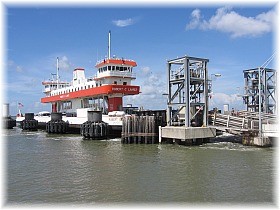
One of the best examples of the lie of "free government programs" is whenever I take a trip to Galveston, Texas and ride the state's ferry. Shortly after you take off the captain announces that "this free service was brought to you by the Texas Department of Transportation." In reality it was paid for by taxpayers through out the state, many who live 15 hours away and have never even seen the Gulf of Mexico.

A sensible policy that government on all levels should pursue is a truth in advertising. These agencies should be forced to inform boat riders what it cost the taxpayers annually or the individual impact in terms of taxes. That is the kind of transparency we need in government.
Kevin Price is Host of the Price of Business, the longest running show on CNN 650 (M-F at 11 am), AOL Radio, and CBS Radio. Eric Bolling of Fox News and Fox Business says that Price’s Blog “is very influential and moves the blogosphere.” Steve Moore of the Wall Street Journal calls Price the “best business talk show host in the country.” Find out why and visit his blog at www.BizPlusBlog.com and his show site at www.PriceofBusiness.com. You can also find Price on Strategy Room at FoxNews.com.

Labels: , , , , ,

Thursday, April 03, 2008

Oink, Oink from the Federal Government

The government is at it again. They are feeding the pork at the expense of taxpayers. Each year Citizens Against Government Waste releases its annual report of wasteful government programs designed to assure the reelection of politicians. "Earmark" spending is used by Members of Congress to bring home projects to Congressional districts and states that politicians can point to in order to help get reelected. What did they find in 2008?

Citizens Against Government Waste has dug up $17.2 billion in pork and that waste covers a plethora of areas. Here are a few examples:

In Agriculture: "$15,115,446 for 17 projects by Senate Appropriations Committee Ranking Member Thad Cochran (R-Miss.), including: $3,723,750for a Natural Products Lab; $2,780,400 for the Jamie Whitten Delta States Research Center; $1,075,419 for the Agricultural Wildlife Conservation Center; $849,015 for genomics for southern crop stress and disease research; $511,395 for biotechnology research;and $229,383 for rural systems research."

In Commerce: "$146,708,000 for 63 projects by CJS Appropriations Subcommittee Ranking Member Richard Shelby (R-Ala.), including: $5,640,000for the Marshall Space Flight Center; $470,000 for a National Oceanic and Atmospheric Administration (NOAA)Maritime Museum in Mobile; $329,000 for American Village Citizenship Trust Montevallo for character programs in at-risk areas (the group’s website boasts that its mission is to “...to strengthen and renew the foundations of American liberty and self-government through citizenship education.”In addition to these lofty goals, young lovers can rent out the chapel and the barn to get married for $2,650.); $235,000 for the Foley Police Department for communications upgrades; and$235,000 for West Alabama Marine Shrimp and Fish Aquaculture to develop new methods and find efficiency in the development of marine shrimp and fish aquaculture using ponds and the salinic water of West Alabama."

In Defense: "$173,200,000 for 25 projects by Senate Defense Appropriations Subcommittee Chairman Daniel Inouye (D-Hawaii), including:$25,000,000 for the Hawaii Federal Health Care Network;$23,000,000 for the Maui Space Surveillance System operations &research; $10,000,000 for the National Defense Center of Excellence for Research in Ocean Sciences; $5,000,000 for the Maui High Performance Computing Center; $3,500,000 for Army conservation and ecosystem management; $3,000,000 for the Hawaii National Guard Counter-Drug Program; and $2,000,000 for Brown Tree Snakes."

The list goes on and includes energy, finances, and other guilty culprits. I recommend reading the summary here. The criticism crosses party lines and guilty parties among the GOP and Democrats are quick to throw hand grenades. But I have been familiar with the group for 25 years, back when it was called the Grace Commission, which was appointed by Ronald Reagan and led by J. Peter Grace. I, for one, have long been grateful to the contributions they make.

How did the Presidential candidates fair in the Report? Well, Senator Hillary Clinton secured 281 projects totaling $296 million, and Obama won 53 projects totaling $97 million, according to the group. How about John McCain? Zero. He doesn't believe such an approach to government spending is ethical and votes against earmarks at every opportunity and will not offer them (and hasn't offered them in years).
How did your elected officials spend?

For a copy of the free report, "Why Your Marketing Isn't Working," email Info@HoustonBusinessShow.com and put "marketing" in the subject line.

Kevin Price is Host of the Houston Business Show (M-F at 11 AM on CNN 650) and Publisher of the Houston Business Review. Hear the show live and online at HoustonBusinessShow.com. Visit the archive of past shows here.

Labels: , , , , , , ,