m

Wednesday, April 02, 2008

Economist on the Media and Recession
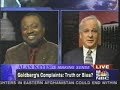
For quite some time I have been telling readers of this blog and listeners of my show that the media has wanted a recession. Furthermore, the media has reported an economy in decline while it reflected numbers reminiscent of a strong economy. Now a serious leader in academia has recently validated this assessment.

Economist John Lott, Jr. of the University of Maryland was cited on Fox and Friends as quantifying the distorted views purported by the media about the economy. In an article by Lott on FoxNews.com, the scholar noted that:

A Nexis search on news stories during the three-month period from July 2000 through September 2000 using the keywords “economy recession US” produces 1,388. By contrast, the same search over just the last month finds 3,166. Or, even more telling, take the three months from July through September last year, when the GDP was growing at a phenomenal 4.9 percent. The same type of Google search shows 2,475 news stories.

Over 78 percent more negative news stories discussed a recession when the economy under a Republican was soaring than occurred under a Democrat when the economy was shrinking.
A little perspective on the economy would be helpful. The average unemployment rate during President Clinton was
5.2 percent. The average under President George W. Bush is just slightly below 5.2. The current unemployment rate is 4.8 percent, almost half a percentage point lower than these averages.

Therefore the economy was seen as healthy and vibrant under Clinton with higher unemployment than it is today under Bush at level that is .4 percent lower. The comparison doesn't stop with unemployment, however:

The average inflation rate under Clinton was 2.6 percent, under Bush it is 2.7 percent. Indeed, one has to go back to the Kennedy administration to find a lower average rate. True the inflation rate over the last year has gone up to 4 percent, but that is still lower than the average inflation rate under all the presidents from Nixon through Bush’s father.

Yet, again, the news tends to describe the economic situation in this economy as dire and you would think we were at the brink of economic ruin. Lott goes on to quantify other areas.

The issue I would love to see discussed more thoroughly are the reasons why this is happening. All I can do is speculate, based on approximately two decades of being involved with the media on several levels, but the causes could include:

* The liberal bias in the media. According to the Pew Research Center, there are five liberals for every one conservative in the media. This would certainly lead to the media giving Conservatives a negative spin.


* I personally believe that the media benefits from a bad economy. Much of what we have seen and heard has reflected "wishful" thinking. Why? When the economy is hot, businesses simply don't need as much advertising. A soft economy makes businesses more inclined to invest in marketing.


* Finally, bad news equals big ratings. There is a belief that if all news was good news, people would not be nearly as interested in watching TV, listening on the radio, or reading stories.


I'm impressed with Lott's work and am eager to find more who contribute to this debate.


For a copy of the free report, "Why Your Marketing Isn't Working," email Info@HoustonBusinessShow.com and put "marketing" in the subject line.


Kevin Price is Host of the Houston Business Show (M-F at 11 AM on CNN 650) and Publisher of the Houston Business Review. Hear the show live and online at HoustonBusinessShow.com. Visit the archive of past shows here.

Labels: , , , , , , , , ,

Thursday, July 10, 2008

Gramm is Largely Correct

Former Senator Phil Gramm, who had an excellent career in the US Senate fighting for the prosperity of Americans, recently spoke his mind about the economy with candor and intelligence. Sen. Gramm is not only a former member of the House and the Senate with over two decades experience, but also has a PhD in economics from the University of Georgia. He may very well be the "Dr. Phil" of economics.

In an interview with the Washington Times, Gramm stated:

You've heard of mental depression; this is a mental recession," he said, noting that growth has held up at about 1 percent despite all the publicity over losing jobs to India, China, illegal immigration, housing and credit problems and record oil prices. "We may have a recession; we haven't had one yet."

"We have sort of become a nation of whiners," he said. "You just hear this constant whining, complaining about a loss of competitiveness, America in decline" despite a major export boom that is the primary reason that growth continues in the economy, he said.
"We've never been more dominant; we've never had more natural advantages than we have today," he said. "We have benefited greatly" from the globalization of the economy in the last 30 years.

He goes on to point out that "Misery sells newspapers. Thank God the economy is not as bad as you read in the newspaper every day."

These themes have been a part of my mantra, with titles such as Economist on the Media and Recession, Bad News Means Big Business for CNBC, and others with similar titles for the last two years, the criticism against Gramm seems to me to be unfair.

But criticized he has been and practically thrown under the bus by Sen. John McCain for whom he has served as an economic advisor. Threatening to send Gramm to Eastern Europe as an ambassador if elected and if they would have him, McCain is using the harshness he has become famous for in his ability to turn on a friend.

It is true, there are people in this country who are suffering at this time. However, most of those are the same people when are economy was incredibly hot a few years ago. Gramm's statements are largely true but probably too honest in an election cycle. The media lives off of bad news and the people are beginning to buy the headlines.
Would you like to get a weekly email summarizing Kevin Price's political and economic content? Subscribe to the Houston Business Review by emailing us at Info@HoustonBusinessShow.com.

Kevin Price is Host of the Houston Business Show (M-F at 11 AM on CNN 650) and Publisher of the Houston Business Review. Hear the show live and online at HoustonBusinessShow.com. Visit the archive of past shows here.

Labels: , , , , ,

Thursday, April 17, 2008

Historians to Bush: the Worst President?

One of the things I learned in the pursuit of my history degree is that the subject requires a long term perspective. There should be some time between the person and his or her impact on society before historians size them up. Many of my professors at Abilene Christian University -- conservative or liberal -- would say that if they are sizing up a President's impact before his time is done, they are political scientists, not historians. Many of those same professors would say "and, after all, political science isn't a real discipline."

Seriously though, these words of wisdom are being largely ignored by historians today. According to a recent US News & World Reports, "President Bush often argues that history will vindicate him. So he can't be pleased with an informal survey of 109 professional historians conducted by the History News Network. It found that 98 percent of them believe that Bush's presidency has been a failure, while only about 2 percent see it as a success. Not only that, more than 61 percent of the historians say the current presidency is the worst in American history."
The worst ever? I'm sorry, but I was just talking to someone today about applying for a cashier job at a grocery store and stood in a line that went all the way around the corner. There were two openings at that store. During that time when President Carter was in charge, 13 countries fell to Communism, we had hyperinflation by US historical perspectives, and we were a laughing stock around the world. During that time, we were told by Carter that it was America's fault for being in such a sorry state. We no longer believed in ourselves, we were told.

We didn't stop believing in America, just the politicians running this country. It lead to a mandate going to Ronald Reagan and an American Renaissance. I come from a multi-generational family of Democrats and Carter single handily changed that view. With that, I'm not even sure if Carter was the worst (although he was certainly on the short list of such), but he makes Bush look absolutely brilliant.

In a recent blog post I discussed how the media has altered our perceptions of the economy. We have been fed recession garbage for years and are starting to believe it. Economist John Lott, Jr pointed out that our economic numbers are generally better than a decade ago when Clinton was President -- a period described as economically prosperous. I expect some of the average news consumers to buy into this media propaganda, but not serious historians.

George Bush will not be one of my favorite Presidents, I am sure. His failure to promote free enterprise and its success in the 2006 Congressional races haunts us today (and likely will in 2008), his expansion of government in several areas has been damaging, his inability to articulate the case for the war, and his haphazard and often liberal answers to our current credit crisis leaves much to be desired. But this is a man who presided over the country on September 11th, 2001 and helped restore confidence in this country that lead to a 17 percent growth of the economy under his tenure and remarkably low unemployment. The best President? No. The worst President? Give me a break.

Historians should know better and give history time to judge Bush and leave, what appears to be political agendas to political scientists. After all, they don't know any better.

Kevin Price is Host of the Houston Business Show (M-F at 11 AM on CNN 650) and Publisher of the Houston Business Review. Hear the show live and online at HoustonBusinessShow.com. Visit the archive of past shows here.

Labels: , , , , , ,

Wednesday, February 13, 2008

What About the Economy?

I was listening to the radio just before my show began today and noted that it was reported that consumer spending was up over the last month. This came as a surprise to the "sky is falling" crowd that dominates the media today.


Retail sales unexpectedly rose 0.3% last month after a dismal December, the Commerce

Department said Wednesday, easing concerns that the U.S. already has fallen into a recession.
Wall Street cheered the report. The Nasdaq rose 2.3% while the S&P 500 and Dow climbed 1.4%.

Analysts had expected a 0.3% fall following December's 0.4% drop.

Consumer spending, which accounts for 70% of economic activity, is being eyed closely for signs the U.S. is sliding into a recession.

"As the consumer goes, so goes the economy," said Joel Naroff. chief economist at Naroff Economic Advisors. "The good news is that the consumer is not dramatically cutting back on spending, but the bad news is the consumer is not spending at any great pace."

The 1.4 percent increase in the Dow translated into 178.83 points. This is a significant increase for a single day.

The media is now trying to figure out what happened, considering the economy was suppose to be in a total melt down. I have been a contrarian for quite some time. The reality is, last month was the first one in which we actually showed the slightest sign of weakness outside of the subprime crisis. In spite of how great the passion to declare the end of the world, we might be seeing the end of a very short "recession." We will have to wait a while and see.

On a recent Movers and Shakers segment, I interviewed several Advisors from the Houston Business Show about the economy. I found the conversation most informative (click here and then click, Movers and Shakers).

Kevin Price is Host of the Houston Business Show (M-F at 11 AM on CNN 650) and Publisher of the Houston Business Review. Hear the show live and online at HoustonBusinessShow.com. Visit the archive of past shows here.

Labels: , , , , , ,