m

Friday, January 29, 2010

Obama's New "Tax Cuts" are Designed to Create Votes and Not Jobs

When it comes to income taxes there are basically two ways you can cut them. You can either have taxes that benefit consumption (geared primarily towards the large middle class in modest amounts and are designed to encourage consumer purchases) and those that are across the board (the same percent for each income group) and encourage production (also known as a "supply-side" tax cut). President Obama favors the former because he considers them more "fair" and they have the ability to help him with the middle class which has become increasingly unhappy with his policies. Rumor has it, he is considering such cuts as we approach the 2010 mid term elections. Someone needs to teach him some history.

For decades Republicans have resisted Democrat attempts to provide small and modest tax cuts for the middle and lower class at the expense of those with higher incomes, simply because such polices do not work. In 2008, as Republicans were fighting for their political lives, President Bush passed just such a consumption tax cut package of his own with very weak results. Most Americans received checks that were designed to make them go out and buy a new TV, maybe take a vacation, or even use it towards the down payment on a car. However, because of the rampant economic fear that our country has been suffering from, people used those checks to pay off credit cards, to make a payment on their mortgages, or to do other things to reduce debt.

These demand side, or consumption tax cuts, are very different from those on the supply side. Supply side cuts are usually long term (multi-year in scope) and proportional (giving as big of a percentage to the affluent as those in lower income brackets). The amount of savings for the affluent -- who pay the vast majority of all the revenues the government acquires annually -- are typically significant enough to lead to the creation of new jobs, the expansion of businesses, and to stimulate the economy. History has repeatedly proved this to be true.

Calvin Coolidge passed a huge tax cut that led to one of the greatest expansions of the economy in US history during the 1920s. In the 1960s, presidential candidate John F. Kennedy eloquently stated that it was imperative to "get the economy going again" and believed that tax cuts would lead to a "rising tide that will lift all boats" (rich as well as those who wish to be rich). Those tax cuts, which were predicted to lead to a depletion in revenue, led to one of the last balanced budgets the US enjoyed for decades and economic expansion. In 1980 Ronald Reagan inherited one of the worst economies since the Great Depression (similar to the one today) and he attacked taxes with a plan that was largely modeled after the Kennedy tax cuts. That tax bill was called a "jobs creation act," which is exactly what supply side tax cuts achieve, and it contributed to one of the strongest periods of economic growth in US History. Finally, following the technology bubble burst at the end of the Clinton Administration and the tragedy of September 11th, President George W. Bush used supply-side tax cuts to create an economy that sustained the lowest unemployment for the longest period of time since the early part of the 20th century (in terms of years of full employment). He followed that up with the ridiculous consumer tax cut of 2008 that did nothing to move things in the right direction (including voters that he was trying to appeal to) and has left many scratching their heads. We have learned that all tax cuts are not alike.

Part of the dramatic decline in the economy is actually linked to the end of the Bush supply-side tax cuts that had to be approved each year by the Congress in order to stay in effect. In 2006, pro supply-side Republicans were beat by Democrats who opposed those policies. The businesses that largely drive the economy knew their days were numbered. Hostility towards a pro-business view of taxes has become even worse following the election of Obama. After a few years since the 2006 elections unemployment went from 4.5 percent to around 7 in no time (and is now pushing double digits), consumer confidence reached a record low. 2008 should have been a Referendum on the Democrats. Instead, Americans decided to consume more of the poison that is destroying the economy.

Americans need to know the difference between consumption and supply-side tax policies, and remind their representatives of those differences in the up coming election cycle. Meanwhile, pro-growth candidates for Congress should use 2010 as a year to remind their constituents of what works and to use this as a wedge issue for Obama and his Democrats who seem to hate wealth (and, thus, job) creation.

Kevin Price is a syndicated columnist whose articles frequently appear at ChicagoSunTimes.com, Reuters.com, USAToday.com, and other national media. Kevin Price is Host of the Price of Business (M-F at 11 AM on CNN 650) and Publisher of the Houston Business Review. Hear the show live and online at PriceofBusiness.com. Visit the archive of past shows here.

Labels: , , , , ,

Saturday, August 29, 2009

Where Keynes Went Wrong

I recently received an advanced review copy of a compelling and important book entitled "Where Keynes Went Wrong," scheduled to be published on October 1, 2009 by Axios Press. One of the perks of hosting a show is the large number of free books I receive every month. Better still is getting books weeks before they are released. This particular book, by Hunter Lewis, is fantastic and is must reading for those who are concerned about the future of our country. It provides one of the most thorough critiques of John Maynard Keynes and, more importantly, it restores the economic way of thinking that use to be a central part of Western thought and was the mighty force that made nations prosper. If nations applied the principles in Hunter's book, those nations would grow economically.

The timing for the book could not better. One year ago the US economy (and many economies around the world) began a terrible meltdown and responded with an approach very similar to what economist John Maynard Keynes promoted during the Great Depression. Lewis' compelling and powerful book eloquently argues that Keynes approach made that Depression far worse than it should have been and will have a similar impact on our economic situation today.

In the press release for the book we see that "When the world financial system began to fall in 2008, the US government reacted decisively with a stimulus package, bailouts, and printing, borrowing, and spending trillions of dollars. All of these interventions were taken from a playbook devised by the last century's most influential economist, John Maynard Keynes. But is Keynes right? The implications of this question are large and timely. If Keynes is wrong, then so are the economic policies of Barack Obama, George W. Bush, and virtually all governments today."

He tackles Keynes with extraordinary vigor and raises the questions that are desperate to the issues of the day. Did Keynes have proof for his theories? Lewis argues that the answer is absolutely not. In fact, the author noted in an interview that "Overall, the most surprising thing is the lack of evidence, much less proof for anything he says. It is just a series of brilliant hunches. But there is really nothing to back up the hunches. In the whole of the General Theory, Keynes most important book, there are only two pages devoted to actual evidence." Imagine building an economy on such flimsy evidence and even those two pages were lacking.

The two pages -- and the rest of the book -- are full of paradoxes that tend to only confuse and not bolster his arguments. The following are a few examples from Lewis of the type of approach Keynes would take to problems based on the General Theory:


  • "If too much bad debt is the problem, for example during the Crash of 2008, the solution is to add more debt."

  • "An economy depends on the confidence of the players. If confidence has been shaken by too much bad debt, restore confidence by adding more."

  • "If low interest rates held down long have caused trouble, lower them further and hold them down longer."

  • "If the public seems to be opposing the idea of borrowing and spending more, their elected representatives in government can do it for them."

These types of paradoxes (and many more) not only confuse the debate, but when they are applied in the form of public policy the consequences for the Great Depression was an economic downturn that lasted almost two decades. The jury is out on what kind of impact Obama's policies will have today, but human nature and the way a person responds to polices is unchanged. Lewis does an excellent job of providing a window of our own possible future based on the policy pursuits of Obama. What we can expect is long term pain.

This book is extremely readable and might be a force to impact the opinions of the general public. Unfortunately, I don't think most people will read a book about John Maynard Keynes except for those in the academic world who have already made conclusions about the economist. Many are familiar with the popular book, Free to Choose by Milton Friedman, but virtually no one (outside of academia) know about Capitalism and Freedom (also by Friedman) which has almost the exact same message. Titles matter. One that focused on our problems, rather than the philosopher behind them, would likely be a more popular work. This book is great, however, and with the times we are in it could create a huge following. With it coming out just before the holiday season, I believe this could be the idea gift for the person looking for answers to today's biggest problems.


Kevin Price is Host of the Price of Business, the longest running show on AM 650 (M-F at 11 am) in Houston, Texas and on AOL Radio. His articles often appear in Chicago Sun Times, Reuters, USA Today, and other national media. Steve Moore of the Wall Street Journal calls Price the “best business talk show host in the country.” Find out why and visit his blog at www.BizPlusBlog.com and his show site at www.PriceofBusiness.com. You can also find Price on Strategy Room at FoxNews.com.

Labels: , , , , , ,

Monday, June 22, 2009

As Conservatives Ponder the Future of the GOP

There is a raging debate going on in conservative circles that the future of the Republican Party is doubtful, at best. After years of feeling left out in the cold, many are declaring the GOP is dead. For several years the Republican Party has chosen to be a "light" form of the Democrat Party. You might even call it a "diet" alternative. Like diet soda, nothing can beat the purest form. Sales are always higher for the original. The fact is, Democrats are not significant winners, but the GOP are serious losers.

Let's look at the Presidential races alone since Ronald Reagan. In 1988 a "converted" George HW Bush assured voters that he wasn't no longer calling for tax policies that encouraged economic growth "Voodoo Economics," he was committed to being responsible when it comes to regulations, and he had even "matured" when it came to the issue of abortion and declared himself "pro-life." In one of those rarely inspiring moments in his first campaign, Bush declared "Read my lips, no new taxes." By the end of that first term he had instituted a massive tax increase and made unreasonable regulations on the environment that wiped out mom and pop shops (e.g., the modification of gas pumps that cost over $10,000 each). The real Bush had stood up and the voters were ready to let him go.


Fast forward to the next GOP president, George W. Bush. He had something of a reputation as a moderate conservative in Texas, but said all the right things on the campaign trail in 2000. As President, his first term was noted for standing strong against terror, providing a massive supply-side oriented "tax cut" that allowed us to quickly recover from the stock market struggles at the beginning of the decade and to rebound from September 11th. By 2004, a fairly conservative candidate in a couple crucial areas that mattered, found himself as the first Presidential candidate to win by a true majority since 1988. He had won 2.5 (out of 3 million) square miles of ballot boxes around the country and proved that someone with a conservative message could win reelection.


Unfortunately, by 2006 Bush had largely abandoned that message and we had the Democrats taking over both Houses of Congress. When a moderate like John McCain got the nomination, he found himself forced to defend (and even agreeing) with a President who was actively and aggressively socializing the country in the name of TARP. Bush and company supported "consumer driven tax cuts" that did nothing to stimulate real job growth and contributed to a perfect stage for the slaughter of anyone affiliated with the GOP.

We are now quickly approaching the 2010 elections and there is a great deal of apprehension about the future of the Republican Party. Many are crying it is time to abandon it and are seriously discussing a third party alternative. The problem with that is that the GOP is little more than a vehicle, a "car" that needs to be fixed. As we get closer to 2012, the car that needs to be repaired has instant ballot approval in every state of the union, more dollars than all the other third parties combined, and a political structure through out the country. Those who are ready to abandon the GOP must weigh the obvious weaknesses in the party with the fact that starting from scratch or using a preexisting third party will take years to create a serious challenge against the left. I doubt the Republic has years. It is time to make that vehicle work for conservatives and Americans. Taking the GOP back is an important step in bringing the country back to the values that made it great.


Kevin Price is Host of the Price of Business, the longest running show on AM 650 (M-F at 11 am) in Houston, Texas and on AOL Radio. His articles often appear in Chicago Sun Times, Reuters, USA Today, and other national media. Steve Moore of the Wall Street Journal calls Price the “best business talk show host in the country.” Find out why and visit his blog at www.BizPlusBlog.com and his show site at www.PriceofBusiness.com. You can also find Price on Strategy Room at FoxNews.com.

Labels: , , , ,

Wednesday, June 17, 2009

The Democrats Rural Problems

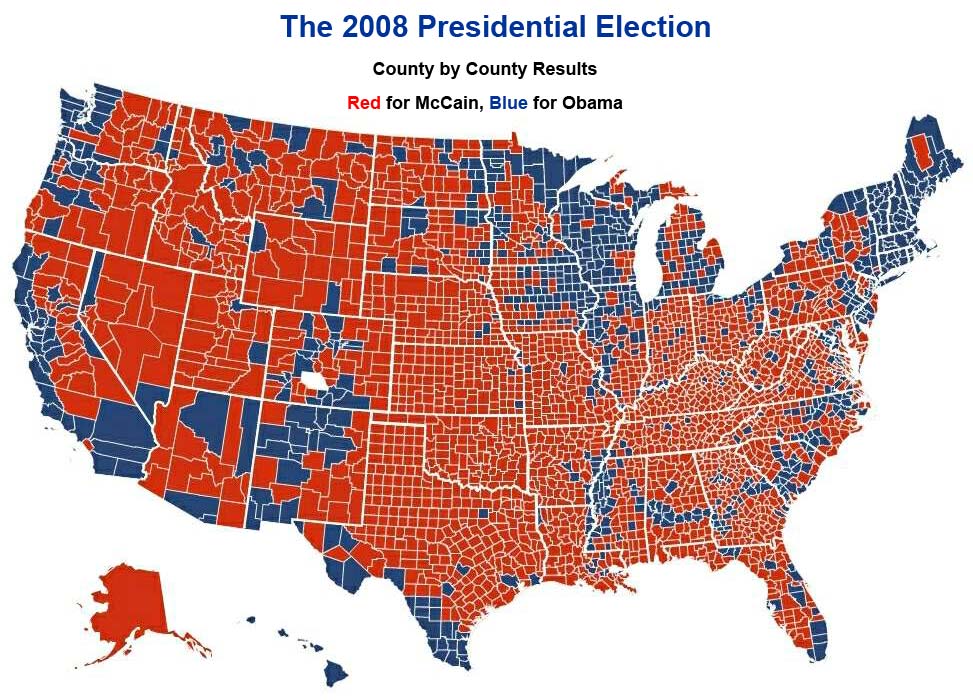
For years we have heard about "red state" vs. "blue state." Red States are suppose to be Republican or Conservative and blue states are suppose to be Democrat or liberal. This trend was recognized by Tim Russert and other news people and there are things to learn from this, but the big message is that it isn't so much "Republican" or "Democrat" as it is "rural" and "urban."


At the end of a Presidential election, the states are defined as large blocks of red and blue based on the winner of the party, but don't give an accurate picture of how it actually looks demographically. A county by county overview is far more helpful.

For example, when you look at this map, you see that there are huge territories that voted Republican (red) and large pockets of blue (Democrat). Those pockets are virtually always in the urban areas. This is not without exceptions (especially in 2008), where entire states voted predominantly Democrat, (see, in particular, New England states), but the rule largely holds true.

Democrats who were elected to the US House and Senate in "red" areas are finding life rather difficult, according to Politico.com. In fact, many of these Democrats are organizing a rebellion against an Administration and Congressional leadership that seems to have a dim view of anything but the needs of urban areas.

The Politico reports: "Angered by White House decisions on everything from greenhouse gases to car dealerships, congressional Democrats from rural districts are threatening to revolt against parts of President Barack Obama’s ambitious first-year agenda."

“'They don’t get rural America,' said Rep. Dennis Cardoza, a Democrat who represents California’s agriculture-rich Central Valley. 'They form their views of the world in large cities.'
Cardoza’s critique was aimed at Obama’s Environmental Protection Agency, but it echoes complaints rural-district Democrats have about a number of Obama administration decisions."
A great example is the demise of auto dealerships, which are not only an important job creator, but a support for community organizations. Little league teams, parks, and parades are often branded with the local car dealers name and when they disappear the towns themselves begin to fade away.

Politico notes: “'In rural jurisdictions, your dealerships are pretty big employers. If you knock out four dealerships, the ripple effects of that are substantial,' said Rep. Frank Kratovil (D-Md.), who represents a largely rural Eastern Shore district and is co-sponsoring a bill that could force the auto companies to honor their contracts with the rejected dealerships."

Furthermore, "Sen. Kay Hagan (D-N.C.) questioned how independent owned and operated businesses have any financial impact on automakers. 'None of us can quite understand why they consider dealerships a drag when they are the ones that buy the cars, that take the financial risks. Many of the dealerships that are being closed are profitable.'”

The Democratic leadership seems to be banking on the idea that they can win without the rural areas, failing to learn the lessons from George Bush in 2004. This is also why you hear the Democrats want to see the end of the Electoral College. Without that element in our political process, rural voters would not have a voice (because Democrats spending all of their money in the ten largest cities in ads would obliterate a GOP challenge). This is why those who created this republic wanted an Electoral College and why they want two Houses of Congress (so small states would have an equal voice). The Founding Fathers understood the need of representing minorities long before the "diversity" crowd.

Kevin Price is Host of the Price of Business, the longest running show on AM 650 (M-F at 11 am) in Houston, Texas and on AOL Radio. His articles often appear in Chicago Sun Times, Reuters, USA Today, and other national media. Steve Moore of the Wall Street Journal calls Price the “best business talk show host in the country.” Find out why and visit his blog at www.BizPlusBlog.com and his show site at www.PriceofBusiness.com. You can also find Price on Strategy Room at FoxNews.com.

Labels: , , , , , , , , , , ,

Friday, June 05, 2009

Under Obama, Ten Percent Unemployment is Described as Prosperous Economy

It seems like just yesterday when George Bush's unemployment rating of around 5 percent was described as symptomatic of a "weakening economy." Meanwhile, a CBS affiliate website just declared that the "Unemployment Rate Shows Hope" rather than the more logical slug of "Unemployment is at its worse rate in 25 Years."

The positive spin today versus the "horrible" scenario of a couple years ago simply don't make sense, especially when you look at the numbers from 2006:
  • Consumer confidence stood at a 2 1/2 year high. People were buying more and feeling better about their economic future.

  • Regular gasoline sold for $2.19 a gallon. This price is far too high, but less than today and certainly better than the direction it is going. "Cap and Trade" is just another name for gas taxes.

  • The unemployment rate was 4.5%. Economists define this as "full employment." This economy was surprisingly strong and the demand for quality employees was at an all time high.

  • The Dow Jones hit a record high. 14,000 and higher. Americans were optimistic about the future on both Wall Street and Main Street.

The raging optimism by the media about the future of the US economy is running rampant. In a story that would almost make one laugh because of how outlandish it sounds, CNN Money is reporting a headline stating that "Wal-Mart CEO: 'Our customers will stay with us.'" The subtitle goes further: "Citing a 'new normal' in shopping behavior, (Mike) Duke promises shareholders that the discounter will not lose customers even after economy rebounds." Rebounds? One recent upbeat Consumer Confidence survey and nearly ten percent unemployment translates into "rebound?"

I keep hearing from experts that, "no matter what, this economy will get better." If this Administration continues to pursue policies that tax and regulate job creation out of existence, job growth will be more of a dream than a reality. Government can either encourage job creation or deter it. This government is taking the latter approach.

The media intends to continue its course of being a cheerleader, rather than a force to hold the government and others accountable. You can see it in the headlines:


  • The Kansas City Star argues that "The Good News on Jobs Cloaked in Bad News." In other words, "ignore the ten percent unemployment, the worst job numbers in a quarter of a century, and your own gut instincts...everything is fine."

  • Reuters takes an odd, but up beat approach by staying that "Jobless Data Bad, But Better."

  • The Houston Chronicle is even more optimistic: "Report Adds Hope to Recovery."

  • Finally, the Associated Press states "Layoffs Slow as Recession Eases."

The stock market is still around half its high, unemployment is higher than it has been in a quarter of a century, and many new taxes and regulations that have a history of cooling off an economy have not yet gone into effect. Reports of an economy on the mend are quite exaggerated.

Back during the stimulus package debate, the Obama Administration warned that if the bill didn't pass, we would have 8.8 percent unemployment. With the package, we currently have 9.5 percent. It is amazing that this fact is large being ignored by the media.

The job of the media is to report, not promote. It is to ask tough questions, not be a mouth piece for those who would use it. The media today is responsible for "making history" instead of being a witness to it. As a result, it has so much invested in the Obama Administration, we will find it very unlikely that the media will hold this President accountable on the public policy front.

Kevin Price is Host of the Price of Business, the longest running show on AM 650 (M-F at 11 am) in Houston, Texas and on AOL Radio. Eric Bolling of Fox News and Fox Business says that Price’s Blog “is very influential and moves the blogosphere.” Steve Moore of the Wall Street Journal calls Price the “best business talk show host in the country.” Find out why and visit his blog at www.BizPlusBlog.com and his show site at www.PriceofBusiness.com. You can also find Price on Strategy Room at FoxNews.com.

Labels: , , , , ,

Friday, May 15, 2009

Politicians use Wrong Benchmark in Decision Making


After their designated election cycles members of the US House of Representatives and Senate, as well as the President of the United States, swear to defend the US Constitution. In the vast majority of cases, it appears they are lying.

Unfortunately, most Americans haven't read the half a dozen pages that make up that lean, but important, document. They haven't noticed Article I, Section 8 of the Constitution that limits Congress to around 20 powers. Real exciting things like post offices, standard weights and measures, and post roads.
Very few members care about these mandates and to support them as the scope of government makes them seem little more than eccentric (or worse) in the eyes of their colleagues. It simply isn't trendy to support the law you swear you will defend. When I think of such, I consider my own US Senators, John Cornyn and Kay Bailey Hutchinson, both of whom are Republicans. One of them, Cornyn, is consistently ranked in the top 10 percent of the most conservative by groups that rate voting records. I don't consider this a badge of honor, but an indictment of how liberal Republicans and the Senate have become.

John Cornyn, for example, is among the many who voted for TARP in 2008. Instead of being a true leader and representing his constituents, he chose to be a cheerleader and tried to win support from the GOP leadership. The bill he voted for began in the US Senate (unconstitutional according to Article I., Section 7, which states that "All bills for raising Revenue shall originate in the House of Representatives; but the Senate may propose or concur with Amendments as on other Bills." TARP included provisions for raising revenue. Where it started was grounds for being unconstitutional. I won't even begin to list the many other areas that it fails to uphold the Constitution.

Many who brand themselves as "conservative" use their colleagues with very liberal agendas as the benchmark their philosophy. The reality is, it simply means they are willing to take their time as they stroll down the road to serfdom. I believe the American people prefer those who are honest about their agendas (liberals) than those who are dishonest (so-called conservatives). The last election seemed to prove that true.

The only way to solve this problem is to set a different standard for our elected officials. It is time to select politicians who are strict constructionists when it comes to the Constitution. People who have sworn to defend it and a voting record that reflects that they have done jsut that. Many call themselves "strict constructionists," even George W. Bush who paved the way to much of the socialism the US is now pursuing at a breakneck pace. That is where seriously examining one's political record matters. Instead of "conservatives," I'm looking for candidates who describe themselves as "restorationists" (of the Constitution), and can back it up with their actions.

Holding politicians to the Constitutional standard will lead to more honest government, less government, and the restoration of America's greatness. This won't happen over night and we will receive lectures about "practicality" and being "realistic." Making those concerns our primary drivers, which has been the case for decades, has squarely put us in the mess we are in today.


Kevin Price is Host of the Price of Business, the longest running show on AM 650 (M-F at 11 am) in Houston, Texas and on AOL Radio. Eric Bolling of Fox News and Fox Business says that Price’s Blog “is very influential and moves the blogosphere.” Steve Moore of the Wall Street Journal calls Price the “best business talk show host in the country.” Find out why and visit his blog at www.BizPlusBlog.com and his show site at www.PriceofBusiness.com. You can also find Price on Strategy Room at FoxNews.com.

Labels: , , , , , , , ,

Friday, April 03, 2009

The More You Tax Something, the less You get of It

From the time I was 16 I was passionate about the future freedom of our country. Early on I came across a book entitled An American Renaissance, by then Congressman Jack Kemp. Kemp was an early architect of Reaganomics and an important soldier in the "Reagan Revolution."
One of the concepts conveyed in that book is that "the more you tax something, the less you get of it." Also, "the more you subsidize something, the more you get of it." Those simple words are at once a "no kidding" moment and, at the same time, really quite profound. That philosophy was being thoroughly violated in the world of Government in the 1970s under Jimmy Carter and it is all the more so the case in the world we live in today.

The New York Times Headlines states that "Jobless Rate Hits 8.5% as March Payrolls Fall by 663,000." This headline has followed months of business owners voting with their pink slips at the election results of last November. This is due to the fact that candidate Barack Obama made it perfectly clear that he intended to raise taxes on job creation.

Because of the Democrat's control of the Congress and the position of Obama, President Bush's tax cuts were not renewed. Those cuts had a direct effect on those who create jobs. Because of the failure to renew those cuts there was a marked increase in the Capital Gains tax, which will significantly undermine the economic activity that leads to more jobs. Than there is Obama's own proposal to dramatically increase the taxes of those who make $250,00 or more a year -- the very people who create most of the jobs. Add the many other taxes and regulations (which are very similar to a tax in their results) they are adding on the economy and we have a government waging a war on employment.

So Obamanomics are increasing unemployment by penalizing job creation, so what is it subsidizing? A great place to look is Obama's recent pork package also known as "stimulus" and the impact it would have on the various states, such as Mississippi. According to Fox News, Obama's measure would force states to allow people to receive welfare, even if they are not willing to work. For example, Barbour noted, that if the state of Mississippi wants to receive $54 million in increased unemployment benefits, they will have to expand the benefits to those not actively looking for employment or willing to take employment if offered. Barbour's decision not to take it led the state to receive less than $4 million of the expanded benefits.

In sum, Obama is taxing employment and subsidizing unemployment. The current headlines could be many things, but not surprising.

Kevin Price is Host of the Price of Business, the longest running show on CNN 650 (M-F at 11 am), AOL Radio, and CBS Radio. Eric Bolling of Fox News and Fox Business says that Price’s Blog “is very influential and moves the blogosphere.” Steve Moore of the Wall Street Journal calls Price the “best business talk show host in the country.” Find out why and visit his blog at www.BizPlusBlog.com and his show site at www.PriceofBusiness.com.

Labels: , , , , , , , , ,

Monday, January 19, 2009

Bush Finally Gives a Little Justice to Border Patrol Agents

Two Border Patrol agents became front page stories in 2005 after they shot a Mexican drug runner. This drug runner complained to Mexican authorities about how he was treated (how dare the US not allow this illegal smuggle drugs into our country) and the next thing you know Ignacio Ramos and Jose Alonso Compean were serving eleven year and twelve year terms respectively.

The conservative movement was up and arms. How could two law enforcement officers be put in jail for carrying out their duties? For years we have all been frustrated by impotent agents who watch illegals cross the border and do virtually nothing to stop it. Considering what these two men went through, do you blame them?

What they went through was nothing short of horrific. Ramos and Compean were treated like the most hardened criminals in the system. Like those individuals who continually perpetuate murders and other crimes once in prison, these former agents were placed in solitary confinement and were let out only one hour a day for exercise. Why such harsh treatment? Because if these former law enforcement officials were part of the general population they would be walking around with targets on their backs. Such harsh treatment was the only way they could protect them.

According to psychologists, this form of isolation is among the ugliest forms of punishment individuals can face. People are social animals by design and to be unable to communicate with others only leads to mental health issues over time. For two years these men lived under such harsh circumstances.

Finally, Ramos and Compean are having their sentences commuted and I join millions of Americans who are glad to see this happen. However, I am also wondering how it took so long to happen. Furthermore, instead of commutation, I join the vast majority who have an opinion on these convictions that believe they should have never have been found guilty in the first place. They should have been pardoned. A commutation will still allow these convictions to haunt them with a prison record and they will never be able to serve in law enforcement again.

I'm glad that these two men who had the courage to do what we have wanted our agents to do for quite some time and that they are finally getting their freedom back. It would be great if they could get their reputations fully restored as well.
Kevin Price is a syndicated columnist whose articles frequently appear at ChicagoSunTimes.com, Reuters.com, USAToday.com, and other national media. Kevin Price is Host of the Price of Business (M-F at 11 AM on CNN 650) and Publisher of the Houston Business Review. Hear the show live and online at PriceofBusiness.com. Visit the archive of past shows here.

Labels: , , , , ,

Friday, January 09, 2009

Why Bush's Consumer Driven Tax Cuts Didn't Work

For decades Republicans wisely discredited Democrat attempts to provide small and modest tax cuts for the middle and lower class at the expense of those with higher incomes, simply because such polices are ineffectual. In 2008, as Republicans were fighting for their political lives, President Bush passed just such a package. Most Americans received checks that were designed to make them go out and buy a new TV, maybe take a vacation, or even use it towards the down payment on a car. I predicted on my radio show that it wouldn't work and have defined effective tax policy often in this blog. I hate to say I told you so, but they didn't work. Instead, people used them towards their mortgage so they can stay in their home one more month, others paid on a credit card, and others still put it away for a rainy day. Very few used it to jump start the economy.

This "demand side" tax cut (meant to increase consumption) has the potential of giving all tax cuts a bad name. Supply side tax cuts have a much different effect. These cuts are usually long term (multi year in scope) and proportional (giving as big of a percentage to the affluent as those in lower income brackets). The amount of savings for the affluent -- who pay the vast majority of all the revenues the government acquires annually -- are typically significant enough to lead to the creation of new jobs, the expansion of businesses, and to stimulate the economy. History has proven this to be true.

Calvin Coolidge passed a massive tax cut that led to one of the greatest expansions of the economy in US history during the 1920s. In the 1960s, Presidential candidate John F. Kennedy eloquently stated that it was imperative to "get the economy going again" and believed that tax cuts would lead to a "rising tide that will lift all boats" (rich as well as those not so rich). Those tax cuts, which were predicted to lead to a depletion in revenue, let to one of the last balanced budgets the US enjoyed for decades and economic expansion. In 1980 Ronald Reagan inherited one of the worst economies since the Great Depression and he attacked taxes with a plan that was largely modeled after the Kennedy tax cuts. That tax bill was called a "jobs creation act," which is exactly what supply side tax cuts achieve, and it lead to one of the strongest periods of economic growth in US History. Finally, following the technology bubble burst at the end of the Clinton Administration and the tragedy of September 11th, President George W. Bush used supply-side tax cuts to create an economy that sustained the lowest unemployment for the longest period of time since the early part of the 20th century (years of full employment). He followed that up with the ridiculous consumer tax cut of 2008 that did nothing to move things in the right direction and has left many scratching their heads. Not all tax cuts are alike.

The dramatic decline in the economy is actually linked to the end of the Bush supply-side tax cuts, that had to be approved each year by the Congress in order to stay in effect. In 2006, pro supply-side Republicans were beat by Democrats who opposed those policies. The businesses that largely drive the economy knew their days were numbered. The results were almost instant. After less than two years unemployment went from 4.5 percent to 6 (and is now pushing 7), consumer confidence reached an all time low, and the Dow Jones went below ten thousand for the first time in four years (is is now typically between 8 to 10 thousand). 2008 should have been a Referendum on the Democrats. Instead, Americans decided to consume more of the poison that is destroying the economy.

Americans need to know the difference between consumption and supply-side tax policies, and remind their representatives of those differences before the next election cycle.

Kevin Price is a syndicated columnist whose articles frequently appear at ChicagoSunTimes.com, Reuters.com, USAToday.com, and other national media. Kevin Price is Host of the Price of Business (M-F at 11 AM on CNN 650) and Publisher of the Houston Business Review. Hear the show live and online at PriceofBusiness.com. Visit the archive of past shows here.

Labels: , , , , , ,

Friday, December 19, 2008

Bush Snubs Constitution, Congress, and Passes the Buck

In one of the most glaring examples of "keeping up appearances" in history, President George Bush has decided to single handily provide a bailout bridge to the "Big Three" automobile companies. It is intended to be a bridge that keeps them alive long enough to get to Barack Obama, who is expected to have a more friendly Congress available to do more. The current Congress and majority of Americans are rightly afraid that this is just another bridge to nowhere.

In a brief speech, the President made the case for going against the Congress and using money that was passed for bailing out Wall Street, to be shifted to assist the automobile industry.

He begins by pointing out that money shouldn't be given to the industry without accountability (as proposed by the automobile companies originally), stating that a "more responsible option is to give the auto companies an incentive to restructure outside of bankruptcy -- and a brief window in which to do it. And that is why my administration worked with Congress on a bill to provide automakers with loans to stave off bankruptcy while they develop plans for viability." This bill was rejected by the United States Senate. Bush notes "this legislation earned bipartisan support from majorities in both houses of Congress." There was not, however, enough "bipartisan support" to get this passed.

Bush goes on to say that "unfortunately, despite extensive debate and agreement that we should prevent disorderly bankruptcies in the American auto industry, Congress was unable to get a bill to my desk before adjourning this year." This is a nice euphemism for stating that the bill didn't pass. Period.

Bush states that "this means the only way to avoid a collapse of the U.S. auto industry is for the executive branch to step in. The American people want the auto companies to succeed, and so do I." Maybe some of the people he knows. Maybe his golfing buddies from Ford or tennis partners at GM. But I couldn't find a single national survey that supported such. Furthermore, the American people overwhelming told Congress to not pass this bill. Most were unhappy with the Wall Street bailout, someone needs to be held accountable for their business acumen (or lack of).

In spite of the political realities, Bush goes on to say that "today, I'm announcing that the federal government will grant loans to auto companies under conditions similar to those Congress considered last week." Remember, Congress "considered," but rejected this legislation. Bush is disregarding the will of the Congress, whose authorization should be necessary (according to Article I of the Constitution), and is making the $800 billion bailout for Wall Street into a giant slush fund for the Executive Branch.

The President stated that "these loans will provide help in two ways. First, they will give automakers three months to put in place plans to restructure into viable companies -- which we believe they are capable of doing." When I left Detroit in the 1970s, the automobile industry in that city was already on the ropes and Chrysler was seeking loans. The automobile industry has wasted decades trying to get its house in order. Now, Bush believes it will restructure itself in 3 months? It would be funny if the money wasn't real and he wasn't serious. Well, at least it is only around $15 billion. The second "way" this bill is to help will be "if restructuring cannot be accomplished outside of bankruptcy, the loans will provide time for companies to make the legal and financial preparations necessary for an orderly Chapter 11 process that offers a better prospect of long-term success -- and gives consumers confidence that they can continue to buy American cars." Does Bush honestly believe that Americans will ever have confidence in a company in Chapter 11? President Bush clearly needs a reality check.

Bush states that "because Congress failed to make funds available for these loans, the plan I'm announcing today will be drawn from the financial rescue package Congress approved earlier this fall." Translation: I will take money passed by this Congress meant for one purpse, for purposes that this Congress voted against. This is the arrogance of officialdom and a President behaving like an autocrat.
President Bush simply can't stomach the thought of the automobile industry going under during his watch. In an incredible attempt to protect his "legacy," this President is suspending his Constitutional responsibility, snubbing the Congress who is required in authorizing such expenditures, and is abandoning the will of the people. In an effort to "save face" he is leaving a very ugly memorial to his administration.


Kevin Price is a syndicated columnist whose articles frequently appear at ChicagoSunTimes.com, Reuters.com, USAToday.com, and other national media. Kevin Price is Host of the Price of Business (M-F at 11 AM on CNN 650) and Publisher of the Houston Business Review. Hear the show live and online at PriceofBusiness.com. Visit the archive of past shows here.

Labels: , , , , , ,

Tuesday, November 11, 2008

Domestic Drilling, Barack Obama, and Executive Orders

Executive Orders are a favorite tool of Presidents to promote their political agenda. Some times they actually alter policy because they address issues that have no specific legislative limitations. In other cases, they are a form of protest or persuasion, because they go against the current law of the land. An example of this was President Bush's Executive Order to lift some of the restrictions on domestic drilling. Congress had prohibited the areas the order covered, but Bush wanted to make it clear that the Executive Branch supported such. That protest and the outcry of millions of Americans finally led to Congressional action in which they reversed the ban.

During the Presidential campaign and gasoline prices were pushing $4 a gallon, Barack Obama said he was open to any energy option to drive gas prices down. He was for nuclear energy (as long as it was always safe), coal (as long as he could tax it into bankruptcy), and domestic drilling (as long as you can guarantee there would be no environmental damage). This view was against all of Obama's historic policy statements and voting record.


Obama and Congressional Democrats have been philosophically for higher gas prices. The higher the prices, the better. He supports high gas prices as a way of conserving energy, to drive people to mass transit, and to force the development of energy alternatives. That has long been the primary position of Democrats for years, who describe our need for energy as "addictive" and that there is something fundamentally wrong with Americans because they demand more energy than other country in the world. I don't apologize for our quality of life or the technology necessary to maintain it, I expect our government to create the environment to get those needs met through free enterprise. Furthermore, many of his Congressional allies are singing a similar tune.

So why did Obama and company say they would support these traditional forms of energy? Because they needed the votes. In fact, for the last 60 days of the campaign, Obama ran as a moderate and even attempted more conservative positions than McCain (rightly describing the Arizona Senator's home bailout plan as "irresponsible").

The election is over, the real Obama is standing up and doing so tall with this bold announcement. I think it is being done immediately because he hopes that the adverse effects it will have on oil futures (projecting future demand effects gas prices today) will be seen as a remnant of the Bush Administration and he wants to get the liberals' bizarre conservation program of high prices back on track. Every day we are enjoying prices around $2.00 a gallon, we are wasting energy and destroying our environment according to the Democrats. Obama believes this must stop.

This is just the beginning. Many of the things you worried about Obama earlier in the race when he ran as a liberal, but saw fade away in his rhetoric as he worried about his electoral success, will come back in full force. Will the real Barack Obama please stand up? I hope not.


Kevin Price articles frequently appear at ChicagoSunTimes.com, Reuters.com, USAToday.com, and other national media.


Kevin Price is Host of the Price of Business (M-F at 11 AM on CNN 650) and Publisher of the Houston Business Review. Hear the show live and online at PriceofBusiness.com. Visit the archive of past shows here.

Labels: , , , ,

Thursday, October 02, 2008

The Senate Bailout Plan: "That's Not All..."

The bailout bill the US Senate passed reminded me of one of those late night infomercials. You know the ones where the company isn't convinced that you are going to buy something so they throw in "that's not all, oh no, that's not all." You see a very similar approach to selling this bailout in the final legislation passed by the Senate.

The original proposal that came from Treasury Secretary Paulson and President Bush was a mere two pages long. The US House got its hands on it and it became a little more than 100 pages long. There is no reason to worry, however, because Harry Reid (D-NV) has announced that the Senate has made it better by bringing it up to 451 pages and by adding over $100 billion to the final bill. If more is better, we certainly got that from this bill that passed by a very wide margin.

Fiscally Conservative Republicans put the breaks on the bailout bill that came to the US House because they thought it was too wasteful and transferred to much power to the federal government. So adding more pork and power to the government will make it more likely to pass? We will have to see.

So what will you find in this multi-layered package:

- Tax Breaks for Wooden Arrows designed for use by children (Sec. 503)

- Tax Breaks for Film and Television Productions (Sec. 502)

- 6 page package of earmarks for litigants in the 1989 Exxon Valdez incident, Alaska (Sec. 504)
- Tax earmark “extenders” in the bailout bill.- Virgin Island and Puerto Rican Rum (Section 308)

- American Samoa (Sec. 309)

- Mine Rescue Teams (Sec. 310)

- Mine Safety Equipment (Sec. 311)

- Domestic Production Activities in Puerto Rico (Sec. 312)

- Indian Tribes (Sec. 314, 315)

- Railroads (Sec. 316)

- Auto Racing Tracks (317)

- District of Columbia (Sec. 322)

- Wool Research (Sec. 325)


Who knew that Indians were about to go bankrupt? Considering they have their growing gaming interests, I thought we might be able to borrow money from them. The above are just a few of the examples that were added. I encourage you to read the bill in its entirety, if you have a few days to spare. I think it would make sense also to find out how your Senator voted on this bill.

In the end, however, I see this bill passing in the US House. There are specific tax breaks for small to medium size businesses to help encourage their recovery, tax relief for those hit by the recent natural disasters (hurricanes in the South and tornadoes in the Midwest), and there is an increase in the requirements on the Federal Deposit Insurance Corporation (up to $250,000 from $100,000), putting more responsibilities on the banks.

In spite of such assurances, I have to question whether the trade offs of our freedoms and the potential socializing of our financial systems is worth the short term "stabilization."
Kevin Price articles frequently appear at ChicagoSunTimes.com, Reuters.com, USAToday.com, and other national media.

Kevin Price is Host of the
Price of Business (M-F at 11 AM on CNN 650) and Publisher of the Houston Business Review. Hear the show live and online at HoustonBusinessShow.com. Visit the archive of past shows here.

Labels: , , , , ,

Tuesday, July 22, 2008

The High Cost of Socialized Banking

I am no fan of welfare. In fact, I take every opportunity to take shots at systems designed to reward laziness, inefficiency, and the subsidizing of poverty. Although there seems to be far more opportunities to write about welfare for the poor, I have even greater disdain for the subsidizing of the rich. So when the stories of banks "on the ropes" and the pending government bailouts hit the news, I was disgusted.

The federal government has announced it was willing to shore up Fannie Mae and Freddie Mac by purchasing its stock if it proved "necessary." Libertarians and liberals were quick to call this "fascism." Strong word, but since fascism entails government "partnership with" and subsidy to business, the shoe fits. That is exactly what the Bush administration appears to be advocating. I can't stomach an administration that, on the one hand, decries welfare for the poor but is willing to dig deep into the government's coffers for big business.

How deep? According to Forbes, "It's going to be a mind-popping $25 billion over fiscal 2009 and 2010, according to the Congressional Budget Office (CBO), which released its estimate of the rescue plan Tuesday morning. Let's put that in perspective: $25 billion for two financial institutions compared with $125 billion for the entire S&L industry in 1989-1991? Ouch." By the way, the S&L crisis was another example of government fascism in support of the rich.

There is another concept in economics that irresponsible banks need to learn. Moral hazard. Moral hazard is the possibility or probability that a party insulated from risk may behave differently from the way it would behave if it were fully exposed to the risk. Who knows, the current banking crisis may be linked to the S&L crisis of the 1980s and 1990s. If we allowed S&Ls to face the full brunt of their decisions, who knows, financial institutions may have thought twice before diving so quickly into the sub prime loans they are suffering from today. Lesson NOT learned, since government is strongly entertaining bailing financial institutions again.

Welfare is usually dangerous and harmful. When it is done to benefit big business, it is the adding of insult to injury.

Would you like to get a periodical email of the best of Kevin Price's political and economic content? Subscribe to the Houston Business Review at Info@HoustonBusinessShow.com.

Kevin Price is Host of the Houston Business Show (M-F at 11 AM on CNN 650) and Publisher of the Houston Business Review. Hear the show live and online at HoustonBusinessShow.com. Visit the archive of past shows here.

Labels: , , , , , , , ,

Monday, July 14, 2008

The Message Behind New Yorker's Obama Cover

The recent cover of New Yorker Magazine, a publication noted for a liberal bent and elitist flare, shocked most readers this month with a satarical depiction of Mr. and Mrs. Obama celebrating their victory in the Oval Office of the White House. In the drawing, Barack Obama is wearing a turban and his wife is sporting an Afro and carrying a machine gun. Meanwhile, in the background you see an American flag burning in the fire place and a picture of Osama Bin Laden hanging on the wall.

Both the Obama and McCain campaignd have declared the cover "offensive" and there is an expectation of an apology. It was suppose to be funny, even outrageous, but for some reason it has struck a nerve. New Yorker Editor David Remnick told the Huffington Post that “Obviously I wouldn’t have run a cover just to get attention — I ran the cover because I thought it had something to say. What I think it does is hold up a mirror to the prejudice and dark imaginings about Barack Obama’s — both Obamas’ — past, and their politics, I can’t speak for anyone else’s interpretations, all I can say is that it combines a number of images that have been propagated, not by everyone on the right but by some, about Obama’s supposed ‘lack of patriotism’ or his being ‘soft on terrorism’ or the idiotic notion that somehow Michelle Obama is the second coming of the Weathermen or most violent Black Panthers. That somehow all this is going to come to the Oval Office.”
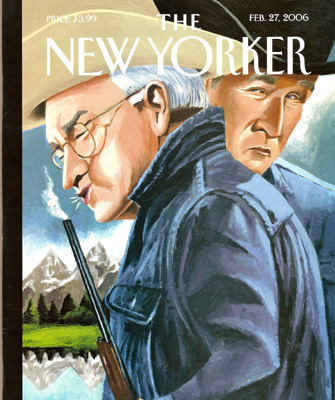
The same magazine has depicted Bush as a maid serving Dick Cheney (reported by Fox News) and even a "Brokeback Mountain" comparison between the President and Vice President. Bush and Cheney wisely ignored the comparisons because they are laughable. But Obama has been up in arms, almost as though the satire hits a little too close to home. Many are convinced that he is protesting too much for his own good.
Many Americans actually believe Obama is Muslim (12 percent according to Newsweek). Bloomberg was early in reporting Obama's relationship with "William Ayers, a former member of the radical group the Weather Underground who is now a professor of education at the University of Illinois in Chicago. Ayers donated $200 in 2001 to Obama’s Illinois state Senate campaign and served with him from 1999 to 2002 on the board of the Woods Fund, an anti-poverty group."

"The Weather Underground carried out a series of bombings in the early 1970s — including the U.S. Capitol and the Pentagon. While Ayers was never prosecuted for those attacks, he told the New York Times in an interview published Sept. 11, 2001, that 'I don’t regret setting bombs.'
Bill Burton, Obama’s spokesman, said Ayers 'does not have a role on the campaign.' Ayers said he had no comment on his relationship with Obama." These are the type of stories that have over shadowed Obama for months and would have likely derailed his campaign if they came out early. I'm sure this will keep Hillary Clinton anxiously waiting in the wings.
Would you like to get a weekly email summarizing Kevin Price's political and economic content? Subscribe to the Houston Business Review at Info@HoustonBusinessShow.com.

Kevin Price is Host of the Houston Business Show (M-F at 11 AM on CNN 650) and Publisher of the Houston Business Review. Hear the show live and online at HoustonBusinessShow.com. Visit the archive of past shows here.

Labels: , , , , , , , , , ,

Monday, June 16, 2008

Are the Saudis Getting McCain's Message?

At any moment I expected the great Rod Sterling of the Twilight Zone to pop up to explain the merge of what appeared, on the surface, to be two separate stories. The first is McCain announcing that it is time to reverse the ban on offshore oil drilling in this country. The Senator has been resistant to such for years and his announcement is creating quite a stir. It is the type of policy position that could help him to seriously differentiate himself from Barack Obama.

About the same time we got an announcement from the Saudis that they are considering an increase in production. This comes after President Bush requested such and they informed him it wasn't going to happen. There is legitimate concern that the Saudis have scarcity problems of their own. But now, just a couple of weeks later, they are talking about loosening the pipelines? Do you hear that Twilight Zone music popping up yet?
Ironically, I wrote about this just last Wednesday when I discussed how to lower gas prices in 30 days or less. In that post I stated "A few liberal Senators with a history of opposing drilling in this country, coming out in favor of such" would make a difference in those gas prices. When it comes to oil policy, McCain has acted like a liberal, in my opinion. My tea leaves seem to be reading correctly and this policy is well received, both by conservatives who have demanded energy independence for decades, and independents who are simply trying to make ends meet. Other things we need to see happen to drive down prices are Congress stepping away from lecturing the oil industry and follow up with getting involved in constructive discussions to build a strategy to solve these problems. It is time to solve problems and stop pointing fingers.

It is imperative for McCain to take positions such as this on issues like these if he has any intention of winning in November. He desperately needs to simply get on the side of the rest of the country when it comes to issues of where we feel as though we are being abused by the government. Be it excessive taxes that prevents people from starting or growing a business, regulation that makes it costly to fuel our cars, or policies that simply undermine our personal and economic freedoms. He needs to get on the right side and he needs to do it now. This announcement is an excellent first step in that objective.

According to recent surveys on marketing, most advertising attracts sellers (others who want you to buy more ads) and not buyers. Do you want to know why? Email info@HoustonBusinessShow.com and put "marketing audio" in the subject line and we will get it to you.


Kevin Price is Host of the Houston Business Show (M-F at 11 AM on CNN 650) and Publisher of the Houston Business Review. Hear the show live and online at HoustonBusinessShow.com. Visit the archive of past shows here.

Labels: , , , , ,

Monday, June 02, 2008

Economy Held Hostage by Future of Tax Cuts

Since the Democrats have taken over both Houses of Congress in 1996, there has been a great deal of discussion on the future of the tax cuts that many economists believe drove this economy through much of the 1990s. The situation is simple. When the original tax cuts were passed early in the Bush Administration, the President was unable to make those cut permanent. The votes weren't there. These cuts had to be passed by every Congress and now they are facing expiration because the current leadership won't even allow them to be voted on.

We can now hear the clock ticking on the tax cuts and the impact on 43 million American families could be significant. Failure to keep those cuts on the books will translate into the "biggest tax increase in history" according to the President.

CNN has reported that "allowing the cuts to expire would add $1,900 to the tax bill of a family of four with an annual income of $60,000, Bush said. All told, he added, 43 million families with kids would have to pay an average tax increase of $2,323." As damaging as the policy will be on families, the effects on Main Street and Wall Street could prove even more profound.

"It turns out that 75% of taxpayers who benefited from the reduction of the top bracket were small business owners," Bush said, noting that small businesses pay taxes at individual income tax rates. "So when you hear 'tax the rich' you're really talking about taxing Mom and Pop businesses."

Many capital investments of business of all sizes (be it a new machine, more office space, or vehicles, etc.), the hiring of new employees, and other expenditures that lead to greater economic growth -- and even increased revenue for the government in taxes -- have been held hostage by a Congress unwilling to take action. The result of this procrastination could be further economic down turn. It is time to stop playing politics and make this tax cuts permanent. Tax cuts have worked for decades, as seen in the video going back to the early 1960s. We need these tax cuts to continue today.

According to recent surveys on marketing, most advertising attracts sellers (others who want you to buy more ads) and not buyers. Do you want to know why? Email info@HoustonBusinessShow.com and put "marketing audio" in the subject line and we will get it to you.


Kevin Price is Host of the Houston Business Show (M-F at 11 AM on CNN 650) and Publisher of the Houston Business Review. Hear the show live and online at HoustonBusinessShow.com. Visit the archive of past shows here.

Labels: , , ,

Wednesday, May 28, 2008

$300 Billion Farm Bill Subsidizes Rich Farmers and High Prices

The Congress passed a scandalous farm bill designed to subsidize rich farmers and to actually pay farmers to not produce. Neither policies make sense when times are good, but are disastrous in light of our current economic situation.

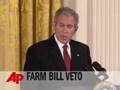
The government is printing money like there is no tomorrow in order to cover its expenses. It is trillions in debt and is unable to cover its cost through revenues thanks to spending being out of control. In an environment such as this, the government has no business creating such a bill. President Bush agrees and has vetoed the legislation saying "At a time when net farm income is projected to increase by more than $28 billion in 1 year, the American taxpayer should not be forced to subsidize that group of farmers who have adjusted gross incomes of up to $1.5 million," the president said in his veto."


The bill provides $40 billion for some of America's richest farmers (those who have incomes of up to $1.5 million) and an additional $30 billion to pay farmers to keep their land idle. With grocery prices rising rapidly due to the rise of alternative fuels and ethanol and the need of more goods that will continue to assist such alternatives, do policies such as these make sense?


So what about the rest of the subsidy (the other $200 billion)? The vast majority of it goes to food stamps and other welfare programs. It is typical. Two separate issues that could not typically garner enough support on their own, passes because of political pandering in an election year.


Bush's veto is likely to be overridden by the Congress. We should consider overriding them by sending them home this November.


According to recent surveys on marketing, most advertising attracts sellers (others who want you to buy more ads) and not buyers. Do you want to know why? Email info@HoustonBusinessShow.com and put "marketing audio" in the subject line and we will get it to you.


Kevin Price is Host of the Houston Business Show (M-F at 11 AM on CNN 650) and Publisher of the Houston Business Review. Hear the show live and online at HoustonBusinessShow.com. Visit the archive of past shows here.

Labels: , ,

Monday, May 19, 2008

Did Obama Protest Too Much?

President Bush took his political opponents on in Israel by comparing them to those who tried to placate Hitler in the days leading up to World War II. Barack Obama quickly rose to the occasion by protesting "I resemble that statement." Okay, not those exact words, but Bush didn't point the finger at any particular person and Obama quickly assumed he was talking about him. I guess "if the shoe fits, wear it."

The protest reminds me of situations that break out in my house. I find a mess in the kitchen that you can tell was caused by kids and ask "who is responsible for..." and, of course, before I even finish, the most guilty party yells "not me." I'm afraid Obama protests too much.

Obama is a traditional "progressive" and has described himself in those terms -- "jobs, peace, and freedom" (although I have no idea how his policies will generate any of the above). Many Democrats are talking about appeasement as well, but they are doing it for pragmatic reasons. Many initially supported the war (e.g., Hillary Clinton) and argue they based that decision on the data they had seen. It was, in their opinion, the right decision at the time. Some, like Dennis Kucinich, made an ideological choice. No matter how bad the data looked (and it obviously had some credibility because much of the international community came up with similar results), he would vote against it. All along, Obama claimed he would have done the exact same thing.
Obama used this commitment as a wedge between Clinton and the most liberal forces that dominate his party. Clinton implies that it was easy for Obama to criticize since he was in the Illinois Legislature as a State Senator when she voted for the war. I guarantee you, he was telling the truth. He is an ideologue. A pacifist. He would vote "no" regardless of what he say. And those are dangerous positions for the leader of the free world to hold.

It requires a certain degree of pragmatism to be President, in my opinion. You have to be philosophical, but you have to be able to make decisions based on political, economical, and national security realities. Obama is proving over and over again that he doesn't have that ability. What do we expect from the man the National Journal calls the most liberal in the US Senate? Obama reminds me of Neville Chamberlain, a progressive in his own right who believed humans had evolved too much for Hitler to drag the world into conflict. Chamberlain was wrong and so is Barack Obama.

The above article originally appeared at RedState.com. It was edited for BizPlusblog.
According to recent surveys on marketing, most advertising attracts sellers (others who want you to buy more ads) and not buyers. Do you want to know why? Email info@HoustonBusinessShow.com and put "marketing audio" in the subject line and we will get it to you.

Kevin Price is Host of the Houston Business Show (M-F at 11 AM on CNN 650) and Publisher of the Houston Business Review. Hear the show live and online at HoustonBusinessShow.com. Visit the archive of past shows here.

Labels: , , , , ,

Thursday, April 17, 2008

Historians to Bush: the Worst President?

One of the things I learned in the pursuit of my history degree is that the subject requires a long term perspective. There should be some time between the person and his or her impact on society before historians size them up. Many of my professors at Abilene Christian University -- conservative or liberal -- would say that if they are sizing up a President's impact before his time is done, they are political scientists, not historians. Many of those same professors would say "and, after all, political science isn't a real discipline."

Seriously though, these words of wisdom are being largely ignored by historians today. According to a recent US News & World Reports, "President Bush often argues that history will vindicate him. So he can't be pleased with an informal survey of 109 professional historians conducted by the History News Network. It found that 98 percent of them believe that Bush's presidency has been a failure, while only about 2 percent see it as a success. Not only that, more than 61 percent of the historians say the current presidency is the worst in American history."
The worst ever? I'm sorry, but I was just talking to someone today about applying for a cashier job at a grocery store and stood in a line that went all the way around the corner. There were two openings at that store. During that time when President Carter was in charge, 13 countries fell to Communism, we had hyperinflation by US historical perspectives, and we were a laughing stock around the world. During that time, we were told by Carter that it was America's fault for being in such a sorry state. We no longer believed in ourselves, we were told.

We didn't stop believing in America, just the politicians running this country. It lead to a mandate going to Ronald Reagan and an American Renaissance. I come from a multi-generational family of Democrats and Carter single handily changed that view. With that, I'm not even sure if Carter was the worst (although he was certainly on the short list of such), but he makes Bush look absolutely brilliant.

In a recent blog post I discussed how the media has altered our perceptions of the economy. We have been fed recession garbage for years and are starting to believe it. Economist John Lott, Jr pointed out that our economic numbers are generally better than a decade ago when Clinton was President -- a period described as economically prosperous. I expect some of the average news consumers to buy into this media propaganda, but not serious historians.

George Bush will not be one of my favorite Presidents, I am sure. His failure to promote free enterprise and its success in the 2006 Congressional races haunts us today (and likely will in 2008), his expansion of government in several areas has been damaging, his inability to articulate the case for the war, and his haphazard and often liberal answers to our current credit crisis leaves much to be desired. But this is a man who presided over the country on September 11th, 2001 and helped restore confidence in this country that lead to a 17 percent growth of the economy under his tenure and remarkably low unemployment. The best President? No. The worst President? Give me a break.

Historians should know better and give history time to judge Bush and leave, what appears to be political agendas to political scientists. After all, they don't know any better.

Kevin Price is Host of the Houston Business Show (M-F at 11 AM on CNN 650) and Publisher of the Houston Business Review. Hear the show live and online at HoustonBusinessShow.com. Visit the archive of past shows here.

Labels: , , , , , ,

Wednesday, April 02, 2008

Economist on the Media and Recession

For quite some time I have been telling readers of this blog and listeners of my show that the media has wanted a recession. Furthermore, the media has reported an economy in decline while it reflected numbers reminiscent of a strong economy. Now a serious leader in academia has recently validated this assessment.

Economist John Lott, Jr. of the University of Maryland was cited on Fox and Friends as quantifying the distorted views purported by the media about the economy. In an article by Lott on FoxNews.com, the scholar noted that:

A Nexis search on news stories during the three-month period from July 2000 through September 2000 using the keywords “economy recession US” produces 1,388. By contrast, the same search over just the last month finds 3,166. Or, even more telling, take the three months from July through September last year, when the GDP was growing at a phenomenal 4.9 percent. The same type of Google search shows 2,475 news stories.

Over 78 percent more negative news stories discussed a recession when the economy under a Republican was soaring than occurred under a Democrat when the economy was shrinking.
A little perspective on the economy would be helpful. The average unemployment rate during President Clinton was
5.2 percent. The average under President George W. Bush is just slightly below 5.2. The current unemployment rate is 4.8 percent, almost half a percentage point lower than these averages.

Therefore the economy was seen as healthy and vibrant under Clinton with higher unemployment than it is today under Bush at level that is .4 percent lower. The comparison doesn't stop with unemployment, however:

The average inflation rate under Clinton was 2.6 percent, under Bush it is 2.7 percent. Indeed, one has to go back to the Kennedy administration to find a lower average rate. True the inflation rate over the last year has gone up to 4 percent, but that is still lower than the average inflation rate under all the presidents from Nixon through Bush’s father.

Yet, again, the news tends to describe the economic situation in this economy as dire and you would think we were at the brink of economic ruin. Lott goes on to quantify other areas.

The issue I would love to see discussed more thoroughly are the reasons why this is happening. All I can do is speculate, based on approximately two decades of being involved with the media on several levels, but the causes could include:

* The liberal bias in the media. According to the Pew Research Center, there are five liberals for every one conservative in the media. This would certainly lead to the media giving Conservatives a negative spin.


* I personally believe that the media benefits from a bad economy. Much of what we have seen and heard has reflected "wishful" thinking. Why? When the economy is hot, businesses simply don't need as much advertising. A soft economy makes businesses more inclined to invest in marketing.


* Finally, bad news equals big ratings. There is a belief that if all news was good news, people would not be nearly as interested in watching TV, listening on the radio, or reading stories.


I'm impressed with Lott's work and am eager to find more who contribute to this debate.


For a copy of the free report, "Why Your Marketing Isn't Working," email Info@HoustonBusinessShow.com and put "marketing" in the subject line.


Kevin Price is Host of the Houston Business Show (M-F at 11 AM on CNN 650) and Publisher of the Houston Business Review. Hear the show live and online at HoustonBusinessShow.com. Visit the archive of past shows here.

Labels: , , , , , , , , ,