m

Friday, April 02, 2010

The Simplest Guide to what the US Government can do that You will Ever Find

More Americans are aware of the huge problems facing are republic than at any time in recent decades. Our unemployment is approaching Great Depression levels, our deficits are growing annually at a rate similar to what our entire national debt was just a few decades ago, and the government is pumping dollars into our money supply in the trillions of dollars, putting us on pace for hyperinflation. Everyone seems to be aware of what is wrong, but are unaware as to why and, more importantly, how to fix it. That is why I developed this simple guide.

There is nothing original in this article. In fact, that is what makes it unique. It goes back to the original source, which is the US Constitution, to guide us back to where we belong. There is an old saying, "if you lose something, go back to the place where you last remembered having it." We have lost our liberty and the place we can find it is in the US Constitution. Every member of Congress swears to defend the US Constitution and to fulfill the powers listed in it. What are those powers? How many are there? The answer to those questions will surprise most Americans today.

Seventeen powers. That is all. None of them are particularly sexy and combined would cost a fraction of what we pay today. If they only did these functions, taxes (which obstruct job creation) would be much lower, the dollar would be much stronger (since we would not need "funny money" to fund excess government), and we would simply be more free. Here are those simple items:

"The Congress shall have power To lay and collect taxes, duties, imposts and excises, to pay the debts and provide for the common defense and general welfare of the United States; but all duties, imposts and excises shall be uniform throughout the United States;"

"To borrow money on the credit of the United States;"

"To regulate commerce with foreign nations, and among the several states, and with the Indian tribes;"

"To establish a uniform rule of naturalization, and uniform laws on the subject of bankruptcies throughout the United States;"

"To coin money, regulate the value thereof, and of foreign coin, and fix the standard of weights and measures;"

"To provide for the punishment of counterfeiting the securities and current coin of the United States;"

"To establish post offices and post roads;"

"To promote the progress of science and useful arts, by securing for limited times to authors and inventors the exclusive right to their respective writings and discoveries;"

"To constitute tribunals inferior to the Supreme Court;"

"To define and punish piracies and felonies committed on the high seas, and offenses against the law of nations;"

"To declare war, grant letters of marque and reprisal, and make rules concerning captures on land and water;"

"To raise and support armies, but no appropriation of money to that use shall be for a longer term than two years;"

"To provide and maintain a navy;"

"To make rules for the government and regulation of the land and naval forces;"

"To provide for calling forth the militia to execute the laws of the union, suppress insurrections and repel invasions;"

"To provide for organizing, arming, and disciplining, the militia, and for governing such part of them as may be employed in the service of the United States, reserving to the states respectively, the appointment of the officers, and the authority of training the militia according to the discipline prescribed by Congress;"

"To exercise exclusive legislation in all cases whatsoever, over such District (not exceeding ten miles "square) as may, by cession of particular states, and the acceptance of Congress, become the seat of the government of the United States, and to exercise like authority over all places purchased by the consent of the legislature of the state in which the same shall be, for the erection of forts, magazines, arsenals, dockyards, and other needful buildings;-And"

"To make all laws which shall be necessary and proper for carrying into execution the foregoing powers, and all other powers vested by this Constitution in the government of the United States, or in any department or officer thereof."

Over the years that last clause ("necessary and proper") has become a license to do virtually everything. This is wrong, because the clause makes it clear that it applies only to the "foregoing powers" (the seventeen items listed above. Some of the Founding Fathers feared that this could lead to an abuse of power, which led to the first ten amendments being added to guarantee our rights, including the 10th Amendment, which states "The powers not delegated to the United States by the Constitution, nor prohibited by it to the States, are reserved to the States respectively, or to the people."

Stop arguing with friends, family, loved ones, neighbors, and even idiots. Tell them their elected officials are breaking the law and have them read this simple document which will give them the tools they need to determine whether or not a policy is proper and whether or not their member of Congress should change careers.

Kevin Price is a syndicated columnist whose articles frequently appear at ChicagoSunTimes.com, Reuters.com, USAToday.com, and other national media. Kevin Price is also host of the Price of Business (M-F at 11 AM on CNN radio). Hear the show live and online at PriceofBusiness.com. Visit the archive of past shows here.

Labels: , ,

Monday, December 07, 2009

The Popular Disdain for the Constitution

At one of her recent press conferences, Speaker Nancy Pelosi's was asked by a CNS News reporter, "Madam Speaker, where specifically does the Constitution grant Congress the authority to enact an individual health insurance mandate?" the Speaker was clearly agitated by the question and responded, "Are you serious? Are you serious?" The reporter said, "Yes, yes, I am." Without commenting further, Pelosi shook her head in disgust and took a question from another reporter. Later on, the Speaker's press spokesman Nadeam Elshami told CNSNews.com about its question regarding the constitutionality of socialized medicine that "You can put this on the record. That is not a serious question. That is not a serious question."

Like every member of Congress, Pelosi takes this sacred oath: "I do solemnly swear (or affirm) that I will support and defend the Constitution of the United States against all enemies, foreign and domestic; that I will bear true faith and allegiance to the same; that I take this obligation freely, without any mental reservation or purpose of evasion; and that I will well and faithfully discharge the duties of the office on which I am about to enter: So help me God." She swears to defend the Constitution, but does not take this question seriously? The arrogance or ignorance is amazing. The question is legitimate, Article I, Section 8 of the Constitution lists the enumerated powers of Congress and there is no provision for health care. Furthermore, the Tenth
Amendment makes it explicitly clear that the powers not listed in the Constitution are to be left to the states and the citizens.

For decades government has gone well beyond it Constitutional responsibility and has become more cavalier about the role of government. Essentially our government is on auto-pilot and simply picks up new duties as it deems fit.

I have said often on my radio show that to be for the Constitution is simply not "cool" and you will not be taken serious in Washington. I have had friends -- both Democrat and Republican -- smugly smile at me and say that arguments about the Constitution are laughable. Discussions about a "strict constructionist" view can only be academic.

I must ask the question, by what standard than are we going to judge government? If not the Constitution, what will be our measure of whether government is serving us properly? It cannot be popular opinion, because the masses can be convinced to believe anything. That is why the Founding Fathers put such safe guards against pure democracy.

This is why I have grown frustrated by the "liberal" versus "conservative" debate. All these two views argue is the pace towards socialism. Liberals ask why we are not fully under government control while conservatives want to argue to slow down the pace. What is there to "conserve" any more? Massive deficits and debts? Taxation out of control? A regulatory system that is hostile to freedom? If we are serious about the Constitution we should drop the conservative label and state we wish to restore the Constitution.

Until we have a serious debate about the Constitution we can only expect our freedoms to further disappear while are political leaders show extreme joy on the left or slight discomfort on the right. The leaders in Washington believe there is nothing government cannot do and they intend to only prove that in the years to come.

Economist Walter Williams recently noted that "in each new session of Congress since 1995, John Shadegg, (R-Ariz.,) has introduced the Enumerated Powers Act, a measure 'To require Congress to specify the source of authority under the United States Constitution for the enactment of laws, and for other purposes.' The highest number of co-sponsors it has ever had in the House of Representatives is 54 and it has never had co-sponsors in the Senate until this year, when 22 senators signed up. The fact that less than 15 percent of the Congress supports such a measure demonstrates the kind of contempt our elected representatives have for the rules of the game -- our Constitution."

How has your member of Congress stood on this important first step in restoring Constitutional government? Instead of arguing with politicians on specific policies, let us make them defend their view of the document they swore to defend .

Kevin Price is a syndicated columnist whose articles frequently appear at ChicagoSunTimes.com, Reuters.com, USAToday.com, and other national media. Kevin Price is Host of the Price of Business (M-F at 11 AM on CNN 650) and Publisher of the Houston Business Review. Hear the show live and online at PriceofBusiness.com. Visit the archive of past shows here.

Labels: , , ,

Saturday, November 14, 2009

The Road to Serfdom is Paved with Exceptions

For decades I have been sitting across the table from politicians, authors, business leaders, and economists as guests on one of the radio. There have been a few that believe that the government is the solution to virtually every problem. Government needs to solve health care, housing, poverty, and more. The vast majority believe that freedom works. They will be quick to say government does too much and that its role should be strictly limited.

These conversations tend to run a similar course. They will say the "free market is so amazing and powerful, it is able to create jobs and new industries. It is terrible that government seems to do everything in its power to undermine the economy's potential." However, you dig a little deeper and then you start finding exceptions. Most of the time those exceptions are based on what they do for a living. Attorneys who represent clients who have suffered property damage will say, "they support free enterprise, except when it comes to the regulations they place on insurance companies." The farmer will tell you, "I definitely support free enterprise, except when it comes to agriculture subsidies." Scientists definitely believe the economy is best left alone "except when it comes to research grants." You get the idea.

As a result, the United States is, largely, socialistic. We can argue to what extent, but there is no doubt what our country has become. The single biggest (and fastest growing) part of our GDP is government and it has evolved over the decades to accommodate exceptions like those above. Now we have millions of Americans who support free enterprise, "except." That "except" is bankrupting us and destroying our freedoms.

One of the most inspiring things I ever witnessed was the "Damn Right" campaign for President of Pete dupont in 1988. In that year, I actually voted for the former Delaware Governor while managing a Congressional race in West Texas. I have the feeling I was the only one who casted such a vote in that town. He lost big time in the ballot box, but his message is as potent today as it was then. Pete duPont had no problem telling farmers, seniors, scientists and anyone else that they were part of the problem and that everyone would have to sacrifice in order to restore our freedoms. It was "damn right" for people to carry their own weight and not seek government as a solution.

Those who founded this Republic were aware that it was the natural tendency of government to expand over time. That is why they believed in the dispersion of power and they wanted to make changes in policy hard to achieve. The states would not ratify the Constitution with its "necessary and proper clause" that could be used for all form of abuses, without a Tenth Amendment that makes it perfectly clear that "The powers not delegated to the United States by the Constitution, nor prohibited by it to the States, are reserved to the States respectively, or to the people."

Those who created this republic saw a nation of nations, with each state offering their own unique approaches to solving problems. They believed that each of these states served as a check to the others because people could leave that state to another that provided more freedom. The decline in our liberties and the increase in socialism, are all linked to the undermining of the political institutions in government designed to protect us from an authoritarian federal government. It is also indicative of a nation that is rapidly moving from "rule by law" to 'rule by mob." The fast track to socialism the US is taking is not driven nearly as much by philosophy as it is selfish want.

If we are interested in restoring individual freedoms and making a nation into one that has prosperity as a priority, it begins by leaving our personal preferences behind. That is a necessary part of the path to freedom to get us off the road to serfdom.


Kevin Price is Host of the Price of Business, the longest running show on AM 650 (M-F at 11 am) in Houston, Texas and on AOL Radio. His articles often appear in Chicago Sun Times, Reuters, USA Today, and other national media. Steve Moore of the Wall Street Journal calls Price the “best business talk show host in the country.” Find out why and visit his blog at www.BizPlusBlog.com and his show site at www.PriceofBusiness.com. You can also find Price on Strategy Room at FoxNews.com.

Labels: , , , ,

Thursday, September 10, 2009

What does the Constitution say the Federal Government can do?

People are coming out in droves to respond to a government out of control. Their anger is correct, but their solutions to the problems we face are often often off the target. The problem is not that the federal government subsidizes certain businesses, it is their "choice of businesses that is the problem." It is not the income tax, we are told, but who we tax and at what amount. Frankly, we have millions of Americans who are enraged at the current state of affairs, but most of them don't offer solutions per se, just a different and new list of problems.

In my view, the federal government should merely do what is explicitly stated in the US Constitution. Any more than that, it is breaking the law. With that, here are the seventeen enumerated powers to the Congress according to Article I, section 8 of the Constitution:
"The Congress shall have Power To lay and collect Taxes, Duties, Imposts and Excises, to pay the Debts and provide for the common Defence and general Welfare of the United States; but all Duties, Imposts and Excises shall be uniform throughout the United States;
To borrow money on the credit of the United States;"

"To regulate Commerce with foreign Nations, and among the several States, and with the Indian Tribes;"
"To establish an uniform Rule of Naturalization, and uniform Laws on the subject of Bankruptcies throughout the United States;"
"To coin Money, regulate the Value thereof, and of foreign Coin, and fix the Standard of Weights and Measures;"
"To provide for the Punishment of counterfeiting the Securities and current Coin of the United States;"
"To establish Post Offices and Post Roads;"
"To promote the Progress of Science and useful Arts, by securing for limited Times to Authors and Inventors the exclusive Right to their respective Writings and Discoveries;"
"To constitute Tribunals inferior to the supreme Court;"
"To define and punish Piracies and Felonies committed on the high Seas, and Offenses against the Law of Nations;"
"To declare War, grant Letters of Marque and Reprisal, and make Rules concerning Captures on Land and Water;"
"To raise and support Armies, but no Appropriation of Money to that Use shall be for a longer Term than two Years;"
"To provide and maintain a Navy;"
"To make Rules for the Government and Regulation of the land and naval Forces;"
"To provide for calling forth the Militia to execute the Laws of the Union, suppress Insurrections and repel Invasions;"
"To provide for organizing, arming, and disciplining the Militia, and for governing such Part of them as may be employed in the Service of the United States, reserving to the States respectively, the Appointment of the Officers, and the Authority of training the Militia according to the discipline prescribed by Congress;"
"To exercise exclusive Legislation in all Cases whatsoever, over such District (not exceeding ten Miles square) as may, by Cession of particular States, and the acceptance of Congress, become the Seat of the Government of the United States, and to exercise like Authority over all Places purchased by the Consent of the Legislature of the State in which the Same shall be, for the Erection of Forts, Magazines, Arsenals, dock-Yards, and other needful Buildings;"

"And To make all Laws which shall be necessary and proper for carrying into Execution the foregoing Powers, and all other Powers vested by this Constitution in the Government of the United States, or in any Department or Officer thereof."

As one can see, the list is very short and specific, except for that some what open ended last clause. The Founding Fathers were concerned how this would be interpreted, which led them to modify the Constitution with the Tenth Amendment, which states "The powers not delegated to the United States by the Constitution, nor prohibited by it to the States, are reserved to the States respectively, or to the people."

The debate about what the government can and cannot do is pretty simple and can be found in your US Constitution. Hold your elected officials accountable on what they can and cannot do.

Kevin Price is Host of the Price of Business, the longest running show on AM 650 (M-F at 11 am) in Houston, Texas and on AOL Radio. His articles often appear in Chicago Sun Times, Reuters, USA Today, and other national media. Steve Moore of the Wall Street Journal calls Price the “best business talk show host in the country.” Find out why and visit his blog at www.BizPlusBlog.com and his show site at www.PriceofBusiness.com. You can also find Price on Strategy Room at FoxNews.com.

Labels: ,

Wednesday, September 09, 2009

"Gradualism" works Better for Socialism than Freedom

The United States today is a mere shadow of the once free republic that was known as a beacon of freedom through out the work and economic power house that was without comparison. This happened because our federal government deferred to the states and the citizens on the vast majority of decisions that had to be made. We seem to have a very different country today.

Much of the world is rapidly moving away from command economies while the US pursues such at a now rapid pace. This didn't happen over night, but has happened gradually over many generations. Frankly, the US of 50 years ago was not as free as it was a century before; the "good old days" are becoming a distant memory. From the early days of the republic until the early 20th century, state and even local government officials had more real power than those who held most federal offices. Those in Congress -- and the White House -- had their hands tied by a constitution that put firm limits on them.

We can look at historic Supreme Court decisions and even major events (like some of the effects of the Civil War) and see the power shift from a federalist system with sovereign states to the strong national government system we are experiencing today. The court decisions were driven by policies that were designed to make the federal government stronger. These policies included a redefining of welfare (which historically meant had to be beneficial to everyone or was not welfare), how people were taxed, the expansion of regulation, and much more. There was not a massive change over night, but the change has indeed been huge.

These changes happened because people want more things (or money) paid for by others. The late Russell B. Long may have put it best, stating "Don't tax you, don't tax me, tax the guy behind the tree." People want "free" schools, unemployment benefits, subsidy programs, etc., as long as they don't have to pay for them. This natural inclination makes it easy for government to expand. This isn't the case with reducing the size of government. Cutting a program even slightly is seen as Draconian -- even cruel. This is logical, if a benefit or program is justified at all, shouldn't it be justified in abundance? This goes back to the federal system that we were talking about earlier. This is why the Founding Fathers so greatly limited the government’s activities to around 17 items in Article I, Section 8 of the Constitution.

The only answer to our current situation is to challenge those who want government to grow at a slower speed (the vast majority of Republicans it appears), to begin to demand that those who take the oath of office take it seriously (regardless of how odd their platform seems compared to the many politicians who have trampled over this oath), and to begin using the language of "restoration" and not conservatism. What is there, after all, left to conserve? Bloated budgets, the decline of freedom, and the confiscation of wealth? Conservatism now means only slowing down our trek down the "road to serfdom." We should instead pursue a different path.

Kevin Price is Host of the Price of Business, the longest running show on AM 650 (M-F at 11 am) in Houston, Texas and on AOL Radio. His articles often appear in Chicago Sun Times, Reuters, USA Today, and other national media. Steve Moore of the Wall Street Journal calls Price the “best business talk show host in the country.” Find out why and visit his blog at www.BizPlusBlog.com and his show site at www.PriceofBusiness.com. You can also find Price on Strategy Room at FoxNews.com.

Labels: , , , , ,

Thursday, September 03, 2009

Constitution was about Protecting the States

When one looks at the state of affairs today and the leviathan that we have called the federal government, it is hard to believe that our national government was actually quite small and was designed to keep the states sovereign. The delegates to the Constitutional Convention had the overriding objective to keep the states strong and the federal government very weak. You see this in some of the most important themes in the US Constitution. These same themes are among those that the left and the media are most hostile towards today.

  • Electoral College. The Electoral College, which gives each state a certain number of votes based on the number of House members and Senate, is among the most hated of US institutions among liberals and the media because it is "undemocratic." It was designed, for the explicit purpose of making sure every state, regardless of its size, mattered when the federal government made decisions. Without an Electoral College, the ten largest cities (or less) could determine the next President of the United States because of their population. All the many states in between those cities would be completely dismissed and we would have a White House that would only -- and always -- look out for urban interests and not the interests of the rest of the nation.

  • The Bicameral legislature. The founders chose a system with two houses of Congress, one to represent the populations in the states (House of Representatives) and one to represent each state equally regardless of population (the Senate) in order to make sure, again, that each state received equal representation.

  • The unique nature of the US Senate. The US Senate was not designed for any other purpose but to represent the interests of the state governments that chose to send them to Washington. Historically, Senators were appointed by Governors and approved by the legislatures to look after the states' business. This was the single biggest check against a federal government growing out of control and the strongest guard of states rights. Senators had powers not granted to any other federal officials. Their offices included legislative (in the bills they proposed and voted on), executive (in the approval of treaties and Presidential appointments), and judicial (in its unique impeachment role). In 1913 the 17th Amendment was passed to make Senators directly elected like members of the House. This was done because political activists at that time grew tired of how long it took the Senate to move on legislation. By the early 20th century one of the Senate's greatest virtues (its ability and desire to deliberate slowly) became seen as its biggest vice.

  • The Tenth Amendment. There were ten major areas that stood between the newly written US Constitution and ratification. Those issues were addressed in the Bill of Rights. One of those, the Tenth Amendment, reminded the federal government who was actually the main seat of power by stating "The powers not delegated to the United States by the Constitution, nor prohibited by it to the States, are reserved to the States respectively, or to the people." Simply put, whatever implied powers existed in the Constitution had to be clearly delegated to the federal government or it was left to the states.
Those people who founded this republic were men on a mission. They were passionate crusaders for the dispersion of power and believed the best way for that to be accomplished was to have the power in the states they represented. The delegates from Virginia, for example, saw themselves as Virginia delegates to the Constitutional Convention and not US delegates from Virginia. They had a different mindset from those who governed today. They knew that freedom was found closer to home and not from an increasingly assertive federal government.
Kevin Price is Host of the Price of Business, the longest running show on AM 650 (M-F at 11 am) in Houston, Texas and on AOL Radio. His articles often appear in Chicago Sun Times, Reuters, USA Today, and other national media. Steve Moore of the Wall Street Journal calls Price the “best business talk show host in the country.” Find out why and visit his blog at www.BizPlusBlog.com and his show site at www.PriceofBusiness.com. You can also find Price on Strategy Room at FoxNews.com.

Labels: , , , , , ,

Thursday, August 20, 2009

Interviewing Your Next Congressman or Senator

The Tea Party movement will have many people voting for the first time in years and some voting for the first time ever. When they go into those voting booths they will be filled with anger -- even revenge -- and will be poised to "get back" at those politicians who have taken this country on such a dangerous course.

Candidates for Congress are applying for a job and it is imperative that they be asked some tough questions before one casts a vote:


  • What is your employment history? In my opinion, if a candidate has never owned a business and has never been subject to the payroll, regulations, taxation, and licensure laws that comes with it, they should not be taken seriously as a candidate.

  • What is your view of the Constitution? The responsibilities of a member of Congress are wide, but the single most important duty is to carry out the responsibilities in the Constitution they have sworn to defend. They need to explain what the enumerated powers in Article I, Section 8 of the Constitution mean. They need to articulate the role of the Tenth amendment in limiting federal power. If a candidate does not answer these questions in a manner in line with the Constitution, they have no business running for such an important office. This is the most important question to ask someone running for federal office.

  • What other elected offices have you been in? US House or Senate are pretty significant offices. In my experience it takes politicians a significant period of time to "get their legs" in Congress. When I worked for the US Senate I was surprised by how little members knew when it came to conducting their duties. I believe that career politicians are a problem, but I believe it makes sense for the House or Senate to be the next step after serving in a state legislature.

  • What other positions have you held? I think that many Americans will be a little reluctant to elect a career "community activist" to any office after Barack Obama. For a long period of time people on every level of government (federal, state, local) were reluctant to elect attorneys to office because who wants to elect individuals who make a living off the proliferation of laws? To me, the best candidate is the one who is most sympathetic to the plight of all Americans and understands the challenges of job creation and economic growth.

If Americans had been asking these type of questions before now, our country would be in a very different position today.

Kevin Price is Host of the Price of Business, the longest running show on AM 650 (M-F at 11 am) in Houston, Texas and on AOL Radio. His articles often appear in Chicago Sun Times, Reuters, USA Today, and other national media. Steve Moore of the Wall Street Journal calls Price the “best business talk show host in the country.” Find out why and visit his blog at www.BizPlusBlog.com and his show site at www.PriceofBusiness.com. You can also find Price on Strategy Room at FoxNews.com.

Labels: , , , , ,

Tuesday, July 28, 2009

What the Government Can and Cannot Do

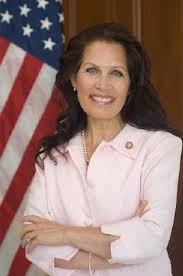
For the first time in decades there seems to be a serious discussion about the role of government in a free society and the question of what it "can" and "cannot" do is becoming ever so common. Rep. Michele Bachman (R-MN) had an excellent exchange with the Secretary of Treasury Tim Geithner on this subject.

The issue being discussed was the Constitutionality of the bailout. Geithner was being questioned by the House Banking Committee. The exchange went something like this:

BACHMAN: By what authority did the Treasury Department bailout major financial institutions?

GEITHNER (clearly looking puzzled by the question): What do you mean?

BACHMAN: What legal authority did you have to do this?

GEITHNER (almost looking guilty and certainly more confused): Congress said we could.

BACHMAN: What authority did Congress have to do this?

From there the conversation digressed to one very similar that a child with his hand stuck in a cookie jar would say to a parent. "Bobby said I could do it." Of course, Bobby didn't have the authority, but we will blame him anyway. That is the dilemma today. We have years of Constitutional authority that has deteriorated away and a government that largely runs on autopilot. This is beyond government based on "precedent," which means new laws are tested against others that passed court muster. This is filled with enough peril, but the new model is to rapidly pass laws and see if they hold up or not. With so many years of complacency, many things become law that would not have had a prayer a few generations ago.

So the question of what government can and cannot do remains. The answer to me seems simple. You have to read the source, which is the US Constitution. It is a very short read, measured in dozens of pages. The document is also very straight forward:


  • What the Government can do is found in a short section of the Constitution often referred to as the enumerated powers (Article I, Section 8). There you will find seventeen things the government can do. Really interesting things like post offices, post roads, and standard weights and measures. Very little of what government does today can be found as a listed power of government.

  • Many through out the states that were needed in ratifying this Constitution noted a "necessary and proper clause" in Article I, Section 8 that was designed to make sure these 17 things would be allowed to be fulfilled (noting the problems the government had under the Articles of Confederation before). Because of their concerns about the fact that some could interpret that clause as anything those in government deemed "necessary and proper," they forced the government to add Ten Amendments to the Constitution, also referred to as the Bill of Rights.

  • "Amendments", as the name implies is about changing. So these amendments changed any assumptions or potential loopholes in the Constitution in the areas they addressed. When it comes to the issue of government power, the Tenth is the most important of these amendments, stating that "The powers not delegated to the United States by the Constitution, nor prohibited by it to the States, are reserved to the States respectively, or to the people." Simply put, if not an enumerated power, it is for the states or the people. Period. If people want socialized health care, move to states like Oregon or Massachusetts that have such programs or even try to pursue such in their own states. The Founding Fathers were brilliant in understanding that a "one sized fits all" form of government would eliminate competition in policy and have people with no freedom of choice. That, more than anything else, made them believe in state rights.

In spite of the clarity, government has been moving towards the elimination of our freedoms for generations. To move back in that direction will be challenging, but is necessary. What our government is allowed to do according to the law, however, is obvious. To think differently is disingenuous.

Kevin Price is Host of the Price of Business, the longest running show on AM 650 (M-F at 11 am) in Houston, Texas and on AOL Radio. His articles often appear in Chicago Sun Times, Reuters, USA Today, and other national media. Steve Moore of the Wall Street Journal calls Price the “best business talk show host in the country.” Find out why and visit his blog at www.BizPlusBlog.com and his show site at www.PriceofBusiness.com. You can also find Price on Strategy Room at FoxNews.com.

Labels: , , , , , ,

Saturday, June 27, 2009

It is time for Economic Triage

You know medical triage, the idea of a procedure used in emergency rooms to determine who gets treated first. When Barack Obama was running for President and, shortly after he was elected, we were daily lectured about the urgency of the situation facing our economy.

What we have seen is a massive subsidy primarily benefitting the richest corporations in America passed first by Bush in the fall of last year and part 2 (arguably worse) in January of 2009. It was interesting that the very liberal and very conservative Members of Congress voted against this legislation. The left clearly saw the corporate welfare involved and the right saw both that and the obvious disregard of the Constitution. We were told that action was needed "now!" If not, we were looking at unemployment of around 8.5 percent in 2009. We have that unemployment rate and more with "stimulus" and the situation is getting worse.


There are several serious challenges facing Americans today:


  • The largest unemployment rate in recent history. Forget about the 9.5 percent touted by the Obama Administration, economists on both the right and left say it is more, much more. Bill Clinton's former Secretary of Labor and a huge fan of Obama, Robert Reich, says the actual uemployment is closer to 15 percent.

  • Excessive taxation of the job creators. The vast majority of jobs comes from people who make $250,000 a year or more, yet this group is being singled out to pay more taxes as a form of economic genocide. It has never been easier to move capital and with US tax rates the second highest among industrial countries in the world, you can expect a flight of capital and jobs that comes with such.

  • Hyperinflation. On one day, the federal government pumped $1.4 trillion in the money supply in order to pay some of its recent bills and to "jump start" the economy. This type of policy leads to hyperinflation as too much money chases too few goods.

Obama should approach our situation with these realities in mind, and as a doctor in triage, he should be driven by the mandate to "do no harm."


  • Eliminate barriers between people and jobs. This isn't through temporary government jobs that will run out with the subsidies, but through real jobs that create revenue for them to grow in number and in quality. The federal government should mandate the states to have a minimum wage law in each state of the union and allow them to set them based on the needs of the people and the cities. This would not cost the federal government a penny, but would spur economic activity immediately.

  • Eliminate taxes on corporations because they do not pay taxes, they are tax collectors. Taxes are a fixed cost for doing business, plain and simple. If taxes are too high, businesses have no choice, but move to places where the rate is less so they can lower prices and be competitive. This would have a profound impact on high quality job creation. This policy would also encourage an increase in productivity and soften the blow of inflation.

  • They should end taxes on wealth creation and replace income tax with a sales tax. This would eliminate the economic genocide against job creators and would more fairly spread the financial burden of government on all economic groups.

Our situation is dire, the answers to our problems are in the market place and not in the halls of government. These kind of actions would encourage problem solving where it belongs -- in the hands of the people.


Kevin Price is Host of the Price of Business, the longest running show on AM 650 (M-F at 11 am) in Houston, Texas and on AOL Radio. His articles often appear in Chicago Sun Times, Reuters, USA Today, and other national media. Steve Moore of the Wall Street Journal calls Price the “best business talk show host in the country.” Find out why and visit his blog at www.BizPlusBlog.com and his show site at www.PriceofBusiness.com. You can also find Price on Strategy Room at FoxNews.com.

Labels: , , , , , ,

Wednesday, June 24, 2009

Herb Allison: The Man of TARP

The first in an series of articles on Barack Obma's Czars.

Upon being elected President -- and during his State of the Union Address -- Barack Obama made it clear that his priorities were "reforming" health care, expanding education, and changing the way people get their energy. These three areas also reflect the earliest appointments Obama made of "Czars." Little did we know, it was only the beginning. The President has since gone on to make 28 such choices covering an equal number of areas, and there appears to be no end in sight of how many more he might have.

Presidents have appointed Czars for years. They are controversial because they do things, in terms of developing policy, without direct Congressional scrutiny. Historically, Czars were separate from the department that covers the same policy issues. This is not the case in the Obama Administration, who has three Czars who are also serve under other cabinet members. One of those is Herb Allison, who is the Assistant Secretary of the Treasury for Financial Stability or affectionately called the "TARP Czar."

Allison was appointed in April and was just confirmed this month to oversee the bailout program. Born in 1946, Allison graduated from Yale University with a degree in philosophy and went on to get a MBA from Stanford after serving four years in the Navy.

Highlights of his career include:

  • Allison started his professional career in 1971 in the investment industry at Merrill Lynch in New York and worked his way up to COO in 1997.

  • In mid-1999 Allison left to become National Finance Chairman of the McCain for President campaign. In spite of this, Allison has long hedged his political bets, with the Federal Elections Commission showing contributions to both Democrats and Republicans.

  • Next, Mr. Allison became President and Chief Executive Officer of the Alliance for Lifelong Learning, Inc. from 2000 to 2002, a joint venture of Oxford, Stanford and Yale Universities, offering online, college-level courses to adults.

  • In addition, Allison has been a director of Time Warner, on the Advisory Board of the Yale School of Management, on the Advisory Council of the Stanford Graduate School of Business, and the Federal Reserve Bank of New York's International Advisory Committee.

  • He was a director of the New York Stock Exchange from 2003-2005. Recently, Allison also chaired the Business-Higher Education Forum and the Vietnam Education Foundation and served on the Business Roundtable, and the Financial Services Roundtable. Furthermore, he served on the Board of Directors of The Conference Board, the Board of Trustees of The Economic Club of New York, the New York State Commission to Modernize the Regulation of Financial Services, the New York State Commission on Education Reform, and the Council of Graduate Schools Advisory Committee.

  • Former CEO of Fannie Mae during the financial crises of September 2009, until he was approved by the Senate for his new position.

The accountability issues surrounding the duties of a position such as this are vast, ranging to measures on how well TARP is working to questions on how the dollars are being spent. There are also the many constitutional issues that have largely been ignored when it comes to the spending of these dollars. In the end, this position demands Congressional scrutiny, the Administration believes it should be hiding in the White House. Is it any wonder why many are concerned about the rise of the Czars?

Kevin Price is Host of the Price of Business, the longest running show on AM 650 (M-F at 11 am) in Houston, Texas and on AOL Radio. His articles often appear in Chicago Sun Times, Reuters, USA Today, and other national media. Steve Moore of the Wall Street Journal calls Price the “best business talk show host in the country.” Find out why and visit his blog at www.BizPlusBlog.com and his show site at www.PriceofBusiness.com. You can also find Price on Strategy Room at FoxNews.com.

Labels: , , , , ,

Thursday, June 04, 2009

The Party of Diversity should Support Diversity of Power

There is something funny going on. The "narrow minded" people on the Right are sounding more like their liberal counterparts when it comes to the issue of diversity. "Diversity" has been the battle cry of the left for decades. It has been (oddly) the driver behind multiculturalism and political correctness and has long been held among the most important of "liberal values."

Unfortunately, limiting diversity to the way we view ethnic and other social groups is only scratching the surface. Diversity is defined as "the state or fact of being diverse" "difference," "unlikeness," "variety," and "multiformity." In other words, "diversity" stands for more, much more.

Diversity can be used in the way we approach virtually every issue. In the name of diversity, we should allow each state of the Union to develop its own minimum wage policies. Michigan, for example, may want to help the city of Detroit and let them develop a minimum wage that is lower than the rest of the state in order to combat its 20 percent plus unemployment. Same with East St. Louis, Il (30 percent unemployment); Camden, NJ (32 percent), and others. I would be fine with the Federal Government ending minimum wage laws entirely. Short of that, the Feds should mandate the states to create their own minimum wage laws and let the problem solving begin. It is insane to have a federal government on the other side of the country set a minimum wage for areas that are desperate in attracting employers and opportunity.

Environmental regulations would be another great place to move back to the states. Instead of a "Super Fund" designed to clean polluted areas devised by the Feds and (according to the National Center for Policy Analysis) 80 percent of the dollars going to lawyers, or "one size fits all" regulations that put small business into bankruptcy, the states should be the leader in establishing regulations. They would set rules that would protect wildlife and nature, while placing humans and employment as the number one priority. From the competition of the states in public policy we would learn the best ways to develop sound policies.

This is exactly what the Founding Fathers had in mind. They saw the United States as a "nation of nations." This is why they developed the Tenth Amendment and limited the federal government to only seventeen powers in Article I, Section 8 of the Constitution. They believed this dispersion of power would not only protect our freedoms, but lead to the best ideas to solve problems, having the best opportunity to be developed. Other states would voluntarily adopt policies that worked and would avoid those that didn't. Furthermore, this diversity of power would protect all the states from becoming too big. If taxes became too high and regulations too oppressive, people would leave such states in mass. It is the ultimate example of "checks and balances."

Diversity should not be preserved in a monolithic federal government, but promoted through fifty unique and strong states. Advocates of diversity should be fighting for states' rights more than any other special interest group.

Kevin Price is Host of the Price of Business, the longest running show on AM 650 (M-F at 11 am) in Houston, Texas and on AOL Radio. Eric Bolling of Fox News and Fox Business says that Price’s Blog “is very influential and moves the blogosphere.” Steve Moore of the Wall Street Journal calls Price the “best business talk show host in the country.” Find out why and visit his blog at www.BizPlusBlog.com and his show site at www.PriceofBusiness.com. You can also find Price on Strategy Room at FoxNews.com.

Labels: , , , , , ,

Friday, May 22, 2009

What do you mean by "Unconstitutional"?

There is a great deal of rhetoric, particularly among conservatives and libertarians about the "unconstitutional" actions of President Barack Obama. To me, those are rather strong words, but they flow out of the mouth of pundits and radio personalities without a blink and, even more often, without an explanation. Many (if not most) Americans hear such and say "this is ridiculous" (at least according to the polls, with most still supporting the new President) and others say "Yeah!" with clinched fists and they are ready to take action. The sad thing is, the vast majority of the pundits, radio hosts, those with clinch fists or Obama supporters do not really understand what it means to be "unconstitutional" or how to abide by the law of the land.

The problem is, the vast majority in this country have received their knowledge of the Constitution from the government schools. It is similar to chickens learning self defense from the foxes. It is simply beneficial to the government, but not necessarily to the citizens. The Founding Fathers would not understand how we would allow the government to be in charge of educating the population about such issues (or anything, as far as that goes), which is why there wasn't a department of education in any state until the 1830s, fifty years after this country was founded.

The founders saw education as a "check" against a government that could overly expand its authority. This is one of the constitutional concepts our population doesn't understand. So what is "constitutional" and "unconstitutional"? What can the government actually do? If someone is serious about this discussion, they don't merely argue in clichés, such as "government should only do those things that the people can't do for themselves," but offer a very specific policy agenda. The following are only a few of the guiding principles that define "constitutional" government. In fact, they only scratch the surface. But if we majored in these important areas, we would be so much closer to having our constitution restored.

A Republican form of Government.

This is actually a small "r" and has nothing to do with any party. Article IV of the Constitution defines the guarantees by the federal government for the state. At section four it states "the United States shall guarantee to every state in this union a republican form of government, and shall protect each of them against invasion; and on application of the legislature, or of the executive (when the legislature cannot be convened) against domestic violence. " The characteristics of this are rule by law (the constitution). Although such a government can have democratic institutions, a Republic is designed to check all tyrants, be it a federal government out of control or a mob with a destructive agenda. The constitution was designed to protect minorities, not just majorities. If the majority wants to oppress people, the people still feel oppressed. Under a republic, the government limits itself to "referree" and not a parental role.

The Dispersion of Power.

The Constitutional Convention was made up of representatives of the thirteen states. Their primary goal was to protect those states from a federal government that could undermine state rights. Most Americans don't even realize that the US Senate was comprised of individuals chosen by the state governments to represent their interests. This was the practice until the 20th century. Furthermore, our US Constitution could not get ratified by the states without the Bill of Rights. These ten amendments that are now claimed by the federal government as being designed for its protection, were intended to protect the states and the American people.


Limited Government.

Article I, Section 8 of the Constitution lists 20 powers of the federal government. Most of them are very basic and not very expensive. These include things such as post offices, post roads, and standard weights and measures. The military, of course, is one of the few things relegated to the federal government. What the Founders intended was a very small federal government that did the few things it was suppose to do and to do them very well and deliberately.

In the end, there should be no question about whether we are wandering away from the spirit and letter of our US Constitution. A better question is, what do we need to do as a nation to restore our Republic?

Labels: , , , , , , ,

Thursday, May 21, 2009

Time to get Over the "S" Word

Recently, a very good friend of mine and nationally known economist (and frequent guest on the Price of Business Show) told an interviewer on Fox News that he liked to "avoid the 'S' word." This economist is one of the most passionate and best informed advocates of freedom that I personally know. His credentials in the cause of liberty are without question. With that, I find it hard to believe that he and other free market economists have a problem with the "S" word. It is time to get over the word, and focus on its consequences.

Let's begin by demystifying the word "socialism." If you recall back in your basic economics class, we are told that socialism is "government control or ownership of the means of production." Let's break this already basic definition into even more simple terms. We largely know that the phrases "Government control" and "ownership" are self explanatory. It doesn't have to be both, simply one or the other. The other part is the "means of production." This can simply mean people, businesses, machines and any thing else that adds to the economy.

So is the United States becoming a socialist country or is it already there? Who would believe we would have the President of the United States firing the CEO of an American automobile company? Who would imagine the United States government becoming the major stock holder of untold numbers of American companies? Who would think that the United States would arbitrarily and retroactively break contract law with companies (e.g., the government's taking of bonuses of AIG executives, when they clearly originally agreed to such).

The US didn't have an election in November and then wake up to a socialist regime in January. As Fredrich Hayek pointed out in his The Road to Serfdom, these processes do not have to happen over night. Our road has been, arguably one that has taken over a century (maybe longer), but we are reaching that point where socialism will soon be the commonly accepted worldview. A few years ago politicians shunned in fear the "liberal label," now politicians coolly dismiss comparisons of our countries with European socialism. In fact, they almost appear to be saying, "That is a problem?"

This "road to serfdom" for our country could be a rather lengthy book, but I'm going to only give a few examples:

  • Our Founding Fathers originally prohibited income tax because they believed that the federal government had no business knowing how much people made or even how they made it. Furthermore, income taxes are a tax on wealth creation, which is the type of tax that makes economies weaker. Why would any government want to do that?
  • The Constitutional Convention was made up of representatives of the thirteen states. Their over riding objective was to protect those states from a federal government that could grow out of control. Most Americans don't even realize that the US Senate was comprised of individuals chosen by the state governments to represent their interests. This was the practice until the 20th century. Furthermore, our US Constitution could not get ratified by the states without the first ten amendments. These Bill of Rights that are now claimed by the federal government as a tool for its protection, were designed to protect the states and the American people.
  • In the 1930s there was a complete perversion of the role of government from one of an umpire (making sure that everyone was judged by the same rules) to a parent (attempting to "create" equality in results), which is a contrary to both the letter and spirit of the Constitution.

The very first step in dealing with any addiction or disease is to own it, so you can battle it. The first step on the road to get the US back where it belongs is to recognize the "socialist" label so we can find a path to liberty.

Kevin Price is Host of the Price of Business, the longest running show on AM 650 (M-F at 11 am) in Houston, Texas and on AOL Radio. Eric Bolling of Fox News and Fox Business says that Price’s Blog “is very influential and moves the blogosphere.” Steve Moore of the Wall Street Journal calls Price the “best business talk show host in the country.” Find out why and visit his blog at www.BizPlusBlog.com and his show site at www.PriceofBusiness.com. You can also find Price on Strategy Room at FoxNews.com.

Labels: , , , , , , ,

Friday, May 15, 2009

Politicians use Wrong Benchmark in Decision Making


After their designated election cycles members of the US House of Representatives and Senate, as well as the President of the United States, swear to defend the US Constitution. In the vast majority of cases, it appears they are lying.

Unfortunately, most Americans haven't read the half a dozen pages that make up that lean, but important, document. They haven't noticed Article I, Section 8 of the Constitution that limits Congress to around 20 powers. Real exciting things like post offices, standard weights and measures, and post roads.
Very few members care about these mandates and to support them as the scope of government makes them seem little more than eccentric (or worse) in the eyes of their colleagues. It simply isn't trendy to support the law you swear you will defend. When I think of such, I consider my own US Senators, John Cornyn and Kay Bailey Hutchinson, both of whom are Republicans. One of them, Cornyn, is consistently ranked in the top 10 percent of the most conservative by groups that rate voting records. I don't consider this a badge of honor, but an indictment of how liberal Republicans and the Senate have become.

John Cornyn, for example, is among the many who voted for TARP in 2008. Instead of being a true leader and representing his constituents, he chose to be a cheerleader and tried to win support from the GOP leadership. The bill he voted for began in the US Senate (unconstitutional according to Article I., Section 7, which states that "All bills for raising Revenue shall originate in the House of Representatives; but the Senate may propose or concur with Amendments as on other Bills." TARP included provisions for raising revenue. Where it started was grounds for being unconstitutional. I won't even begin to list the many other areas that it fails to uphold the Constitution.

Many who brand themselves as "conservative" use their colleagues with very liberal agendas as the benchmark their philosophy. The reality is, it simply means they are willing to take their time as they stroll down the road to serfdom. I believe the American people prefer those who are honest about their agendas (liberals) than those who are dishonest (so-called conservatives). The last election seemed to prove that true.

The only way to solve this problem is to set a different standard for our elected officials. It is time to select politicians who are strict constructionists when it comes to the Constitution. People who have sworn to defend it and a voting record that reflects that they have done jsut that. Many call themselves "strict constructionists," even George W. Bush who paved the way to much of the socialism the US is now pursuing at a breakneck pace. That is where seriously examining one's political record matters. Instead of "conservatives," I'm looking for candidates who describe themselves as "restorationists" (of the Constitution), and can back it up with their actions.

Holding politicians to the Constitutional standard will lead to more honest government, less government, and the restoration of America's greatness. This won't happen over night and we will receive lectures about "practicality" and being "realistic." Making those concerns our primary drivers, which has been the case for decades, has squarely put us in the mess we are in today.


Kevin Price is Host of the Price of Business, the longest running show on AM 650 (M-F at 11 am) in Houston, Texas and on AOL Radio. Eric Bolling of Fox News and Fox Business says that Price’s Blog “is very influential and moves the blogosphere.” Steve Moore of the Wall Street Journal calls Price the “best business talk show host in the country.” Find out why and visit his blog at www.BizPlusBlog.com and his show site at www.PriceofBusiness.com. You can also find Price on Strategy Room at FoxNews.com.

Labels: , , , , , , , ,

Saturday, April 18, 2009

Supporting the Constitution just Is Not that Cool

When Secretary of Treasury Tim Geithner was taken aback by Michele Bachman's aggressive questioning about the role of the Constitution in governing today, he was clearly uncomfortable. The Minnesota Congresswoman was clearly "not cool" in his view. It seems that we are now lead to believe that "smart," "sophisticated," and "relevant" individuals might appreciate how wonderful the Constitution was, but it is not really that useful today.

I recently did a radio interview where I went to great lengths to cite specifics of the Constitution. According to the host, the audience loved it and you could see that by the number of questions we were receiving. One comment stayed with me though. One person said, "I agree with everything you are saying, but how do you convey your message without sounding nuts." "Gee, thanks," I thought, but at the same time I understood his point. He was simply trying to tell me that, if you stick too close to the Constitution, you are often going to be dismissed by the people you talk to on the subject.
I'm afraid he is correct. To believe in the Constitution in a manner that the Founding Fathers intended, is to be willing to have the same attitude they had as they wrote the Declaration of Independence and together they stated that: "for the support of this Declaration, with a firm reliance on the protection of Divine Providence, we mutually pledge to each other our Lives, our Fortunes, and our sacred Honor."

People like:
  • Carter Braxton of Virginia, who was a wealthy planter and trader. He saw his ships wiped out by the British Navy. He sold his home and properties to pay his debts, and died in poverty.
  • Thomas McKeam was under such constant pursuit by the British that he was forced to continually move his family. He served in the Congress without pay, and his family was kept in hiding. His possessions were taken from him and he too died in poverty.
  • Francis Lewis had his properties destroyed. The British jailed his wife and she died within a few months.

I could go on, but the theme is similar... sacrifice, poverty and often death for what they believed in. Today, most people in politics have a rather smug view of the Constitution. Years of political correctness have led people to dismiss the law of this land as something of value in years past, but totally "out of date" today. Recently I interviewed a member of the Tea Party and mentioned that the dramatic moves of the government in so many different areas was clearly against the idea of state rights as seen in the Tenth Amendment. Her response was, "well, I don't really like to talk about the Tenth Amendment because that was used as an excuse for institutional racism." Well I hate to tell you, but state rights is the centerpiece of the US Constitution. That document is about the dispersion of power and they saw strong states and local governments as an primary means of achieving that.

To dismiss the Constitution because it has been used to protect racist policies in the past (and has since been corrected) is to advocate a government without law. That is exactly what we have today. A huge population that has come to the belief that the Constitution is irrelevant and instead of a government that is ruled by law, we have a government on autopilot. This is dishonest government.

I challenge people to study the Constitution and value its relevance today. I encourage people to challenge those who question the currency of the Constitution and ask them what they believe should govern our nation today. More than likely, their answer will be far more flimsy than the document that helped to make the US, the most free and prosperous country in the history of the world.

Kevin Price is Host of the Price of Business, the longest running show on CNN 650 (M-F at 11 am), AOL Radio, and CBS Radio. Eric Bolling of Fox News and Fox Business says that Price’s Blog “is very influential and moves the blogosphere.” Steve Moore of the Wall Street Journal calls Price the “best business talk show host in the country.” Find out why and visit his blog at www.BizPlusBlog.com and his show site at www.PriceofBusiness.com. You can also find Price on Strategy Room at FoxNews.com.

Labels: , , , , ,

Friday, April 17, 2009

Tea Party Members Need to Quickly Harness Their Energies

I was exhilarated by the opportunity to speak in Houston, Texas to thousands (estimated at around 8,000) who came out to defend their freedoms against a government that is spiraling out of control. I saw moms, dads, babies, and grandparents. They were all Americans who are worried about this nation's future and they were among hundreds of thousands who gathered at locations around the country to be heard.

When you address thousands, you don't see individual faces. In my case it was a sea of bodies and signs. I told that group that I was excited to see the "dozens" and maybe even "hundreds" that the media would report showed up to that event. The crowd roared at the humor, but I was not joking, and the Houston Chronicle reported that "hundreds showed up." The article included a video clearly showing thousands and you have to wonder how stupid the media is or how stupid they believe we are.

Although I was inspired, I was also concerned. The vast majority of the people involved in this movement tend to be quite new to the political process who have expectations and agendas that simply will not stand the test of reality. I have been involved in politics since the late 1970s and have never walked far from it in decades. There are others in the Tea Party movement with some experience, but they are few and far between. The vast majority not only lack an understanding of our political process or the most effective means of action, they are proud of their lack of experience and look at people with experience with suspicion (it also doesn't help to have the CNN label behind my name).

After I spoke I was greeted by a young man wearing camouflage and a name tag simply described as "Domestic Terrorist," making fun of Barack Obama's expanded use of the phrase to include anyone who questions the direction this country is going. The young man was fairly bright, full of energy, and has the desire that is needed to help his cause. But how will he tap into it?

I asked him what he was doing in 2010, since that will be an important year if the Party is going to have an impact (because of the need to focus on the Congress). This twenty-four year old agreed and told me he was going to run for Congress. It didn't seem like a great use of time, since there are so many other opportunities going on, but I went along with him. "Where?" I asked. "I live in Stafford, Texas, who ever the Congressman is there." That would be the very newly elected Pete Olson, who shares this young man's beliefs on most issues and is not an "old timer" who simply needs to be kicked out. This wasn't all, this young man wanted all members of Congress, regardless of affiliation or beliefs, to be collectively thrown out. That means that good members would be replaced by bad. I guess the logic is that since there are more "bad" than "good members," I guess they believed you would have the opposite if you simply "cleaned it out." It sounds simplistic, but things like these alone are not the only thing necessary to achieve change.

Many of the thousands of people at these events are like this young men -- well intended, but in a difficult position to help facilitate change. Many, simply don't know the best routes to facilitate a move towards restoring America's values. The most important time in US history may turn out to be 2010. The center of the political universe will be the US Congress and the US House of Representatives in particular. If the Tea Party wants to make a difference, it will have to be focusing on the Congress and it will have to be done in a concerted and organized way.
Kevin Price is Host of the Price of Business, the longest running show on CNN 650 (M-F at 11 am), AOL Radio, and CBS Radio. Eric Bolling of Fox News and Fox Business says that Price’s Blog “is very influential and moves the blogosphere.” Steve Moore of the Wall Street Journal calls Price the “best business talk show host in the country.” Find out why and visit his blog at www.BizPlusBlog.com and his show site at www.PriceofBusiness.com.

Labels: , , ,

Wednesday, April 01, 2009

"I Believe in Free Enterprise, Except..."

For almost two decades I have been sitting across the table from politicians, authors, business leaders, and economists as guests on one of my radio programs. There have been the occasional crazies who want to socialize everything, but the vast majority of them -- like the majority of your neighbors and co-workers -- claim to support free enterprise.

These conversations about the virtues of the market go the same way. "The free market is so amazing and powerful, it is able to create jobs and new industries. It is terrible that government seems to do everything in its power to undermine the economy's potential." However, you dig a little deeper and then you start finding exceptions. Most of the time those exceptions are based on what they do for a living. Attorneys who represent clients who have suffered property damage will say, "they support free enterprise, except when it comes to the regulations they place on insurance companies." The farmer will tell you, "I definitely support free enterprise, except when it comes to agriculture subsidies." Scientists definitely believe the economy is best left alone "except when it comes to research grants." You get the idea.

Our entire socialistic system has evolved over the decades to accommodate exceptions like these above. Now we have millions of Americans who support free enterprise, "except." That "except" is bankrupting us and destroying our freedoms.

One of the most inspiring things I ever witnessed was the "Damn Right" campaign for President of Pete dupont in 1988. In that year, I actually voted for the former Delaware Governor while managing a Congressional race in West Texas. I have the feeling I was the only one who casted that vote in that town. He lost big time in the ballot box, but his message is as potent today as it was then. Pete duPont had no problem telling farmers, seniors, scientists and anyone else that they were part of the problem and that everyone would have to sacrifice in order to restore our freedoms. It was "damn right" for people to carry their own weight and not seek government as a solution.

Those who founded this Republic were aware that it was the tendency of government to expand over time. That is why they believed in the dispersion of power and they wanted to make changes in policy hard to achieve. The states would not ratify the Constitution with its "necessary and proper clause" that could be used for all form of abuses, without a Tenth Amendment that makes it perfectly clear that "The powers not delegated to the United States by the Constitution, nor prohibited by it to the States, are reserved to the States respectively, or to the people." They envisioned a nation of nations, with each state offering their own unique approaches to solving problems, all of them checked in their excesses because people could leave that state to another that provided more freedom. The decline in our liberties and the increase in socialism, are all linked to the undermining of the political institutions in government designed to protect us from an authoritarian federal government.

So, where does the long path towards the restoration of freedom begin? John F. Kennedy is famous for saying "Ask not what your country can do for you - ask what you can do for your country." We need to ask ourselves, what "exception to freedom can I give up for my country?"

Kevin Price is Host of the Price of Business, the longest running show on CNN 650 (M-F at 11 am), AOL Radio, and CBS Radio. Eric Bolling of Fox News and Fox Business says that Price’s Blog “is very influential and moves the blogosphere.” Steve Moore of the Wall Street Journal calls Price the “best business talk show host in the country.” Find out why and visit his blog at www.BizPlusBlog.com and his show site at www.PriceofBusiness.com.

Labels: , , , , , , ,

Thursday, March 26, 2009

It is a "Restoration" and not "Conservative" Movement

For years I have felt that the term "conservative" was inadequate in describing the objectives of those who support the cause of liberty. The word implies being resistant to change. In fact, Obama and the mainstream media effectively promoted the idea that to be conservative was to want to defend the status quo. Obama's campaign was one of "change" and the media lumped everyone who opposed him as conservatives who wanted to keep things the way they were. This could not be further from the truth.

The term "conservative" doesn't fit those who support freedom today. We do not want to conserve a massive national debt, political elitism, or a deterioration of American families. We are interested in restoring those principles that made American the greatest nation on the face of the earth. Those principles include:
  • The belief in rule of law. Our political system was designed to protect its people from radical change. It was fearful of unchecked mob rule as much as it was an oligarchy and is intended to protect the minority from the majority. Furthermore, it is one of the most difficult constitutions in the world for facilitating change for a purpose. The founders believed that most solutions were found outside of the government and they made a document that promoted such an objective.

  • A commitment to limited government. This nation was founded on the notion of the dispersion of power. The states were significantly more powerful than the federal government and the US Senate (which had its entire membership chosen by governors and state legislatures until the 20th century) was designed for the purpose of protecting those states from the national government. They were originally chosen by state governments as a protector of state rights. The US Constitution provides around 18 powers for the US Congress according to Article I, Section 8. According to the 10th Amendment, everything else was to be left to the states and the citizens.

  • The importance of national security. When our nation was founded the world was much larger. With nuclear missiles only minutes away, we cannot merely be "fortress America," but we also cannot be the world's police force. However, national defense isn't just soldiers and missiles, but national sovereignty is reflected in secure borders.

  • A strong belief in private property. Today, both parties see the building of a shopping mall as a case for "imminent domain" and they regulate people out of their homes in the name of wetlands and endangered species. Our nation was founded on the fundamental importance of the right to property. Furthermore, our political system is opposed to the idea of redistribution of wealth. One of the greatest speeches delivered by any member of Congress was by Davy Crockett, who warned his colleagues about appropriating money for a person in a manner that was not constitutional (the widow of an Admiral). He offered his own salary for a week to help her if his colleagues would join him, and if they did, the sum to be given would be higher that the appropriation. That bill to provide aid was destined to be approved until Crockett took them to task. They voted against the bill, but also kept their week's pay. Crockett got back on the House floor after the vote and noted "You remember that I proposed to give a week's pay. There are in that House many very wealthy men - men who think nothing of spending a week's pay, or a dozen of them, for a dinner or a wine party when they have something to accomplish by it. Some of those same men made beautiful speeches upon the great debt of gratitude which the country owed the deceased--a debt which could not be paid by money--and the insignificance and worthlessness of money, particularly so insignificant a sum as $10,000, when weighed against the honor of the nation. Yet not one of them responded to my proposition. Money with them is nothing but trash when it is to come out of the people. But it is the one great thing for which most of them are striving, and many of them sacrifice honor, integrity, and justice to obtain it."

  • A belief in free enterprise. Government limited its role in the economy to that of a referee and was not to be intrusive. This is seen in it being responsible for such things as "standard weights and measures" and its explicit prohibition in taxing individuals directly (or income tax, which was later changed to all of our demise). Today the government uses taxation, regulation, and licensure laws to keep free enterprise in check, when it should do everything in its power to unleash it. Chief Justice John Marshall noted that the "power to tax is the power to destroy." In recent years, that seems to become the primary mission of government.

Obviously these points only scratch the surface. The point is, those who support the restoration of America's values should use that term and recognize that words like "conservative" fall on deaf ears for good reasons. No one wants to conserve the status quo.

The above image links to an audio of the writer discussing the US Constitution on the Price of Business Show.

Kevin Price is Host of the Price of Business, the longest running show on CNN 650 (M-F at 11 am). Eric Bolling of Fox News and Fox Business says that Price’s Blog “is very influential and moves the blogosphere.” Steve Moore of the Wall Street Journal calls Price the “best business talk show host in the country.” Find out why and visit his blog at www.BizPlusBlog.com and his show site at www.PriceofBusiness.com.

Labels: , , ,

Tuesday, March 24, 2009

Sweden, US, and Answering the Socialism Question

The economic lessons the vast majority of us received in high school and college is grossly inadequate. Most people can't answer the simple question as to whether the US is making a dramatic move towards socialism. In fact, most can't even explain what socialism is. Socialism is simply defined as "government control or ownership of the means of production." What are the means of production? You and I are, of course, as are the businesses we own and work for.

Recently and with questionable Constitutional authority, the Congress has financed (largely through fiat money) the massive taking over of numerous financial institutions. So ambitious is the government's reach, Congressional leaders are "naming names" of individuals who received bonuses from companies that garnered a bailout to an angry mob and retroactively taxing these executives in an effort to punish the businesses they claimed a commitment to protect.


Secretary of Treasury Timothy Geithner and company are not finished yet. The Associated Press are reporting that he and Federal Reserve Chairman Bernanke "sought broad new powers Tuesday to regulate tottering nonbank financial companies like insurance giant AIG, and President Barack Obama said he hopes 'it doesn't take too long to convince Congress' to grant them.'" These powers don't merely transfer to the Fed and to Treasury, but to the President himself. Furthermore "Along with the new authority to regulate and, if necessary, take over giant financial companies whose collapse might endanger the broader economy, the administration wants increased oversight and controls of previously unregulated markets such as hedge and private equity funds." The government's reach will even go into financial institutions that didn't participate in the bailout programs.


I remember when Americans were shocked back in 1979 when Chrysler successfully negotiated a bailout from the federal government that was a fraction of what GM received in January, which was a very small fraction of what the government gave in bailouts in general.


Historically, when we typically think of socialism, we think of Europe. Furthermore, the most socialistic of all the European governments is arguably Sweden, which is famous for its "cradle to grave" government programs. But recently George Bush, without Congressional approval, gave $15 billion to help bailout the Automobile industry. Sweden's government had a very different message to its struggling and iconic Saab motor company. The New York Times reported that the "enterprise minister, Maud Olofsson, put it recently, 'The Swedish state is not prepared to own car factories.'" Saab lost over $340 million last year and has begun the process of "reorganization," which is one step short of bankruptcy.


Ironically, the Washington Times has noted that "Treasury Secretary Timothy Geithner said Monday that the administration decided on its public-private plan to rescue the U.S. financial system because "we are not Sweden," the country known for nationalizing troubled banks and other sectors of its economy. We are the United States of America, we are not Sweden," Mr. Geithner said.


Geithner is right, Sweden had enough sense and, maybe a commitment to free market principles, to avoid socializing the automobile industry. One thing we know for sure is that there is no question the US is making a dramatic move towards becoming socialistic and seems to be trying to surpass, rather than merely catch up, with Europe's poster child of socialism.


Kevin Price is Host of the Price of Business, the longest running show on CNN 650 (M-F at 11 am). Eric Bolling of Fox News and Fox Business says that Price’s Blog “is very influential and moves the blogosphere.” Steve Moore of the Wall Street Journal calls Price the “best business talk show host in the country.” Find out why and visit his blog at www.BizPlusBlog.com and his show site at www.PriceofBusiness.com.

Labels: , , , , , , ,