m

Friday, September 04, 2009

"A Republic, if you can keep It"

Benjamin Franklin, shortly after the Constitutional Convention in Philadelphia in 1787, was asked by a Mrs. Powel, "Well Doctor, what have we got, a republic or a monarchy?" Franklin was quick to reply, "A republic, if you can keep it." Well, if you haven't received the memo before now, we have not "kept it." The US has wandered from the powerful and sound document that unleashed human freedom and kept government at bay.

Recently, on the Price of Business show, I interviewed Renee Herath, who is one of the millions of people who have simply become tired of seeing her government grow out of control. She has gotten involved with the local Tea Parties (both Katy and Houston, Texas) and in Glenn Beck's 9-12 Project and was on my program to discuss some up coming events that may be of interest to my audience. I innocently asked "what got you inspired to be involved in these organizations?" She listed many things, but when we got to the question of the type of government taught in schools today (democracy) versus the one the Founders intended for us (republic), both of us lit up. Very few these days even care about the subject and it has long left the curriculum of government run schools. Those schools have concluded that our country is a democracy, regardless of what our Constitution or the Founders have stated.


So that leads to the question, "does it matter?" This, in turn, makes you ask "what is a republican form of government?" Let me begin by stating that these names have nothing to do with partisan politics, but political freedom. Republic is actually a small "r" and Article IV of the Constitution defines and guarantees this form of government by the federal government for the states. At section four it states "the United States shall guarantee to every state in this union a republican form of government, and shall protect each of them against invasion; and on application of the legislature, or of the executive (when the legislature cannot be convened) against domestic violence. " This form of government is characterized by the idea of rule by law (the constitution). Although such a government can have democratic institutions, a republic is designed to check all tyrants, be it a federal government out of control or a mob with a destructive agenda. The constitution was designed to protect minorities, not just majorities. If the majority wants to oppress a minority, people still feel oppressed. Under a republic, the government limits itself to a "referee" and not a parental role.


The Founding Fathers believed in checks and balances. It should not surprise us that there were no state departments of education for the first 50 years of our republic. They believed that things like what government can and cannot do are too important to be taught by the government. It would be considered a conflict of interst. We have a generation that largely can't identify the differences between a republic and a democracy, because the vast majority of those people were taught by individuals with a political agenda. We have lost our schools and, as a result, the minds of most Americans. This battle isn't merely about advocating economic freedom, but restoring personal freedom found in the Constitution.

Kevin Price is Host of the Price of Business, the longest running show on AM 650 (M-F at 11 am) in Houston, Texas and on AOL Radio. His articles often appear in Chicago Sun Times, Reuters, USA Today, and other national media. Steve Moore of the Wall Street Journal calls Price the “best business talk show host in the country.” Find out why and visit his blog at www.BizPlusBlog.com and his show site at www.PriceofBusiness.com. You can also find Price on Strategy Room at FoxNews.com.

Labels: , , , , , , ,

Saturday, July 25, 2009

The "Rest of the Story" on David Asman of Fox Business

David Asman of Fox Business, who was a guest on my program a few months back, spoke with passion about a terrible incident that happened when his wife and him were traveling to London, England. In his own words, from an article in the Wall Street Journal, he talks about being approached by an employee of the hotel they were staying at: "'Mr. Asman, could you come down to the gym? Your wife appears to be having a small problem.' In typical British understatement, this was the first word I received of my wife's stroke. We had arrived in London the night before for a two-week vacation. We spent the day sightseeing and were planning to go to the theater. I decided to take a nap, but my wife wanted to get in a workout in the hotel's gym before theater. Little did either of us know that a tiny blood clot had developed in her leg on the flight to London and was quietly working its way up to her heart. Her workout on the Stairmaster pumped the clot right through a too-porous wall in the heart on a direct path to the right side of her brain. Hurrying down to the gym, I suspected that whatever the 'small' problem was, we might still have time to make the play. Instead, our lives were about to change fundamentally, and we were both about to experience firsthand the inner workings of British health care." He goes on to make one of the most eloquent arguments I have heard about the horrors of socialized medicine.

What stayed with me in that interview was the amount of "heart" he had in this discussion about saving his wife. You hope every man or woman would have the same amount of passion in wanting to save his or her partner. In Asman it was awe aspiring. I understand more so why this is the case after learning the "rest of the story." A friend of mine, who knew how much I liked Asmen refereed to me an article from the Miami Hearald called "A Revolutionary Love Story."

It reads like an adventure novel with a romantic bent. In it, Asman describes his adventures as a journalist in Nicaragua in the dangerous days of the Communist Revolution. While there he is introduced to Marta Cecilia, a revolutionary herself who grew to find that the communists were merely offering another brand of totalitarianism. She quickly gave up her government job, which made her a threat to the new regime and even became a critic of the revolution. With people being arrested left and right for criticizing the government, it was clear Cecilia had to get out. During all this drama, Asman and Cecilia fell very much in love and an amazing story unfolded that resulted in their life together as a family with children in New York City today. The article reads like great fiction, but it is absolutely true. I'm only scratching the surface. I suggest you read the entire article yourself. To hear my interview with Asman, click here.

Kevin Price is Host of the Price of Business, the longest running show on AM 650 (M-F at 11 am) in Houston, Texas and on AOL Radio. His articles often appear in Chicago Sun Times, Reuters, USA Today, and other national media. Steve Moore of the Wall Street Journal calls Price the “best business talk show host in the country.” Find out why and visit his blog at www.BizPlusBlog.com and his show site at www.PriceofBusiness.com. You can also find Price on Strategy Room at FoxNews.com.

Labels: , , , , , ,

Saturday, July 18, 2009

Wonder Where ABC gets its Business News?

We are all familiar with that media monster called ABC and its huge channel selections that includes sports (the many ESPN channels), kids programming (the Disney Channels), and many others. But I was curious where they got their business news and information. They obviously wouldn't go to CNBC, since it is a part of the GE family, which includes archrival, NBC. But they still have Bloomberg and a plethora of independent business media available. For some reason I was surprised to see Alexis Glick of Fox Business (part of a huge family of networks that overlap ABC in sports and family programming) on ABC's Good Morning America.

Alexis Glick, who has been a guest on my Price of Business show, is one of the most articulate and well versed people on business news and content. She did not disappoint on ABC's Good Morning America with a very thoughtful Goldman Sachs earnings preview. In her discussion she:


  • Reviewed the enormity of Goldman Sachs earnings and what it means to Wall Street and Main Street

  • How taxpayers should feel about this participant of the bailout enjoying this kind of earnings

  • What should taxpayers expect in the future when it comes to company bailouts

  • How Goldman Sachs early repayment of the TARP (it was one of the first companies) should matter

Glick is one of the more perceptive analysts in business news and I largely agree with her when it comes to the variety of feelings most Americans will experience when it comes to "Business after TARP" (sounds like a future article). I believe that it is imperative, however, for Members of Congress in both Houses and the American people to assess TARP and whether it was the best route to follow. This requires tough questions:

  • Why were we informed that TARP needed to be passed "now," but more than 90 percent won't reach its beneficiaries until 2010?
  • Why is the bulk of that money being released during the election year when we are experiencing near double digit unemployment now?
  • Was this a legitimate action for the government to take in light of the obvious Constitutional restrictions?
  • Since government jobs don't create profit, and profit is necessary for long term job growth, are not the government created jobs all temporary?

These questions and many more should be asked by the media on politicians daily. However, other than Fox and a few overtly conservative media outlets, it simply will not happen. That is probably the exact reason ABC called on Fox and the analysis of Alexis Glick. Not only is the network noted for being "fair and balanced," but it is also extremely thorough. Something we really need from the media today.

Kevin Price is Host of the Price of Business, the longest running show on AM 650 (M-F at 11 am) in Houston, Texas and on AOL Radio. His articles often appear in Chicago Sun Times, Reuters, USA Today, and other national media. Steve Moore of the Wall Street Journal calls Price the “best business talk show host in the country.” Find out why and visit his blog at www.BizPlusBlog.com and his show site at www.PriceofBusiness.com. You can also find Price on Strategy Room at FoxNews.com.

Labels: , , , , , ,

Saturday, April 25, 2009

Socialized Medicine on Strategy Room

My second appearance on Strategy Room (FoxNews.com) this past week moved to a topic that hits close to home to me -- socialized medicine. Eric Bolling had already navigated the panel through his 3 PM hour through a plethora of topics and they were primed by the time I got on the show.

My mother came right off the boat from England. She was a war bride who left her family to join her spouse in the United States. She was young when she did this, a mere 18 years old. Maybe, as a result, she was one of the biggest fan of England you would ever find. She would go on and on about the "virtues" of British socialism and how "terrible" it was that people in this country were responsible for their own health insurance. Having had visited with members of my family in "the old country" many times over the years, my instincts tell me that my mother would have likely had a very different view of British socialism if she lived under it.

My aunt (her sister) use to tell me how such a huge portion of every paycheck was devoured by the socialized health care system, she was amazed by the large number of people who were subsidized to not work, and was disgusted by how it became almost impossible for the average Brit to buy their own home. Regarding health insurance, she said national health care is "great until you need it." It provides "enormous peace of mind" until you actually get sick. Ironically, this aunt eventually died in the British health care system. She was diagnosed with cancer and could not believe how slowly the government dragged its feet in her treatment. Things were even worse when it came to my grandfather when he became ill. Doctors informed my family that treatment options were "limited" because he no longer paid taxes. My aunt was convinced my grandfather died because of the rationing of health care (a common problem when the government controls or owns anything).

This anecdote hits close to home, but the facts support her argument that socialized medicine does not work:
  • According to England's own National Institute of Health, eleven percent of the population of England has very expensive private health insurance. This allows them to get treated as a person, rather than a crowd, and to be able to hold their doctor accountable in a way you can't have when the government is your vendor.

  • In countries such as Canada it is common for people to head to the US for much of their health care (particularly urgent). Many individuals will go to a veterinarian to get tests, like MRIs, because the waiting lists are too long with government doctors.

  • In Australia's socialized health care state, more than half of the population has private insurance.

  • More than 60 percent of innovations in health care are from the United States with a much smaller part being carried by the rest of the world. If the US chooses a socialized system, innovation will be severely damaged because it is the incentives in our system that promotes changes and improvements.

One of the best discussions I have had on the subject was with David Asman of Fox Business when he was a guest on my show (then called the Houston Business Show). While visiting in England his wife had a stroke and barely survived. Because of his resources he was able to get her the best care possible in that country, but concluded that an indigent person in the United States has a better opportunity for recovery than the best insured in England. The harsh reality is very simple, why would we believe that a government that can do so few things effectively, could handle the huge task of providing for all our health care needs?


Kevin Price is Host of the Price of Business, the longest running show on CNN 650 (M-F at 11 am), AOL Radio, and CBS Radio. Eric Bolling of Fox News and Fox Business says that Price’s Blog “is very influential and moves the blogosphere.” Steve Moore of the Wall Street Journal calls Price the “best business talk show host in the country.” Find out why and visit his blog at www.BizPlusBlog.com and his show site at www.PriceofBusiness.com. You can also find Price on Strategy Room at FoxNews.com.

Labels: , , , , , , , , , ,

Saturday, April 18, 2009

Supporting the Constitution just Is Not that Cool

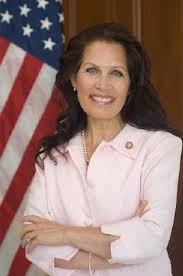
When Secretary of Treasury Tim Geithner was taken aback by Michele Bachman's aggressive questioning about the role of the Constitution in governing today, he was clearly uncomfortable. The Minnesota Congresswoman was clearly "not cool" in his view. It seems that we are now lead to believe that "smart," "sophisticated," and "relevant" individuals might appreciate how wonderful the Constitution was, but it is not really that useful today.

I recently did a radio interview where I went to great lengths to cite specifics of the Constitution. According to the host, the audience loved it and you could see that by the number of questions we were receiving. One comment stayed with me though. One person said, "I agree with everything you are saying, but how do you convey your message without sounding nuts." "Gee, thanks," I thought, but at the same time I understood his point. He was simply trying to tell me that, if you stick too close to the Constitution, you are often going to be dismissed by the people you talk to on the subject.
I'm afraid he is correct. To believe in the Constitution in a manner that the Founding Fathers intended, is to be willing to have the same attitude they had as they wrote the Declaration of Independence and together they stated that: "for the support of this Declaration, with a firm reliance on the protection of Divine Providence, we mutually pledge to each other our Lives, our Fortunes, and our sacred Honor."

People like:
  • Carter Braxton of Virginia, who was a wealthy planter and trader. He saw his ships wiped out by the British Navy. He sold his home and properties to pay his debts, and died in poverty.
  • Thomas McKeam was under such constant pursuit by the British that he was forced to continually move his family. He served in the Congress without pay, and his family was kept in hiding. His possessions were taken from him and he too died in poverty.
  • Francis Lewis had his properties destroyed. The British jailed his wife and she died within a few months.

I could go on, but the theme is similar... sacrifice, poverty and often death for what they believed in. Today, most people in politics have a rather smug view of the Constitution. Years of political correctness have led people to dismiss the law of this land as something of value in years past, but totally "out of date" today. Recently I interviewed a member of the Tea Party and mentioned that the dramatic moves of the government in so many different areas was clearly against the idea of state rights as seen in the Tenth Amendment. Her response was, "well, I don't really like to talk about the Tenth Amendment because that was used as an excuse for institutional racism." Well I hate to tell you, but state rights is the centerpiece of the US Constitution. That document is about the dispersion of power and they saw strong states and local governments as an primary means of achieving that.

To dismiss the Constitution because it has been used to protect racist policies in the past (and has since been corrected) is to advocate a government without law. That is exactly what we have today. A huge population that has come to the belief that the Constitution is irrelevant and instead of a government that is ruled by law, we have a government on autopilot. This is dishonest government.

I challenge people to study the Constitution and value its relevance today. I encourage people to challenge those who question the currency of the Constitution and ask them what they believe should govern our nation today. More than likely, their answer will be far more flimsy than the document that helped to make the US, the most free and prosperous country in the history of the world.

Kevin Price is Host of the Price of Business, the longest running show on CNN 650 (M-F at 11 am), AOL Radio, and CBS Radio. Eric Bolling of Fox News and Fox Business says that Price’s Blog “is very influential and moves the blogosphere.” Steve Moore of the Wall Street Journal calls Price the “best business talk show host in the country.” Find out why and visit his blog at www.BizPlusBlog.com and his show site at www.PriceofBusiness.com. You can also find Price on Strategy Room at FoxNews.com.

Labels: , , , , ,

Thursday, April 09, 2009

Strategy Room: More Reasons Big Media Should Fear the Little Screen

Today I had the opportunity to be a guest on my favorite show, on the little screen, Strategy Room on FoxNews.com. Eric Bolling did a fantastic job of leading his panel on the "ADD Hour" (as he likes to call it) on exploring Somalian Pirates and more on today's program. The group of panelists were diverse, the discussion was lively, and Bolling maintained that perfect balance of letting it "rock and roll" without losing control

One could easily retort about my claim that the show is a small screen phenomenon by saying, "maybe, but only because it is on the small screen." In reality, with the exception of those who play with the carrot with the smiley face that is something of a show mascot, this program is very similar and better than those that enjoy a big screen presence. It is the fact that it is on the small screen that it is a threat to other traditional media.

The number of quality channels that people have to choose from are virtually without limit. We have comedies, dramas, documentaries, current events, reality etc., etc. etc to choose from. It is true, we have similar "limitless" programming online, but few have the quality of Strategy Room when it comes to competing with the big boys. Very few indeed. There are Strategy Room from 9 to 5, Monday through Friday, there is the new FoxBusiness.com Live, and the CBS News' Washington Unplugged (which is a high video quality, but terrible in its editorial bent). Other than that, most programming is amateurish or not unique to the Internet (shows that have appeared elsewhere on TV, but archived online).

I believe Strategy Room has a further edge over the other few uniquely Internet based programs -- the number of hours it is on. With the program running 8 hours a day, people have all the reasons to stay with it throughout the day. It dominates the Internet. Increasingly, people may channel surf on their TVs , but won't think about touching that web channel, since they are getting big screen quality on the Internet, for what often feels like "non-stop."
Kevin Price is Host of the Price of Business, the longest running show on CNN 650 (M-F at 11 am), AOL Radio, and CBS Radio. Eric Bolling of Fox News and Fox Business says that Price’s Blog “is very influential and moves the blogosphere.” Steve Moore of the Wall Street Journal calls Price the “best business talk show host in the country.” Find out why and visit his blog at www.BizPlusBlog.com and his show site at www.PriceofBusiness.com.

Labels: , , , , , , ,

Tuesday, January 13, 2009

Will CBS 60 minutes Get a Pass on the Oil Boom?

This past Sunday 60 Minutes (CBS) did an "expose" about the forces behind the explosive increase in oil prices. Unfortunately, they limited their discussion to mere oil speculation and missed several other factors that drove prices up. A few of them include:

  • The rapid drop in the value of the dollar since 2001. There has been a 40 percent drop since that time. This alone would lead to an increase in fuel costs.
  • People seem to forget that the wars in the Middle East are in the heart of where oil is produced. It doesn't take a rocket scientist to understand that the possibility of disruption can lead to an increase prices.

  • Since 2001 there has been a rapid increase in all commodities, not just oil. Some of those commodities have seen a bigger increase than oil. Is there collusion going on in all these industries or are there simply larger business pressures playing a role? 60 Minutes didn't even consider this possibility.
  • 60 Minutes completely ignored the link between an expanding economy (which increased the demand for oil and therefore led to higher prices) and the recent recession (which has decreased demand and recently led to lower prices). This is something that would be covered in a high school economics class, but again ignored by 60 minutes.

  • There was no mention in the dramatic change in geo-politics since September 11th, 2001, including the rise of al-Quada, the growing hostilities in the Middle East, the disdain of Hugo Chavez of Venezuela towards the US, and the Nigeria crisis that has led to a disruption of supplies. These are among the factors that 60 Minutes did not even consider.

  • Then there is the rapid economic expansion of China and India that has only added to the demand on every commodity (as mentioned earlier), including oil. Again ignored by 60 minutes.

  • High prices in fuel led to a dramatic decrease in travel in the US by several billions of miles. This has led to a decrease in demand and a decrease in prices. This further proves that there was more than mere speculation involved in the rise of fuel prices.

These are just a few of the things 60 Minutes didn't address. One can easily go on, unless you have an apparent agenda like CBS. So far, virtually everyone in the media has given the network a pass, with the rare exception of Eric Bolling at Fox Business. Currently he is one of the only serious financial journalists to address the poor reporting by CBS. Maybe most journalists simply didn't watch the CBS program or maybe they don't believe they should hold their fellow news journalists accountable. All I know, is that the news industry needs to be held to a higher standard.

Kevin Price is a syndicated columnist whose articles frequently appear at ChicagoSunTimes.com, Reuters.com, USAToday.com, and other national media. Kevin Price is Host of the Price of Business (M-F at 11 AM on CNN 650) and Publisher of the Houston Business Review. Hear the show live and online at PriceofBusiness.com. Visit the archive of past shows here.

Labels: , , , , , , ,

Wednesday, November 26, 2008

If a Policy is Bad in a Good Economy...

On my radio show today I interviewed one of my favorite economists, Steve Moore of the Wall Street Journal. He was on to discuss his latest book, The End of Prosperity, and it is must reading. In a very simple and straight forward manner, Moore and co-authors Arthur B. Laffer and Peter Tanous explain what works and doesn't work in our economic system.

One of the areas Moore and I discussed was the fact that government entertains things they would do when the economy is healthy, but would never do when it is weak. If there is a time that such a policy is harmful at all, isn't it safe to conclude that the policy is not in the economy's best interest ever?

On today's show we discussed the fact that Barack Obama is discussing reversing his position on raising taxes on the top five percent because that could make our weakening economy worse. Obama is finally conceding that jobs are made by that top 5 percent and the country simply can't afford more loses. Yet what jobs have we already lost with an economy that has the top one percent paying 27 percent of the revenue? What is more the top twenty percent pays 67 percent. Obama seems to be admitting that adding any more pressure on this group is harmful, but what of the damage already done? It would be interesting if Obama's tax cut discussion was spread to the job creating highest income group. Am I advocating the end of taxes for the rich? Absolutely not, just a fair tax or flat tax that encourages everyone to want to become richer.

Congress is also talking about slowing down the move towards increasing CAFE standards, which are designed to lower fuel consumption. Because of the dire straights of the Big Three automakers, policy makers are reconsidering because of the potential of further damage. Instead of trying incentives to move towards better fuel standards, they seem to be able to use their complete lack of imagination for either increasing regulations to the automakers demise or do nothing at all. They are considering the latter at this point.

Then there is the minimum wage increase which went up just a few months ago (July 24). Since that time we have seen a dramatic jump in unemployment -- the largest increase in 16 years. Minimum wage increases are not even included in the current economic discussion, but there is no doubt among economists that this artificial increase in wages is weakening job creation. Although there is no discussion about reversing this increase, there may be a growing debate about postponing the massive jump scheduled for July of 2009. Again, if the policy is harmful in a weak economy, why is the policy ever beneficial? Furthermore, if such increases cause no harm (as Democrats often argue), why nickle and dime with a dollar here or fifty cents there? Everyone knows that a twenty dollar an hour minimum wage would put a fork in this economy, so how does one justify a minimum wage at all?

Many cities in the US -- Camden, NJ; East St. Louis, MO; and Detroit, MI are in perennial recessions. How can the federal government determine what is best for these cities when it comes to wages? I have long argued that if we must have a minimum wage (a standard practice today), it should be done by cities and states, not by the federal government.

But the larger principle remains. If these policies do harm in bad economies, how are they beneficial at all? Steve Moore summed it up best, "that is a debate that the left doesn't want to have."

Kevin Price is a syndicated columnist whose articles frequently appear at ChicagoSunTimes.com, Reuters.com, USAToday.com, and other national media. Kevin Price is Host of the Price of Business (M-F at 11 AM on CNN 650) and Publisher of the Houston Business Review. Hear the show live and online at PriceofBusiness.com. Visit the archive of past shows here.

Labels: , , , , , , ,

Wednesday, November 12, 2008

The Price of Business and the "Syndication Effect"

One of my objectives is to get the media that my company is developing in front of as many ears and eyes as possible. That is, after all, the purpose of media. The Price of Business Show is the longest running program on CNN 650, which is in the Houston market. Lately, I have been getting calls and emails from all over the country. Florida, Michigan, New Jersey, Pennsylvania are just a few of the states that have been taking a part in the program (you will get an example by clicking the image above). Thanks to the Internet, the show may already be "syndicated." I like to call this phenomenon the "syndication effect." We are nationwide, even thought the program is broadcasted locally.

CNN 650 is a partner with AOL radio and as a result, many of my listeners are listening to my show in their car, on the bus, and at the restaurant on their Ipods. Furthermore, with the ease of finding our media through Google searches (with over 150,000 unique visitors each month) and our growing business media platform (including USBusinessDaily.com, ChicagoBusinessDaily.com, etc.), our reach is only expected to expand.

The syndication effect doesn't end with AOL radio. Rarely does a day go by that I don't see an article of mine from BizPlusBlog.com in Reuters.com, USAToday.com, ChicagoSunTimes.com, or other major media. Blog syndication services, such as Blogburst, is continually changing the way people get seen and heard.

A very popular concept these days is the effort to become "almost famous." With some solid and consistent content and strong efforts to get your information seen, it is easier than ever. Furthermore, with websites like ours enjoying visitors measured in the hundreds of thousands monthly, it is very feasible to be a player in media today.

Kevin Price articles frequently appear at ChicagoSunTimes.com, Reuters.com, USAToday.com, and other national media.


Kevin Price is Host of the
Price of Business (M-F at 11 AM on CNN 650) and Publisher of the Houston Business Review. Hear the show live and online at PriceofBusiness.com. Visit the archive of past shows here.

Labels: , , , , , , ,

Monday, October 13, 2008

Understanding the Stock Market Following the Bailout

Today it appears that the market has capitulated. Investors believe that the market has hit bottom and it is time to rebuild and to buy and is in the 9,000 points area and moving upwards. But people want to know, does this relate to the bank bailout? Why did the market perform so poorly immediately after the bill passed in Congress? Are we about to see the light at the end of the tunnel?
I suggested on my radio show that the market would probably stop its free fall in the low 8,000s and that appears to be the case. But, I have also suggested that this event wouldn't necessarily signify anything more than Wall Street catching its breath. Yes, it could mean it begins its mending process (as seen with the market up around 500 points at this writing), but it could be a short term euphoria from European and Asian markets that responded more favorably than expected over night or just a strong desire to give itself a break from the drama. In other words, the market is being driven by emotions at this time more than anything else and interpreting what is happening is no small task.

Here are a few observations about the current market landscape:
  • Members of Congress supported the spending of more than $800 billion to bailout financial institutions with much of the specifics of how it would be spent to be determined later (Obama and McCain each have very different approaches). This approach raises as many concerns as it placates.

  • The amount proposed, $800 billion plus, was pulled completely out of the year. A high level Department of Treasury official said that this figure was chosen because it "needed to be real high." They had no idea how much was needed, because they weren't sure how it would be fully implemented. Again, this has raised more market concerns.
  • Much of the drama surrounding this event -- most recently seen in the emergency meeting of members of the G7 -- is a mixed bag that could end up heightening fears rather than calming them. On the other hand, because of the interdependence of the international financial markets, some are seeing such an approach is crucial in getting back to normal.

In addition to the financial issues, there are the political aspects. Many in the media are treating Presidential candidate John McCain as if he were among the "walking dead." Wall Street believes that the economic future of this country is in better hands under McCain than Obama. Is McCain's chances begin to decline, I project a continued drop in the stock market.

So are we on the rebound? I certainly hope so, but smart investors are going to find themselves taking a "one day at a time" approach to their investing.

Kevin Price articles frequently appear at ChicagoSunTimes.com, Reuters.com, USAToday.com, and other national media.

Kevin Price is Host of the Price of Business (M-F at 11 AM on CNN 650) and Publisher of the Houston Business Review. Hear the show live and online at HoustonBusinessShow.com. Visit the archive of past shows here.

Labels: , , , , ,

Wednesday, September 17, 2008

Cash Flow "Insurance": A Lesson from Ike

On today's Price of Business I interviewed Larry Korkmas, who is an expert on business disaster and recovery (click image for another recent interview on the subject). On today's show -- the first live one since Hurricane Ike -- we talked about the smart things businesses did and are doing to prepare for disaster.

So many individuals discuss the importance of insurance. There is no doubt about it, you want to protect your property and valuables for a situation like Ike. Unfortunately, insurance only protects cash (or property with money), but it doesn't protect the thing most important to keeping a business going and growing, which is cash flow. Cash flow comes by being able to take care of customers while others cannot. When you hire an expert like Korkmas, companies come as close as possible to having "cash flow" coverage.

Disaster preparedness is the business equivalent of playing "small ball" in baseball. It is about making sure the little things are done in order to keep your company online. Here are just a few examples:

* Companies should maintain a traditional dial up Internet plan so that they will have back up for their WIFI.

* Businesses should get additional wireless from their cell phone providers that they can use on their laptop. "Back up" is the name of the game for disaster.

* Companies should consider getting an 800 number that cannot be affected by such disasters so their clients can at least leave messages, regardless of the phone situation.

* They should know, in advance, the capabilities of the building they work in when it comes to disasters. Does the building have generators? How has it held up in past storms? You want to always ask these questions before disaster hits.

* Following a disaster, be prepared to get on the phone and make calls, put information about your business status and how companies can get help from you online.

* If you can't help your clients in the primary service they have you for, help them any way you can so that when they get to normal, they would include working with you as a part of that scenario.

* Redundancy is crucial. Backup everything on your computer and make sure that it is outside of the disaster area.

Most of the items that will keep you available to your customer are not expensive, but are very valuable. Simply being able to be there for your customer is the most important element in your company's long term survival. Many companies will not be going on long after Ike, those that do will be the ones who placed high priority on the little things that kept their lights on, both figuratively and literally.

Kevin Price articles frequently appear at ChicagoSunTimes.com, Reuters.com, USAToday.com, and other national media.
Kevin Price is Host of the Price of Business (M-F at 11 AM on CNN 650) and Publisher of the Houston Business Review. Hear the show live and online at HoustonBusinessShow.com. Visit the archive of past shows here.

Labels: , , ,