m

Saturday, November 14, 2009

The Road to Serfdom is Paved with Exceptions
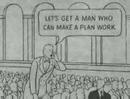
For decades I have been sitting across the table from politicians, authors, business leaders, and economists as guests on one of the radio. There have been a few that believe that the government is the solution to virtually every problem. Government needs to solve health care, housing, poverty, and more. The vast majority believe that freedom works. They will be quick to say government does too much and that its role should be strictly limited.

These conversations tend to run a similar course. They will say the "free market is so amazing and powerful, it is able to create jobs and new industries. It is terrible that government seems to do everything in its power to undermine the economy's potential." However, you dig a little deeper and then you start finding exceptions. Most of the time those exceptions are based on what they do for a living. Attorneys who represent clients who have suffered property damage will say, "they support free enterprise, except when it comes to the regulations they place on insurance companies." The farmer will tell you, "I definitely support free enterprise, except when it comes to agriculture subsidies." Scientists definitely believe the economy is best left alone "except when it comes to research grants." You get the idea.

As a result, the United States is, largely, socialistic. We can argue to what extent, but there is no doubt what our country has become. The single biggest (and fastest growing) part of our GDP is government and it has evolved over the decades to accommodate exceptions like those above. Now we have millions of Americans who support free enterprise, "except." That "except" is bankrupting us and destroying our freedoms.

One of the most inspiring things I ever witnessed was the "Damn Right" campaign for President of Pete dupont in 1988. In that year, I actually voted for the former Delaware Governor while managing a Congressional race in West Texas. I have the feeling I was the only one who casted such a vote in that town. He lost big time in the ballot box, but his message is as potent today as it was then. Pete duPont had no problem telling farmers, seniors, scientists and anyone else that they were part of the problem and that everyone would have to sacrifice in order to restore our freedoms. It was "damn right" for people to carry their own weight and not seek government as a solution.

Those who founded this Republic were aware that it was the natural tendency of government to expand over time. That is why they believed in the dispersion of power and they wanted to make changes in policy hard to achieve. The states would not ratify the Constitution with its "necessary and proper clause" that could be used for all form of abuses, without a Tenth Amendment that makes it perfectly clear that "The powers not delegated to the United States by the Constitution, nor prohibited by it to the States, are reserved to the States respectively, or to the people."

Those who created this republic saw a nation of nations, with each state offering their own unique approaches to solving problems. They believed that each of these states served as a check to the others because people could leave that state to another that provided more freedom. The decline in our liberties and the increase in socialism, are all linked to the undermining of the political institutions in government designed to protect us from an authoritarian federal government. It is also indicative of a nation that is rapidly moving from "rule by law" to 'rule by mob." The fast track to socialism the US is taking is not driven nearly as much by philosophy as it is selfish want.

If we are interested in restoring individual freedoms and making a nation into one that has prosperity as a priority, it begins by leaving our personal preferences behind. That is a necessary part of the path to freedom to get us off the road to serfdom.


Kevin Price is Host of the Price of Business, the longest running show on AM 650 (M-F at 11 am) in Houston, Texas and on AOL Radio. His articles often appear in Chicago Sun Times, Reuters, USA Today, and other national media. Steve Moore of the Wall Street Journal calls Price the “best business talk show host in the country.” Find out why and visit his blog at www.BizPlusBlog.com and his show site at www.PriceofBusiness.com. You can also find Price on Strategy Room at FoxNews.com.

Labels: , , , ,

Saturday, October 10, 2009

Are the Rich Necessary?

Hunter Lewis, author of the provocative Where Keynes Went Wrong, produced another winning book in Are the Rich Necessary?. Clearly policy makers in Washington, DC do not seem to think so and seem to have a very hostile view of the affluent. The "goose that lays the golden egg" is certainly in season. Lewis asks several tough questions that people need to ask in order to get a better understand of the economy and the world..

Lewis is a prolific writer who has written for The Atlantic, The New York Times, and the Washington Post and is the author of six books including the before mentioned Where Kenynes Went Wrong. He co-founded Cambridge Associates, a global investment firm whose clientele reads like a who's who of leading endowments and families, and includes the most prominent American universities. he has also served on boards and committees of fifteen leading nonprofits including the World Bank. He has appeared on "The Today Show," NPR, Fox and the BBC. He lives in Charlottesville, Virginia.

Lewis tackles many important questions, including:

Does Obama's objective of limiting charitable deductions for the rich make sense?

What impact is Wall Street having on politics (and vice versa)?

Is the income gap actually widening and if it is, what can be done to reverse that trend?

Has anything really been done to prevent another crash like the one in 2008?

Was the crash attributed to our profit system? Are there viable alternatives to such?

Should we tax average Americans to bailout major financial corporations?

Are the rich even compatible with a free society?

His answers are thorough, thoughtful, and even humorous. He loves to challenge conventional wisdom and does so on virtually every page of the book. The book is thorough and covers many areas of economics and could actually be an introductory text or compliment to such in an introductory economics class. Unfortunately, in our current academic culture, that is largely a dream and not likely to be found in your local college. This is all the more reason why you need to find it yourself.

The best may have been saved for last, in this important book. There, Lewis argues a new way to fill the gap between the rich and poor, of those who want free enterprise and those who want to make sure there are safety nets for the needy. His answer is to foster massive growth of nonprofits through changes in the tax structure. His ultimate goal is to raise nonprofits to the same stature as government when it comes to being a source of help in the eyes of the public.

Lewis brings to light the stark realities that mandate that we need informed voters who can help restore a healthy attitude towards the engines of prosperity that are currently an endangered species. Are the Rich Necessary? is an excellent place to begin that journey.

Kevin Price is Host of the Price of Business, the longest running show on AM 650 (M-F at 11 am) in Houston, Texas and on AOL Radio. His articles often appear in Chicago Sun Times, Reuters, USA Today, and other national media. Steve Moore of the Wall Street Journal calls Price the “best business talk show host in the country.” Find out why and visit his blog at www.BizPlusBlog.com and his show site at www.PriceofBusiness.com. You can also find Price on Strategy Room at FoxNews.com.

Labels: , , ,

Thursday, May 21, 2009

Time to get Over the "S" Word

Recently, a very good friend of mine and nationally known economist (and frequent guest on the Price of Business Show) told an interviewer on Fox News that he liked to "avoid the 'S' word." This economist is one of the most passionate and best informed advocates of freedom that I personally know. His credentials in the cause of liberty are without question. With that, I find it hard to believe that he and other free market economists have a problem with the "S" word. It is time to get over the word, and focus on its consequences.

Let's begin by demystifying the word "socialism." If you recall back in your basic economics class, we are told that socialism is "government control or ownership of the means of production." Let's break this already basic definition into even more simple terms. We largely know that the phrases "Government control" and "ownership" are self explanatory. It doesn't have to be both, simply one or the other. The other part is the "means of production." This can simply mean people, businesses, machines and any thing else that adds to the economy.

So is the United States becoming a socialist country or is it already there? Who would believe we would have the President of the United States firing the CEO of an American automobile company? Who would imagine the United States government becoming the major stock holder of untold numbers of American companies? Who would think that the United States would arbitrarily and retroactively break contract law with companies (e.g., the government's taking of bonuses of AIG executives, when they clearly originally agreed to such).

The US didn't have an election in November and then wake up to a socialist regime in January. As Fredrich Hayek pointed out in his The Road to Serfdom, these processes do not have to happen over night. Our road has been, arguably one that has taken over a century (maybe longer), but we are reaching that point where socialism will soon be the commonly accepted worldview. A few years ago politicians shunned in fear the "liberal label," now politicians coolly dismiss comparisons of our countries with European socialism. In fact, they almost appear to be saying, "That is a problem?"

This "road to serfdom" for our country could be a rather lengthy book, but I'm going to only give a few examples:

  • Our Founding Fathers originally prohibited income tax because they believed that the federal government had no business knowing how much people made or even how they made it. Furthermore, income taxes are a tax on wealth creation, which is the type of tax that makes economies weaker. Why would any government want to do that?
  • The Constitutional Convention was made up of representatives of the thirteen states. Their over riding objective was to protect those states from a federal government that could grow out of control. Most Americans don't even realize that the US Senate was comprised of individuals chosen by the state governments to represent their interests. This was the practice until the 20th century. Furthermore, our US Constitution could not get ratified by the states without the first ten amendments. These Bill of Rights that are now claimed by the federal government as a tool for its protection, were designed to protect the states and the American people.
  • In the 1930s there was a complete perversion of the role of government from one of an umpire (making sure that everyone was judged by the same rules) to a parent (attempting to "create" equality in results), which is a contrary to both the letter and spirit of the Constitution.

The very first step in dealing with any addiction or disease is to own it, so you can battle it. The first step on the road to get the US back where it belongs is to recognize the "socialist" label so we can find a path to liberty.

Kevin Price is Host of the Price of Business, the longest running show on AM 650 (M-F at 11 am) in Houston, Texas and on AOL Radio. Eric Bolling of Fox News and Fox Business says that Price’s Blog “is very influential and moves the blogosphere.” Steve Moore of the Wall Street Journal calls Price the “best business talk show host in the country.” Find out why and visit his blog at www.BizPlusBlog.com and his show site at www.PriceofBusiness.com. You can also find Price on Strategy Room at FoxNews.com.

Labels: , , , , , , ,

Monday, May 11, 2009

So What Could we Lose in Health Care Savings?

The Los Angeles Times reported today that "President Obama, joined by an array of groups pledging to cut the cost of health care, said today the commitment that insurers, hospitals, doctors and others have made to saving money will help him achieve the health care reform he is pursuing on Capitol Hill."

The Washington Times has taken a rather dismissive tone to the actions, stating "The pledge provided few specifics on how the costs savings would be achieved or monitored. And many industry groups remain fiercely opposed to a central plank of the Obama health reform plan — the creation of a publicly funded health insurance plan to compete with private insurers and ensure universal health coverage."

Many will argue, including this writer, that any such pledges by the health care industry will likely be more verbal than monetary. This is all the more the case when you factor in the huge amounts of money the industry will have to spend to fight the Administration's socialized medicine program.


This government-private "collaboration" has problems on several levels:

  • Where does an administration that has spent more in 100 days than any Administration up to Ronald Reagan spent in their entire terms, have the right to lecture anyone on fiscal responsibility?

  • These dollars are being spent on something and there are always trade offs. Will the proposed $2 trillion come from cutting waste and bureaucracy? Or will it come from innovation, salaries, patient care, and other legitimate functions of health care.

  • The fundamental question of the "role of government" is again, completely ignored in this "agreement."

Right now this agreement is little more than another example of Obama attempting to do "something," even if it results in little or nothing. It is an example of rhetoric without substance. The solution to America's health care problems will be found in the market place. At some point, that is where Obama needs to seriously search. What works in our economy are things like competition, reasonable risk, innovation, and economies of scale. These are found in the market, not in the government.

Kevin Price is Host of the Price of Business, the longest running show on AM 650 (M-F at 11 am) in Houston, Texas and on AOL Radio. Eric Bolling of Fox News and Fox Business says that Price’s Blog “is very influential and moves the blogosphere.” Steve Moore of the Wall Street Journal calls Price the “best business talk show host in the country.” Find out why and visit his blog at www.BizPlusBlog.com and his show site at www.PriceofBusiness.com. You can also find Price on Strategy Room at FoxNews.com.

Labels: , , , , , , ,

Saturday, April 25, 2009

Socialized Medicine on Strategy Room

My second appearance on Strategy Room (FoxNews.com) this past week moved to a topic that hits close to home to me -- socialized medicine. Eric Bolling had already navigated the panel through his 3 PM hour through a plethora of topics and they were primed by the time I got on the show.

My mother came right off the boat from England. She was a war bride who left her family to join her spouse in the United States. She was young when she did this, a mere 18 years old. Maybe, as a result, she was one of the biggest fan of England you would ever find. She would go on and on about the "virtues" of British socialism and how "terrible" it was that people in this country were responsible for their own health insurance. Having had visited with members of my family in "the old country" many times over the years, my instincts tell me that my mother would have likely had a very different view of British socialism if she lived under it.

My aunt (her sister) use to tell me how such a huge portion of every paycheck was devoured by the socialized health care system, she was amazed by the large number of people who were subsidized to not work, and was disgusted by how it became almost impossible for the average Brit to buy their own home. Regarding health insurance, she said national health care is "great until you need it." It provides "enormous peace of mind" until you actually get sick. Ironically, this aunt eventually died in the British health care system. She was diagnosed with cancer and could not believe how slowly the government dragged its feet in her treatment. Things were even worse when it came to my grandfather when he became ill. Doctors informed my family that treatment options were "limited" because he no longer paid taxes. My aunt was convinced my grandfather died because of the rationing of health care (a common problem when the government controls or owns anything).

This anecdote hits close to home, but the facts support her argument that socialized medicine does not work:
  • According to England's own National Institute of Health, eleven percent of the population of England has very expensive private health insurance. This allows them to get treated as a person, rather than a crowd, and to be able to hold their doctor accountable in a way you can't have when the government is your vendor.

  • In countries such as Canada it is common for people to head to the US for much of their health care (particularly urgent). Many individuals will go to a veterinarian to get tests, like MRIs, because the waiting lists are too long with government doctors.

  • In Australia's socialized health care state, more than half of the population has private insurance.

  • More than 60 percent of innovations in health care are from the United States with a much smaller part being carried by the rest of the world. If the US chooses a socialized system, innovation will be severely damaged because it is the incentives in our system that promotes changes and improvements.

One of the best discussions I have had on the subject was with David Asman of Fox Business when he was a guest on my show (then called the Houston Business Show). While visiting in England his wife had a stroke and barely survived. Because of his resources he was able to get her the best care possible in that country, but concluded that an indigent person in the United States has a better opportunity for recovery than the best insured in England. The harsh reality is very simple, why would we believe that a government that can do so few things effectively, could handle the huge task of providing for all our health care needs?


Kevin Price is Host of the Price of Business, the longest running show on CNN 650 (M-F at 11 am), AOL Radio, and CBS Radio. Eric Bolling of Fox News and Fox Business says that Price’s Blog “is very influential and moves the blogosphere.” Steve Moore of the Wall Street Journal calls Price the “best business talk show host in the country.” Find out why and visit his blog at www.BizPlusBlog.com and his show site at www.PriceofBusiness.com. You can also find Price on Strategy Room at FoxNews.com.

Labels: , , , , , , , , , ,

Wednesday, April 01, 2009

"I Believe in Free Enterprise, Except..."

For almost two decades I have been sitting across the table from politicians, authors, business leaders, and economists as guests on one of my radio programs. There have been the occasional crazies who want to socialize everything, but the vast majority of them -- like the majority of your neighbors and co-workers -- claim to support free enterprise.

These conversations about the virtues of the market go the same way. "The free market is so amazing and powerful, it is able to create jobs and new industries. It is terrible that government seems to do everything in its power to undermine the economy's potential." However, you dig a little deeper and then you start finding exceptions. Most of the time those exceptions are based on what they do for a living. Attorneys who represent clients who have suffered property damage will say, "they support free enterprise, except when it comes to the regulations they place on insurance companies." The farmer will tell you, "I definitely support free enterprise, except when it comes to agriculture subsidies." Scientists definitely believe the economy is best left alone "except when it comes to research grants." You get the idea.

Our entire socialistic system has evolved over the decades to accommodate exceptions like these above. Now we have millions of Americans who support free enterprise, "except." That "except" is bankrupting us and destroying our freedoms.

One of the most inspiring things I ever witnessed was the "Damn Right" campaign for President of Pete dupont in 1988. In that year, I actually voted for the former Delaware Governor while managing a Congressional race in West Texas. I have the feeling I was the only one who casted that vote in that town. He lost big time in the ballot box, but his message is as potent today as it was then. Pete duPont had no problem telling farmers, seniors, scientists and anyone else that they were part of the problem and that everyone would have to sacrifice in order to restore our freedoms. It was "damn right" for people to carry their own weight and not seek government as a solution.

Those who founded this Republic were aware that it was the tendency of government to expand over time. That is why they believed in the dispersion of power and they wanted to make changes in policy hard to achieve. The states would not ratify the Constitution with its "necessary and proper clause" that could be used for all form of abuses, without a Tenth Amendment that makes it perfectly clear that "The powers not delegated to the United States by the Constitution, nor prohibited by it to the States, are reserved to the States respectively, or to the people." They envisioned a nation of nations, with each state offering their own unique approaches to solving problems, all of them checked in their excesses because people could leave that state to another that provided more freedom. The decline in our liberties and the increase in socialism, are all linked to the undermining of the political institutions in government designed to protect us from an authoritarian federal government.

So, where does the long path towards the restoration of freedom begin? John F. Kennedy is famous for saying "Ask not what your country can do for you - ask what you can do for your country." We need to ask ourselves, what "exception to freedom can I give up for my country?"

Kevin Price is Host of the Price of Business, the longest running show on CNN 650 (M-F at 11 am), AOL Radio, and CBS Radio. Eric Bolling of Fox News and Fox Business says that Price’s Blog “is very influential and moves the blogosphere.” Steve Moore of the Wall Street Journal calls Price the “best business talk show host in the country.” Find out why and visit his blog at www.BizPlusBlog.com and his show site at www.PriceofBusiness.com.

Labels: , , , , , , ,

Tuesday, March 24, 2009

Sweden, US, and Answering the Socialism Question

The economic lessons the vast majority of us received in high school and college is grossly inadequate. Most people can't answer the simple question as to whether the US is making a dramatic move towards socialism. In fact, most can't even explain what socialism is. Socialism is simply defined as "government control or ownership of the means of production." What are the means of production? You and I are, of course, as are the businesses we own and work for.

Recently and with questionable Constitutional authority, the Congress has financed (largely through fiat money) the massive taking over of numerous financial institutions. So ambitious is the government's reach, Congressional leaders are "naming names" of individuals who received bonuses from companies that garnered a bailout to an angry mob and retroactively taxing these executives in an effort to punish the businesses they claimed a commitment to protect.


Secretary of Treasury Timothy Geithner and company are not finished yet. The Associated Press are reporting that he and Federal Reserve Chairman Bernanke "sought broad new powers Tuesday to regulate tottering nonbank financial companies like insurance giant AIG, and President Barack Obama said he hopes 'it doesn't take too long to convince Congress' to grant them.'" These powers don't merely transfer to the Fed and to Treasury, but to the President himself. Furthermore "Along with the new authority to regulate and, if necessary, take over giant financial companies whose collapse might endanger the broader economy, the administration wants increased oversight and controls of previously unregulated markets such as hedge and private equity funds." The government's reach will even go into financial institutions that didn't participate in the bailout programs.


I remember when Americans were shocked back in 1979 when Chrysler successfully negotiated a bailout from the federal government that was a fraction of what GM received in January, which was a very small fraction of what the government gave in bailouts in general.


Historically, when we typically think of socialism, we think of Europe. Furthermore, the most socialistic of all the European governments is arguably Sweden, which is famous for its "cradle to grave" government programs. But recently George Bush, without Congressional approval, gave $15 billion to help bailout the Automobile industry. Sweden's government had a very different message to its struggling and iconic Saab motor company. The New York Times reported that the "enterprise minister, Maud Olofsson, put it recently, 'The Swedish state is not prepared to own car factories.'" Saab lost over $340 million last year and has begun the process of "reorganization," which is one step short of bankruptcy.


Ironically, the Washington Times has noted that "Treasury Secretary Timothy Geithner said Monday that the administration decided on its public-private plan to rescue the U.S. financial system because "we are not Sweden," the country known for nationalizing troubled banks and other sectors of its economy. We are the United States of America, we are not Sweden," Mr. Geithner said.


Geithner is right, Sweden had enough sense and, maybe a commitment to free market principles, to avoid socializing the automobile industry. One thing we know for sure is that there is no question the US is making a dramatic move towards becoming socialistic and seems to be trying to surpass, rather than merely catch up, with Europe's poster child of socialism.


Kevin Price is Host of the Price of Business, the longest running show on CNN 650 (M-F at 11 am). Eric Bolling of Fox News and Fox Business says that Price’s Blog “is very influential and moves the blogosphere.” Steve Moore of the Wall Street Journal calls Price the “best business talk show host in the country.” Find out why and visit his blog at www.BizPlusBlog.com and his show site at www.PriceofBusiness.com.

Labels: , , , , , , ,

Friday, March 06, 2009

Ten Pillars of Economic Wisdom: Now More than Ever

During the Great Depression the size of government grew exponentially and many believed that the United States had lost those essential principles that made this country the most prosperous on the face of the earth. It was during this time that an organization was formed, called the American Economic Foundation (AEF), and they put together the following “Ten Pillars”* to remind Americans what works in an economy. If people wondered if a policy was good and beneficial to everyone concerned, than it would stand the test of these Pillars.

In the 1990s, I was a Senior Fellow at AEF and I conducted seminars in the former Soviet Union about these principles and how they could be a guiding light to that region that suffered from decades of Communist totalitarianism. Today, we are about to slip into a command economy of our own where the government will seek to be in charge of all things. Today, with the Obama Administration, this country needs to be reminded of these principles now more than ever. You are going to see these principles frequently in my blog, in the Price of Business pages, and on the radio. These principles are a guiding light towards a free economy.

1. Nothing in our material world can come from nowhere or go nowhere, nor can it be free: everything in our economic life has a source, a destination, and a cost that must be paid.

Simply put, there is no such thing as a free lunch. Everything has a cost regardless of promises from politicians.


2. Government is never a source of goods. Everything produced is produced by the people, and everything that government gives to the people, it must first take from the people.

Recently, 25 percent of Americans who were asked in a survey how the government pays for its programs said it was because the US "has its own money." Those people need to be familiar with this Pillar. The bailouts we have seen cost plenty and will have a profound impact on our economy.


3. The only valuable money that government has to spend is that money taxed or borrowed out of the people’s earnings. When government decides to spend more than it has thus received, that extra unearned money is created out of thin air, through the banks, and, when spent, takes on value only by reducing the value of all money, savings, and insurance.

Much of the new spending we have seen by Obama (and Bush) is being financed by fiat money (essentially counterfeit) and will result in rampant inflation. Other parts of the spending will be paid for by future generations. Finally, some will be paid by foreign governments who invest in such debt (making us dependent on regimes, like China).

4. In our modern exchange economy, all payroll and employment come from customers, and the only worthwhile job security is customer security; if there are no customers, there can be no payroll and no jobs.
Labor unions have long tried to create an economic world that is detached from reality. If labor wants job security, they must accommodate customers. There is no other way to assure long term job stability.


5. Customer security can be achieved by the worker only when he cooperates with management in doing the things that win and hold customers. Job security, therefore, is a partnership problem that can be solved only in a spirit of understanding and cooperation.
Unions often want an adversarial relationship with business, but job security can only come if the two are partners pursuing customers together.


6. Because wages are the principal cost of everything, widespread wage increases, without corresponding increase in production, simply increase the cost of everybody’s living.

An example of this is minimum wage. When it goes up, so do prices, and if the job isn't worth the wage, it will be lost. This solves the mystery as to why minimum wage increases are both rare and devastating.


7. The greatest good for the greatest number means, in its material sense, the greatest goods for the greatest number which, in turn, means the greatest productivity per worker.
Production is the best way to keep an economy strong, and those who participate in it growing financially. The best way to encourage productivity is for a government to keep the costs of production as low as possible. This is done through a stable money supply, low taxes, and few regulations.


8. All productivity is based on three factors: 1) natural resources (NR), whose form, place and condition are changed by the expenditure of 2) human energy (HE) (both muscular and mental), with the aid of 3) tools (T).

This is straight forward enough. These three factors make up the totality of the economy. As a formula, this is seen at NR + HE x T = Man's Material Welfare.


9. Tools are the only one of these three factors that man can increase without limit, and tools come into being in a free society only when there is a reward for the temporary self-denial that people must practice in order to channel part of their earnings away from purchases that produce immediate comfort and pleasure, and into new tools of production. Proper payment for the use of tools is essential to their creation.

Tools are the only one of these that can increase without limit. An example of this is agriculture, which was the dominant industry in the late 1700s and early 1800s, with the majority of our population working in that area. Today, the number who work in it are in the single digits and the abundance of food could not be greater. Tools are what have changed everything.


10. The productivity of the tools--that is, the efficiency of the human energy applied in connection with their use--has always been highest in a competitive society in which the economic decisions are made by millions of progress-seeking individuals, rather than in a state-planned society in which those decisions are made by a handful of all-powerful people, regardless of how well-meaning, unselfish, sincere and intelligent those people may be.

The genius of the many individuals when it comes to economic prosperity is always greater than the few or even the majority that would impose its view of "fairness" on the economy. This is the "invisible hand" that Adam Smith spoke of so eloquently in his The Wealth of Nations.

These Pillars are factual, logical, and without a political agenda. They provide excellent benchmarks on what works in the economic system. Pass this tool on to others who are trying to figure out the headlines and let freedom ring!


Kevin Price is a syndicated columnist whose articles frequently appear at ChicagoSunTimes.com, Reuters.com, USAToday.com, and other national media. Kevin Price is Host of the Price of Business (M-F at 11 AM on CNN 650) and Publisher of the Houston Business Review. Hear the show live and online at PriceofBusiness.com. Visit the archive of past shows here.


*An internationally accepted working paper developed by The American Economic Foundation

Labels: , , , , , , , ,

Tuesday, February 24, 2009

Barack Obama: More Pork than Promise

Recently, AOL did a survey of the 10 people that are admired most. The list wasn't limited to modern times or the United States. In fact, Jesus Christ himself made the list and he was second only to Barack Obama. With those kind of ratings, expectations are very high.

So, tonight, when "the Messiah" entered the Halls of Congress, the American people were expected to get "wowed!" What that got was a lengthy list of promises that stand contrary to his commitment to cut the deficit in half in four years (one of his more recent commitments). The following are some "highlights" of what the President intends to do in order to not only "improve the economy," but to also fundamentally change the way we are governed.


The following are two examples in the Obama agenda of why only 13 cents of every dollar actually goes to job creation and raises concerns that the American people have bought into a questionable bill of goods.


Education


"Because of this (recovery) plan, families who are struggling to pay tuition costs will receive a $2,500 tax credit for all four years of college. And Americans who have lost their jobs in this recession will be able to receive extended unemployment benefits and continued health care coverage to help them weather this storm. "


This is the kind of aggressive spending program that will do little to add to jobs, but will do a great deal to add to the deficit. Getting a college education in this country is already more achievable than many other parts of the world, which is why we have so many people from around this planet in our universities. Some financial burden in pursuing a degree will heighten the "ownership" attitude of those who are pursuing it. Don't get me wrong, I can tell one first hand that this has been a challenge for my family (my wife and I have eight children). Some times they start at community college, they have to take a little longer to finish, but all of these things lead to better students and, I believe, a better education system. Besides being costly, adding tax credits like this will also cheapen the educational system.


Health Care


"This budget builds on these reforms. It includes an historic commitment to comprehensive health care reform - a down-payment on the principle that we must have quality, affordable health care for every American. It’s a commitment that’s paid for in part by efficiencies in our system that are long overdue. And it’s a step we must take if we hope to bring down our deficit in the years to come... I suffer no illusions that this will be an easy process. It will be hard. But I also know that nearly a century after Teddy Roosevelt first called for reform, the cost of our health care has weighed down our economy and the conscience of our nation long enough. So let there be no doubt: health care reform cannot wait, it must not wait, and it will not wait another year."


His vision of Health Care Reform is socialized medicine. Besides being terribly inefficient (I have an aunt and grandfather who died as a direct result of the British health care system, these programs are expensive. The Health Systems Innovations Network (HSI) "estimates the Obama plan would cost $452 billion per year, or more than $6 trillion over a 10-year period. The dramatic difference between this estimate and others is largely a result of HSI's assumption that under Obama's mandate to cover children, the federal government would subsidize virtually the full cost of coverage. Also, HSI finds that the employer mandate would add sizable costs to the federal government."


Obama has been saying that we have reached "the beginning of the end" of government as we knew it and he is right. Instead of a country that gave some regard to economic freedom and individual responsibility, we are becoming wards of a nanny state that plans on taking care of us through systems that are too costly, inefficient, and fundamentally opposed to the values that made us great.


Kevin Price is a syndicated columnist whose articles frequently appear at ChicagoSunTimes.com, Reuters.com, USAToday.com, and other national media. Kevin Price is Host of the Price of Business (M-F at 11 AM on CNN 650) and Publisher of the Houston Business Review. Hear the show live and online at PriceofBusiness.com. Visit the archive of past shows here.

Labels: , , , , , , ,

Monday, February 23, 2009

The Bad Ride in the Markets and Main Street

Since September the federal government has been busy. Very busy. But it has very little to show for all its efforts when it comes to Wall Street's and Main Street's reaction. Back in September, when Congress got together to roll up its sleeves and to heal the economy's woes, Wall Street was worried by the volatility of the market. Back then, the market strongly worried investors as it stood at the brink of going below 10,ooo points. Slightly 4 months later and we are threatened by a market that could (and likely, should) go below 7,000 points. The irony is that the plummeting market was a direct response to the government's "best efforts" to placate Wall Street's concerns. Instead of getting better, it has gotten markedly worse and has now reached 11 year lows.

Main Street has responded in a similar fashion. 2008 began with unemployment at a remarkably low 4.9 percent, which many economists describe as "full employment," when you consider seasonal and other factors that make "zero unemployment" an impossibility. Unemployment hovered around 5 percent through much of the year until about a month before the huge minimum wage increase (yes, there is a connection), in which it solidly went into the 5 to 6 percent area around that time. By September it had broken 6 percent and showed no interest in going back. This rise in unemployment joined the drop in the Market in leading to Washington coming "to the rescue." Main Street has responded to the massive bailouts of September and the "stimulus" of January by laying off even more people -- over 500,000 in the last couple of months alone. Main Street has responded to the Obama agenda by casting a new ballot -- pink slips -- and now unemployment is squarely in the 7 percent area and is moving its way towards double digits.


So why have both Main Street and Wall Street reacted so negatively? It is because both of these sectors are in the arena of enterprise. They fundamentally know that the more government controls things, the less efficient and productive those things become. The Bank of America is now on the brink of having 40 percent of its ownership be in the hands of government. Banks running like typically inefficient government institutions have done little or nothing to bolster consumer, financial, or business confidence. Fundamentally, I believe that at some level Americans know better. Free enterprise, limited government, and private property -- the founding principles of this Republic -- are better values than government control and ownership. There is a very good possibility that the businesses today are suffering from rather serious buyers remorse. I hope the government gets that message.


Kevin Price is a syndicated columnist whose articles frequently appear at ChicagoSunTimes.com, Reuters.com, USAToday.com, and other national media. Kevin Price is Host of the Price of Business (M-F at 11 AM on CNN 650) and Publisher of the Houston Business Review. Hear the show live and online at PriceofBusiness.com. Visit the archive of past shows here.

Labels: , , , , , , , , , ,

Sunday, February 15, 2009

It is not About Doing Something, but the Right Thing

The majority I speak to are excited about Barack Obama and his sweeping legislation that is going to possibly change this economy for decades to come. They are excited because they argue that something -- anything -- needed to be done. This type of logic does not serve well in any other aspect of our lives. For example, we don't praise the heroic efforts of the person who poured gasoline on a burning building, or the person who avoided rush hour traffic by driving on a shoulder, or the person who attempts to forget about his problems through alcohol. In the real world, we know there are rules to almost everything. There are also rules to the economy: some things work, other things do not work.

There are two basic views of government. One sees the best government doing as little as possible and being focused on protecting individuals from other individuals and our country from foreign adversaries. The opposite extreme is that government should play a pervasive role in every aspect of our lives and that it should be the primary driver of our economy and society. The vast majority who have an opinion fall some where in between. Far more than those with an actual opinion have no real view at all. Those people are my concern here.


This uniformed majority are the same people who are driving Barack Obama's extremely high approval ratings. They don't really know what they are doing, or what they believe, they are merely very sincere. They think some action is, at least, action. But the actions of this administration will take generations to pay off and they promise to make things far worse than better.


The majority of countries around the world are moving away from more government as an answer to economic problems. Although still Communist, China's economic success has been due to areas of decentralization. This is true, also, for India's famous bureaucratic country. Maybe the best example to the United States is Ireland.


For decades, Ireland was little more than a Third World country. It was uncommon for Europeans to face starvation in the 19th century, but it was a major problem on the Emerald Island. On the economic front, Ireland had the highest tax rates among industrialized nations. This is not the case any more. Ireland dramatically lowered its highest tax rates to around 10 percent and for over a decade it has had one of the fastest growing economies in the world. Countries that have moved towards government solutions and high taxation are only seeing more economic problems. Japan has had chronic economic problems for over two decades (and the highest corporate tax rates in the world). The US now has the second highest and we are quickly catching up in terms of economic woes.


We all know that businesses have to work hard to attract customers, and states have to work hard to attract businesses, but don't countries have the same responsibility as well? Ireland seems to understand that and, in light of the "something" our government did this past week, it is clear the US does not.
Kevin Price is a syndicated columnist whose articles frequently appear at ChicagoSunTimes.com, Reuters.com, USAToday.com, and other national media. Kevin Price is Host of the Price of Business (M-F at 11 AM on CNN 650) and Publisher of the Houston Business Review. Hear the show live and online at PriceofBusiness.com. Visit the archive of past shows here.

Labels: , , , , , , , ,

Wednesday, January 07, 2009

Government Needs a Primer on Money

When you ask the average person what inflation is, they will tell you "high prices." This is like saying that a person with pneumonia merely has a fever. Both are partial descriptions, but very incomplete.


Inflation is more accurately described as "too much money chasing too few goods." Simply put, as we increase the supply of money but not the productivity you have higher prices and so much more. The hundreds of billions (and now trillion plus) that is being spent by the government for bailouts will come from printing money, as well as other sources. Currently, twenty percent of every tax dollar goes to paying the interest on the debt. That makes printing money more attractive, in spite of the potentially negative consequence, and those consequences are significant.


  • Such pumping of money into the economy will lead to a massive devaluation of the currency over time and a significant increase in prices.


  • Wages will grow artificially high, which will lead to many moving into higher tax brackets even as the value of their income declines.


  • There will be an obvious need to increase interest rates, regardless of where the government sets them, because businesses have to make sure that what they receive back is more than what they loaned or provided in credit. This is one of the reasons why interest rates have not gone down for consumers and others, although they have gone down for lenders. It is not mere selfish greed, but self interest in protecting their share holders.


  • New businesses will find it more difficult to start up because of the perceived decrease in its future value, because of the instability of the money supply. These business will find it difficult to find investors, markets, or any future at all.

The bottom line is that calling inflation "high prices" simply does not give this major problem justice. Unfortunately, I am fairly confident that many, if not most Americans are unaware of how far reaching inflation can be. I have heard people say, "why doesn't government just print money to solve deficit and other problems?" If a large quantity of money made people rich, Zimbabwe, Guinea, and Yemen should be among the richest countries in the world. They are not, in fact they are among the weakest, and they also have the highest inflation.


Pouring more money on this economy is the equivalent of pouring gasoline on a fire. The projected long term consequences could be devastating.


Kevin Price is a syndicated columnist whose articles frequently appear at ChicagoSunTimes.com, Reuters.com, USAToday.com, and other national media. Kevin Price is Host of the Price of Business (M-F at 11 AM on CNN 650) and Publisher of the Houston Business Review. Hear the show live and online at PriceofBusiness.com. Visit the archive of past shows here.

Labels: , , , ,

Friday, January 02, 2009

The Gift of Ronald Reagan for Christmas

As a parent I love to watch my children enjoy the presents they receive. When you have as many kids as my wife and I, gifts to one another are simply not a priority. The most memorable gift I may have received was from a couple we know (Archie and Robin Arredondo). There is a huge group of friends that participates as "secret Santas" made up of a families we know. Archie was my secret Santa. We know around Thanksgiving who has who. A few weeks ago, Archie and Robin asked my wife what I like. Wisely, she said "anything with Ronald Reagan." She naturally thought -- as would I -- that I might get a great tribute book (like my daughter gave me a couple of years ago) or a T-Shirt (like my sons gave me on a Father's Day). Archie would have none of it, he went on a quest at eBay.

What I received was a Ronald Reagan action figure. Move over GI Joe, here comes the Gipper. Okay, it was more like a talking doll with a push button instead of a string, but it was one of the most thoughtful gifts I have ever received and it is the type of gift that keeps on giving. Americans, everywhere, should be familiar with the quotes of Reagan and this gift was full of them. The following are a few examples from the "Great Communicator."


* "Above all, we must realize that no arsenal, or no weapon in the arsenals of the world, is so formidable as the will and moral courage of free men and women. It is a weapon our adversaries in today's world do not have."


The statement was even more powerful when delivered two decades ago when our primary enemy -- the Soviet Union -- had become weakened after decades of brainwashing and lies from its bloodthirsty regime.


* "Entrepreneurs and their small enterprises are responsible for almost all the economic growth in the United States."


Where was wisdom such as this when the federal government decided to bailout Wall Street, while taxing the backs of Main Street?


* "Freedom is never more than one generation away from extinction. We didn't pass it to our children in the bloodstream. It must be fought for, protected, and handed on for them to do the same, or one day we will spend our sunset years telling our children and our children's children what it was once like in the United States where men were free."


Bravo! Most parents enjoy giving their children the fruits of our freedom, but are not doing enough to pass it on to the next generation. This is a message that must be conveyed.


* "The government's view of the economy could be summed up in a few short phrases: If it moves, tax it. If it keeps moving, regulate it. And if it stops moving, subsidize it."


One of my favorite Reagan quotes.


When I was a kid the "in thing" was a GI Joe action figure. I think every child should be given a Reagan action figure so we can raise another generation of adults who enjoy freedom. A Reagan action figure is the gift that keeps on giving.

Kevin Price is a syndicated columnist whose articles frequently appear at ChicagoSunTimes.com, Reuters.com, USAToday.com, and other national media. Kevin Price is Host of the Price of Business (M-F at 11 AM on CNN 650) and Publisher of the Houston Business Review. Hear the show live and online at PriceofBusiness.com. Visit the archive of past shows here.

Labels: , , , , , , , , , ,

Tuesday, December 30, 2008

The Year of the Bailout

I consider myself the perennial optimist. I always try to view things from a "half full" versus "half empty" perspective. But 2008 was a challenging year. It is a year where it appears that we made a paradigm shift when it comes to the role of government in the economy.

I believe that future history books will call 2009 the year the United States became the "bailout nation." We saw more of such today with GMAC Finance receiving $6 billion from the federal government. Democrats defied the image of being for "the little guy" that they worked so hard to maintain by leading the effort for bailout for major banks and corporations. There was far more reluctance by Republicans to bailout these fat cats, but in the end, I am sure the media will find these bailouts the complete fault of the GOP if they fail and will be seen as an act of courage by Democrats if they are interpreted as successful. The reality is, we already know they have "failed" because we had to abandon the ideas of limited Constitutional government to make them happen and the hangover effect of them may not be felt for years.


What is almost as negative as the Constitutional and policy implications of these bailouts is the view they project of what is important to us a country. In the United States we have a safety net for the poor, we bailout the super rich, and we obliterate the engine that creates more than 80 percent of the jobs in the country through excessive taxation, regulation, and licensure law. The highest income groups are not nearly as influential as those rising up the economic ladder in creating jobs, yet we sacrifice the entrepreneur at the altar of the mega corporation.


Those who have eaten at the trough of bailout are extremely vulnerable in the future. The government never "gives" without demanding more. Many of the task masters in government that have fed these companies, have advocated the nationalizations of industries. The hubris to think they will not be vulnerable is unbelievable.


The United States has been successful because of its long term commitment to economic freedom. This freedom includes the right to succeed and fail. Moral hazard is an important element in economic freedom. There has to be consequences to failure in order to avoid those mistakes in the future. The government is replacing this system with one that will eventually force the failure of many entrepreneurs and create a new welfare class of the mega wealthy. Let's hope 2009 sees a reversal of such a trend.


Kevin Price is a syndicated columnist whose articles frequently appear at ChicagoSunTimes.com, Reuters.com, USAToday.com, and other national media. Kevin Price is Host of the Price of Business (M-F at 11 AM on CNN 650) and Publisher of the Houston Business Review. Hear the show live and online at PriceofBusiness.com. Visit the archive of past shows here.

Labels: , , , , , , ,

Tuesday, December 23, 2008

Lessons About Taxation Remains the Same

Recently someone sent me a copy of a speech I gave around fifteen years ago in Warsaw, Poland. It appeared in Vital Speeches of the Day. It was funny, "Kevin, did you see this?" Yes, I'm familiar with it, after all I wrote it. His enthusiasm compelled me to sit down and to review to see if there were any lessons garnered then that would be useful now.


The basic thesis of the speech was that freedom works and I pulled many examples from both history and current circumstances (at the time). One lesson that stood out in particular was the miracle story of Japan. At the time I gave that speech in the early 1990s, Japan was the poster child of economic freedom and had one of the fastest growing economies in the world following infrastructural and economic disaster after World War II. The reason for that phenomenon, at the time I gave that speech could be summed up in three things about Japan:
  • Japanese management and workers cooperate as a team to succeed in the market place, rather than oppose one another as in the case of labor unions. This is reflected in the fact that the Japanese have company unions rather than labor unions. Company unions are inclusive, when they say "us against them" they mean competitors. When labor unions say "us against them" they mean management. These subtle differences are crucial in the success of Japanese corporations.

  • There is great emphasis on savings and investment. The typical Japanese laborer in urban areas saves approximately 20 percent of his income.

  • Finally, the tax system encourages economic growth by staying very low. In fact, their taxes are the lowest of any industrialized country in the world.

Those who monitor current affairs know that Japan is now known for its economic stagnation and has suffered such for over a decade. Why the change in fortune? One does not need to look any further than point number three. Today, Japan has the highest tax rates of any modern economy. Meanwhile a European economy known for perennial economic weakness -- Ireland -- is one of the fastest growing economies in the world. The reason for its success is due to Ireland reducing its tax rates to among the lowest in the world.

Nothing is more effective in attracting capital and stimulating economic growth than lower tax rates. If the United States is serious about fostering economic growth and prosperity, it will demonstrate such by competing with other countries for businesses and jobs through lower tax rates.


Kevin Price is a syndicated columnist whose articles frequently appear at ChicagoSunTimes.com, Reuters.com, USAToday.com, and other national media. Kevin Price is Host of the Price of Business (M-F at 11 AM on CNN 650) and Publisher of the Houston Business Review. Hear the show live and online at PriceofBusiness.com. Visit the archive of past shows here.


Labels: , , , , ,

Monday, December 01, 2008

The Squeeze on Entrepreneurs

Over 80 percent of all businesses in this country are created by small business and over 90 percent of all jobs are created by such entrepreneurs, according to the Small Business Administration. It seems that this important engine of economic growth is under a constant state of siege by the government that continually taxes these companies without limits in order to subsidize those in poverty on the one end extreme and to bailout some of America's wealthiest businesses on the other. I cannot recall a time in this nation's recent history where small businesses have been under such pressure and yet have also been more important to the economy's future.

How important are small businesses? According to the SBA, entrepreneurs:
  • Represent 99.7 percent of all employer firms.

  • Employ about half of all private sector employees.
  • Pay nearly 45 percent of total U.S. private payroll.
  • Have generated 60 to 80 percent of net new jobs annually
    over the last decade.

  • Create more than half of non farm private gross domestic
    product (GDP).

  • Hire 40 percent of high tech workers (such as scientists,
    engineers, and computer workers).

  • Are 52 percent home-based and 2 percent franchises.

  • Made up 97.3 percent of all identified exporters and produced 28.9 percent of the known export value in FY 2006.

  • Produce 13 times more patents per employee than large
    patenting firms; these patents are twice as likely as large
    firm patents to be among the one percent most cited.

The logic behind bailing out failed auto companies and financial institutions is because these type of companies individually employ large numbers of people. If a Ford or a GM go under, tens of thousands (or even hundreds of thousands) will be instantly unemployed and the ripple effect will be more like a tidal wave. However, if the local movie rental place, the convenience store, and sandwich restaurant go under, that only translates into a dozen or so positions. However, thousands of these small businesses going down, on the other hand, paints a much different picture.

The lessons we are learning from government is that obsolescence and a lack of competitiveness are only a problem if your business is small. The larger a company is, the more resistant it can afford to be to necessary change, the less important it is too make tough decisions, and the more likely that company will receive a free pass for poor performance. What type of companies are we going to have if they are not allowed to fail? Companies that are destined to fail at a huge cost to taxpayers who keep them up for years. The biggest victims will be the huge entrepreneurial class who more than carries its own in job creation, but also has among the biggest tax burden.

The government control, subsidy, and even ownership of large businesses has historically been known as fascism. We don't like the term because we think of our enemies during World War II. Unfortunately, if the shoe fits, we are destined to wear it. What is most striking is that this desire to accommodate the most massive of businesses at the expense of small ones seems to transcends party lines. Both McCain and Obama joined George Bush in propping up many big businesses begging to fail. I wonder, at what point, will these small businesses that have a big impact will simply declare "enough!"

Kevin Price is a syndicated columnist whose articles frequently appear at ChicagoSunTimes.com, Reuters.com, USAToday.com, and other national media. Kevin Price is Host of the Price of Business (M-F at 11 AM on CNN 650) and Publisher of the Houston Business Review. Hear the show live and online at PriceofBusiness.com. Visit the archive of past shows here.

Labels: , , , , , , ,

Friday, November 28, 2008

Remembering the Real Meaning of Thanksgiving

Thanksgiving has become my favorite holiday. As an adult with many children, Christmas has lost some of its charm and there are few things more enjoyable than getting fat and watching holiday specials. However, one of the things I do not enjoy is the propaganda my kids share with me about the meaning of Thanksgiving. They often tell me about how the Indians taught the Pilgrims how to grow food and that, in spite of a rough beginning, these early Americans enjoyed an abundant harvest. Essentially the Pilgrims were thanking the Indians for their generosity.

In reality, the colony's governor, William Bradford noted that "the experience that was had in this common course and condition, tried sundry years and that amongst godly and sober men, may well evince the vanity of that conceit of Plato's and other ancients applauded by some of later times; and that the taking away of property and bringing in community into a commonwealth would make them happy and flourishing; as if they were wiser than God. For this community (so far as it was) was found to breed much confusion and discontent and retard much employment that would have been to their benefit and comfort. For the young men, that were most able and fit for labor and service, did repine that they should spend their time and strength to work for other men's wives and children without any recompense. The strong, or man of parts, had no more in division of victuals and clothes than he that was weak and not able to do a quarter the other could; this was thought injustice. The aged and graver men to be ranked and equalized in labors and victuals, clothes etc., with the meaner and younger sort, thought it some indignity and disrespect unto them. And for men's wives to be commanded to do service for other men, as dressing their meat, washing their clothes, etc., they deemed it a kind of slavery, neither could many husbands well brook it. Upon the point all being to have alike, and all to do alike, they thought themselves in the like condition, and one as good as another; and so, if it did not cut off those relations that God hath set amongst men, yet it did at least much diminish and take off the mutual respects that should be preserved amongst them. And would have been worse if they had been men of another condition. Let none object this is men's corruption, and nothing to the course itself. I answer, seeing all men have this corruption in them, God in His wisdom saw another course fitter for them." People didn't want to work, because they were not individually rewarded for their efforts. Bradford knew there had to be a better.

The governor stated that "All this while no supply was heard of, neither knew they when they might expect any. So they began to think how they might raise as much corn as they could, and obtain a better crop than they had done, that they might not still thus languish in misery. At length, after much debate of things, the Governor (with the advice of the chiefest amongst them) gave way that they should set corn every man for his own particular, and in that regard trust to themselves; in all other thing to go on in the general way as before. And so assigned to every family a parcel of land, according to the proportion of their number, for that end, only for present use (but made no division for inheritance) and ranged all boys and youth under some family. This had very good success, for it made all hands very industrious, so as much more corn was planted than otherwise would have been by any means the Governor or any other could use, and saved him a great deal of trouble, and gave far better content. The women now went willingly into the field, and took their little ones with them to set corn; which before would allege weakness and inability; whom to have compelled would have been thought great tyranny and oppression." It is interesting that the problems of welfarism was as great in the beginning of our country as it is today. A little incentive goes a long way.

As a result of those changes, the Pilgrims went from hunger and famine in 1621 and 1622 to widespread abundance. The only difference was a simple change in policy that increased incentives to work and not be slothful. When Washington and Obama discusses such today, they need this important reminder from history.

Kevin Price is a syndicated columnist whose articles frequently appear at ChicagoSunTimes.com, Reuters.com, USAToday.com, and other national media. Kevin Price is Host of the Price of Business (M-F at 11 AM on CNN 650) and Publisher of the Houston Business Review. Hear the show live and online at PriceofBusiness.com. Visit the archive of past shows here.

Labels: , , , , ,

Tuesday, November 25, 2008

Developing Countries Need Free Trade and So Do We

I am tired of the hypocrisy. I'm tired of the pleas by bleeding heart liberals about the need to send aid to developing countries on the one hand, but have vehement opposition to providing free trade, which is by far the most effective means of creating worldwide prosperity. The great thing about free trade, is that it also benefits our consumers too.

International aid often cripples developing countries by providing cheap agriculture products that makes it impossible for poorer countries to develop agriculture of their own. Often such aid never gets past the hands of corrupt governments who oversee the distribution of goods. The bottom line, traditional aid in its best implementation and intention always fosters long term dependence.

Free trade, on the other hand, fosters interdependence. The United States, which is the most prosperous country on the face of the earth, desires affordable goods. We want every economic group to be able to afford items that in the past was only afforded the most wealthy. This is achieved through "cheap labor." Meanwhile, poor countries want to improve their economic situation and see the jobs Americans won't do as a means towards that end.

Fundamentally, everything comes back to supply and demand. Developing countries have the supply of people, we have a demand for goods. Our disdain for "exporting jobs" to these developing companies goes back decades. I recall the song by Paul Revere and the Raiders, Cherokee Nation, which states:

"They took away our native tongue
And taught their English to our young
And all the beads we made by hand
Are nowadays made in Japan"

Cheap goods made in Japan? Not anymore and it is no longer a developing country, but one of the richest in the world that has to export jobs to Malaysia in order to satisfy Japan's consumer demand. We pulled Japan out of Post World War II poverty and devastation voluntarily while enjoying an improvement in our own quality of life. It is difficult to find the down side.

The jobs we are discussing as "exported" through cheap labor are largely mythical. I guess if we lived in a pure free market and applied the "quick as hell" employment theory (if we got rid of every government program, people would get a job....I think you get it), these jobs would be filled by fellow Americans. That is certainly a noble goal and one I could support, but don't see happening. So in the interim, Americans are able to enjoy a higher quality of life at a lower cost and foreign countries are becoming more prosperous, advanced, and free without a single taxpayer dollar. In essence, we can have our cake and eat it too.

The myth of trade deficits being damaging continues to persist in the context of this discussion. We are told that the silver lining to our declining economy is the fact the trade deficit is shrinking. That is because the US can't afford to buy as many goods as it did in the past. Where is the upside to that? Free trade benefits everyone by making rich countries richer and poor countries richer too.

Kevin Price is a syndicated columnist whose articles frequently appear at ChicagoSunTimes.com, Reuters.com, USAToday.com, and other national media. Kevin Price is Host of the Price of Business (M-F at 11 AM on CNN 650) and Publisher of the Houston Business Review. Hear the show live and online at PriceofBusiness.com. Visit the archive of past shows here.

Labels: , , , , ,

Wednesday, March 19, 2008

The Wealth Gap

One of my sons sent me an interesting article from MSN about the wealth gap in the world. The article title cannot help but grab your attention: "Got $2,200? You're Rich on a Global Scale."

The artcle points out that the world's three richest people are worth more than the 48 poorest countries combined. That is a very serious gap, we are informed. Further, the article points out that the top 2% of the population makes more than half of the world's household wealth.


I believe that these articles are truthful in content, but often have an agenda beyond being informative. Often we come to moral conclusions about right and wrong when it comes to information such as this, without understanding the larger economic issues.


The question articles like this might want to address is, why are some countries wealthy and others are not?


Why is the United States the richest country in the world?


Why is Japan among the world's most affluent, yet it has virtually no natural resources of its own ("natural resources" is one of the excuses used by some to describe why some countries are affluent and others are not)


Why is Singapore, which is one of the most densely populated countries in the world, prosperous when Somalia (which has a density that is similar to the US) is one of the poorest countries in the world? We have been told that people cause poverty, but it isn't working in this and many other scenarios.


The answers to these questions are far more useful than the issuess offered in the article and the answers point to the power of free enterprise. The countries that are affluent and enjoy far more wealth, also have stronger committments to private property, lower government cost for doing business (fewer regulations, licensing laws, or taxes), and generally smaller (or at least more efficient) governments. Conversations on how the world's poorest countries could pursue such an agenda of their own, would make those countries far richer and would make for more interesting content.


Kevin Price is Host of the Houston Business Show (M-F at 11 AM on CNN 650) and Publisher of the Houston Business Review. Hear the show live and online at HoustonBusinessShow.com. Visit the archive of past shows here.

Labels: , , , , , , ,