m

Wednesday, February 10, 2010

Toyota Recall Raises Question about Conflict of Interest
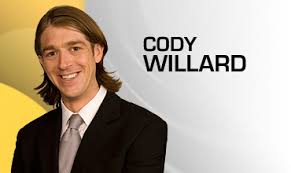
Recently I had Cody Willard of the Fox Business Network on my program and we discussed the incredible expansion of the federal government for several years and the fact that the end is no where in sight. Willard attributes the problem to the "Republican" and "Democrat" financial machine that pays for an ever expansive government. In addition of leading to questionable priorities, expansive government can also lead to some very serious questions about conflict of interest. He points to the recent recall of automobiles on the behalf of several automobile companies.

Willard noted that, what was historically done for safety reasons (recalls) leads one to think could be done for business reasons. Think about it, if the US owns a company (it is majority owner of GM), recalls could be a very powerful tool to undermine the competition. In recent weeks there has been a huge increase in the number of cars being recalled. More importantly, the government has brought an unusual level of attention to these some what common events.

The big story has been Toyota with recalls covering numerous models. This is a huge blow on a company that has had a reputation of providing great value through reasonable pricing and high quality. Another company that has seen a more limited recall is Toyota's chief competitor, Honda. Than there is Volvo's SUV problem. The list of companies in a recall covers a huge number of makes and models and there appears to be no end in sight.

Willard is not the only one noting the hype behind the recalls in general and Toyota in particular. Indiana Governor Mitch Daniels has spoken out about the subject as well. "Let's recall. Let's fix it - the cars," Daniels said. "If a fine is in order, then fine, but they have gone so far beyond that. It's very very suspicious in view of the government conflict of interest." He goes on to note, "This is why you don't want government in the car business, for instance. There you have a company doing more than others have done with regard to a recall. There were 600 recalls last year alone and they didn't go so hysterical as this," Daniels said. "These congressmen running this committee (investigating the Toyota recall) have their own agenda and it is a discriminating agenda in this case. They didn't do this the last several hundred recalls."

WHTR in Indianaoplis is now reporting that Daniels is part of "a bipartisan group of other governors around the nation have joined together to send a letter to the Obama administration, complaining about the handling of the Toyota recall investigation... The governor said the letter was written up without influence from Toyota."

Our federal government has very limited and specific powers, when they do not exercise them properly or if they go beyond that role, the impact can be damaging to everyone in the economy. The people who could suffer from a government abusing its recall powers are the consumers who want safe, but affordable, cars.
Kevin Price is a syndicated columnist whose articles frequently appear at ChicagoSunTimes.com, Reuters.com, USAToday.com, and other national media. Kevin Price is also host of the Price of Business (M-F at 11 AM on CNN 650). Hear the show live and online at PriceofBusiness.com. Visit the archive of past shows here.

Labels: , , , ,

Thursday, May 21, 2009

Time to get Over the "S" Word

Recently, a very good friend of mine and nationally known economist (and frequent guest on the Price of Business Show) told an interviewer on Fox News that he liked to "avoid the 'S' word." This economist is one of the most passionate and best informed advocates of freedom that I personally know. His credentials in the cause of liberty are without question. With that, I find it hard to believe that he and other free market economists have a problem with the "S" word. It is time to get over the word, and focus on its consequences.

Let's begin by demystifying the word "socialism." If you recall back in your basic economics class, we are told that socialism is "government control or ownership of the means of production." Let's break this already basic definition into even more simple terms. We largely know that the phrases "Government control" and "ownership" are self explanatory. It doesn't have to be both, simply one or the other. The other part is the "means of production." This can simply mean people, businesses, machines and any thing else that adds to the economy.

So is the United States becoming a socialist country or is it already there? Who would believe we would have the President of the United States firing the CEO of an American automobile company? Who would imagine the United States government becoming the major stock holder of untold numbers of American companies? Who would think that the United States would arbitrarily and retroactively break contract law with companies (e.g., the government's taking of bonuses of AIG executives, when they clearly originally agreed to such).

The US didn't have an election in November and then wake up to a socialist regime in January. As Fredrich Hayek pointed out in his The Road to Serfdom, these processes do not have to happen over night. Our road has been, arguably one that has taken over a century (maybe longer), but we are reaching that point where socialism will soon be the commonly accepted worldview. A few years ago politicians shunned in fear the "liberal label," now politicians coolly dismiss comparisons of our countries with European socialism. In fact, they almost appear to be saying, "That is a problem?"

This "road to serfdom" for our country could be a rather lengthy book, but I'm going to only give a few examples:

  • Our Founding Fathers originally prohibited income tax because they believed that the federal government had no business knowing how much people made or even how they made it. Furthermore, income taxes are a tax on wealth creation, which is the type of tax that makes economies weaker. Why would any government want to do that?
  • The Constitutional Convention was made up of representatives of the thirteen states. Their over riding objective was to protect those states from a federal government that could grow out of control. Most Americans don't even realize that the US Senate was comprised of individuals chosen by the state governments to represent their interests. This was the practice until the 20th century. Furthermore, our US Constitution could not get ratified by the states without the first ten amendments. These Bill of Rights that are now claimed by the federal government as a tool for its protection, were designed to protect the states and the American people.
  • In the 1930s there was a complete perversion of the role of government from one of an umpire (making sure that everyone was judged by the same rules) to a parent (attempting to "create" equality in results), which is a contrary to both the letter and spirit of the Constitution.

The very first step in dealing with any addiction or disease is to own it, so you can battle it. The first step on the road to get the US back where it belongs is to recognize the "socialist" label so we can find a path to liberty.

Kevin Price is Host of the Price of Business, the longest running show on AM 650 (M-F at 11 am) in Houston, Texas and on AOL Radio. Eric Bolling of Fox News and Fox Business says that Price’s Blog “is very influential and moves the blogosphere.” Steve Moore of the Wall Street Journal calls Price the “best business talk show host in the country.” Find out why and visit his blog at www.BizPlusBlog.com and his show site at www.PriceofBusiness.com. You can also find Price on Strategy Room at FoxNews.com.

Labels: , , , , , , ,

Wednesday, December 10, 2008

Christopher Dodd Has to Go

I am not at all sympathetic of the plight of the automobile industry. The Big Three of Detroit have largely brought their terrible situation upon themselves through decades of bad decision making. In spite of this reality, I was offended when Senate Banking Committee Chairman Christopher Dodd (D-CT) informed the CEOs of Ford, Chrysler, and GM that if they wanted money for their companies, they needed to go. This is the same Christopher Dodd who has been on the Senate Banking Committee for years and oversaw the financial debacle of Wall Street that led to an $800 billion bailout at taxpayers expense. This is the same Dodd who has fueled record government spending for years that has led to our debt of trillions of dollars.

As chairman of the Senate Banking Committee, Dodd proposed a housing bailout on the Senate floor in June 2008 that would assist troubled mortgage lenders such as Countrywide Financial. Condé Nast Portfolio reported that in 2003 Dodd had refinanced the mortgages on his homes in Washington, D.C. and Connecticut through Countrywide and had received favorable terms due to being placed in what was later called the "Friends of Angelo" (Countrywide's CEO) program. Dodd received mortgages from Countrywide at allegedly below-market rates on his Washington, D.C. and Connecticut homes. Dodd has not disclosed the below-market mortgages in any of six financial disclosure statements he filed with the Senate or Office of Government Ethics since obtaining the mortgages in 2003. The Senator's home state Hartford Courant reported Dodd had taken "a major credibility hit" from the scandal.


If direct payment has influence, the problem is even more widespread. Countrywide has also contributed a $21,000 total to Dodd’s campaigns since 1997. Dodd has also received $70,000 in campaign contributions from Bank of America, which is buying Countrywide, in the last year-and-a-half before the Countrywide Financial loan scandal surfaced. Senators Barack Obama and Hillary Clinton are the only other Senators who have received more money from Bank of America than Dodd. However, no politician has received more contributions from Fannie Mae and Freddie Mac than Dodd's combined $133,900.


Marcus Cicero, when discussing the Roman Empire, said "the arrogance of officialdom should be tempered and controlled..." Dodd's throwing stones in a glass house and maintaining a straight face in the process, is arrogance at its height. Senator Dodd needs to go and should be a part of a serious "house cleaning" that should be seen in both the US House and Senate. It is true that, in the end, many familiar faces like Dodd would disappear. That would be a face lift the US could afford.


Kevin Price is a syndicated columnist whose articles frequently appear at ChicagoSunTimes.com, Reuters.com, USAToday.com, and other national media. Kevin Price is Host of the Price of Business (M-F at 11 AM on CNN 650) and Publisher of the Houston Business Review. Hear the show live and online at PriceofBusiness.com. Visit the archive of past shows here.

Labels: , , , , , , , , , , ,

Monday, December 08, 2008

Conditions for an Auto Bailout

It appears that the US Government IS going to give the "big three" their long desired loan, but at a smaller level. Until this past weekend, Congress had been unimpressed. But as if an oracle of God himself, President-Elect Obama has declared that a bailout is necessary and the Congress now seems willing to comply, although with a lighter than expected package. The new package looks like it will be around $16 billion (versus the $25-$35 billion we have heard earlier).

With this bailout, there should be certain conditions that must be complied or there should be no such hand outs (which is my preference). Here are a few of the conditions that should be required:


  • End the controversial UAW "Job Bank" program until the loans are completely paid off. This program has paid tens of thousands to be idle at 90 percent of salary. Although the UAW has agreed to make concessions about the program, their current situation could have the practice back in full force within days of the bailout becoming law.

  • Bring auto worker wages back to the real world. According to the Heritage Foundation, when it comes to salary and benefits, the average wage of all private sector employees is $25.36 and for American based Japanese auto plants (Honda, Nissan, Toyota) is $42.95 to $47.60 on average. The big three pays $70.51 (Ford), $73.26(GM), and $75.86 (Chrysler) per hour, per employee. These six digit wages for blue collar work should be brought into the real world.

  • End the "30 and out" practice. The Detroit auto companies allow employees to retire with very lucrative packages at the young age of 30. If you start working at a plant at 20, you can retire at fifty. You can see where that can be costly. 60 or 65 should have to be the standard retirement age with taxpayers involvement.

  • Seven week vacations need to be history. Detroit auto workers receive almost two months off a year. This is another pounding cost on a very weak industry that needs to change.

  • Finally, they should require the companies to relocate to a right to work state. This would empower these companies to lower wages and make the other reforms listed above.

I am sure you are saying that such reforms will not be happening knowing the temperament of the auto industry and the lack of courage in Congress. You are, of course, exactly correct, which is among the reasons why the companies shouldn't receive the bailout.


Kevin Price is a syndicated columnist whose articles frequently appear at ChicagoSunTimes.com, Reuters.com, USAToday.com, and other national media. Kevin Price is Host of the Price of Business (M-F at 11 AM on CNN 650) and Publisher of the Houston Business Review. Hear the show live and online at PriceofBusiness.com. Visit the archive of past shows here.

Labels: , , , , , , ,

Thursday, July 12, 2007

For Being "Public," PBS Is Very Commercial

I love baseball, it is my favorite sport. Recently a good friend of mine and I were discussing a great series on the game I saw several years ago that was produced by PBS called "Baseball." The ten part series is one of my favorite documentaries on one of my favorite subjects. Sure enough, a few days later, this friend bought me the complete set. I have been very excited indeed.
It took a while to find the time to watch it, but I finally sat down and started going through the series and they certainly do not disappoint. However, before the broadcast of each episode there are several commercials (sorry PBS, I don't know what else to call them) that are displayed in anticipation of the program. Some are for foundations, I notice one by GM, and tell you, in a commercial, that we are watching the show commercial free, thanks to these commercials. Yes, I know, a little confusing.

PBS, also known as the Public Broadcast Service, has figured out how to have its cake and eat it too. In addition to typically having a liberal political agenda in many of its programs, it enjoys government subsidies to underwrite its programming, is tax deductible and recieves donations, and has all the blessings of being a non-profit. In addition to that, it has commercials. Yes, only a few and only at the beginning, but come on!

My old friend former Congressman Steve Stockman made PBS one of his issues. He couldn't understand in an era that had History Channels, National Geographic Channels, Discovery Channels, etc. that there was still a need for government subsidized television (since they provide very "PBS" style programs). The idea behind such subsidized programming is to provide educational shows that wouldn't get on by any other means because the market may not support such. That may have been true in an era of a few national networks and a handful of independent stations in local markets, but in today's economy, it is very difficult to make the case for public programming, especially when one considers it has a political axe to grind.

I love the Baseball series and recomment people buy it (through my bookstore in particular). There are other shows, like Commanding Heights (which makes an excellent case for the market economy), but I believe that the market can provide all the programming we need without the spending of a single taxpayer dollar.

Labels: , , , , ,

Tuesday, April 24, 2007

Toyota: The Rising Sun Continues

Japan is known as the "land of the rising sun" and its chief auto maker, Toyota, continues its towering rise. This morning I was watching the Today Show and it was announced that the car maker has surpassed GM as the largest automobile producer in the world this past quarter. This is something that everyone in business and politics has been expecting for years. That time has come.

A half a century ago, there were a "Big Three" -- GM, Ford, and Chrysler -- that dominated the marketplace and no one imagined Toyota (or any other foreign auto maker) eclipsing any of them. Admittedly it is only one quarter, GM is still number one over all, but the slide for US car builders is expected to continue.

Why the decline of US auto makers? The cause is multi-fold:

* US auto makers are not nearly as nimble as their Japanese competitors. They are typically behind the curve and limping behind Japan when it comes to change.

* Japan has taken a surprisingly safe approach to auto making that gives the consumer assurances of the quality of product. It sounds "boring", but Japan's predictability in style and substance (e.g., engineering) has made it the up and coming "king of the road."

* The devastating impact of Big Labor. Unions have hampered these companies with salary and benefit packages that make it impossible for US companies to successfully compete. This is likely the number one reason.

The above are just a few examples, but Japan will continue to torment US auto makers and I expect its prominence to becomes permanent. That is destined to happen if the US doesn't do the things necessary to be competitive.

Labels: , , , , , ,

Tuesday, September 19, 2006

Ford Employees Learning Economics 101

I know this is going to sound harsh, but the economic realities that Ford employees are discovering are the same lessons everyone must learn in order to thrive in our current economy. During an interview on ABC News Nightline an employee was asked about the cause of the company's decline. She replied it was because Americans selfishly bought foreign cars at the expense of their fellow Americans. The interviewer asked a question that was shockingly perceptive in our current political environment, (paraphrase) "could it be that Americans don't want to pay for the amazing salaries and benefits that you boasted about earlier? Wouldn't they rather pay for the lower cost of buying a car made by Toyota with lower wages and benefits?" (One thing all the Ford employees discussed was how good it was for them financially).

The look on her face was amazing. It was like she had a "V-8" moment, but the negative type, not the one you see in the commercials. She said "the benefits are amazing, but I hate to think that is why they did it." But that is exactly why we -- all of us -- "did it." The economy is a lot of things, but it isn't personal. The invisible hand that Adam Smith discussed in the 18th century is alive and well today. People actively make self interested decisions daily, even as we criticize the ability of other countries in competing against us. The invisible hand, a force we can't see but is all so powerful, creates supply and demand, and controls our economy unless harassed by government.

A great example of this is Wal-Mart. If everyone I talk to about this "job exporting," "people exploiting," "made in the USA destroying" company is telling the truth, this company should be on the brink of bankruptcy and not, arguably, the most economically powerful company in the world. But people, even as they drive to the "hated" store, will decry the injustice of goods made by cheap labor and walk out with not a single item made in the USA (with the possible exception of a tag that was made in a US territory). In essence, they cry all the way to the bank in savings.
Is this a bad thing? Certainly not, in my opinion. Our country has an unemployment of only 4.7 percent, that is virtually zero unemployment when you consider the large number estimated who are voluntarily unemployed (seasonally employed, criminals, etc., equals around 4 percent). Because we are free to get what we want, largely from where we want, we are able to get Ford Escorts for only $14,000 (since they make much of their cars in "cheap labor" countries rather than $60,000 a year (which is what they would likely cost if made bumper to bumper in the US). I'm able to eliminate poverty voluntarily and long term in countries like China and India through my purchases (like we did in Japan 40 years ago) without the United Nations taking my money through redistribution as that organization is attempting to do (leading to corruption and international welfare dependency). We are able to truly take advantage of the law of comparative advantage (things being made were they most make sense economically) and the whole world benefits from it.

I believe people should give up the notion of stopping the imports and embrace them. They are making us richer, not poorer (by the way, our longest period of trade surpluses was during the Great Depression; trade deficits mean we can afford more than other countries; not a bad thing). Instead of grumbling about our imports, we should appreciate the good things we are doing for the world economy and simple common sense with our purchases. We don't make these purchase because they are bad, but because they are good for everyone.

What about the nice Americans who lost their jobs at Ford, GM and other companies? The reality is, most of them will quickly find themselves back on their feet, with either new jobs or created businesses as they pursue becoming their own boss. This loss, though sad, will be temporary, but the American resolve the prosper is permanent.

Labels: , , , , , , , , , , ,