m

Friday, March 12, 2010

The Decline in US Economic Freedom

Since 1995 the Heritage Foundation and the Wall Street Journal have monitored the economic freedoms of countries around the world and have published their results in the 2010 Index of Economic Freedom. Ideas like "economic freedom" are a little subjective, but I like the stated view of the publication. According to the editors, economic freedom is defined as "the fundamental right of every human to control his or her own labor and property. In an economically free society, individuals are free to work, produce, consume, and invest in any way they please, with that freedom both protected by the state and unconstrained by the state. In economically free societies, governments allow labor, capital and goods to move freely, and refrain from coercion or constraint of liberty beyond the extent necessary to protect and maintain liberty itself."

As far as methodology, the editors "measure ten components of economic freedom, assigning a grade in each using a scale from 0 to 100, where 100 represents the maximum freedom. The ten component scores are then averaged to give an overall economic freedom score for each country. The ten components of economic freedom are: business freedom, trade freedom, fiscal freedom, government spending, monetary freedom, investment freedom, financial freedom, property rights, freedom from corruption, and Labor Freedom."

We Americans like to believe that we live in the "land of the free and the home of the brave." Yet, most Americans note that our country is in decline. The top ten list of the 183 considered in the survey, gives you an idea of how bad it has become.

The US does not appear in the top five. Using school standards and 90 plus is an "A," no country on the list meets that criteria. With that, number 1 goes to Hong Kong at 89.7, declining 0.3 percent from 2009. The country reached this high status because of its "competitive tax regime, respect for property rights, and flexible labor market, coupled with an educated and highly motivated workforce, have stimulated an innovative, prosperous economy. Hong Kong is one of the world’s leading financial and business centers, and its legal and regulatory framework for the financial sector is transparent and efficient. Business regulation is straightforward. Despite the global economic slowdown, Hong Kong has maintained its status as Asia’s second-largest destination for foreign direct investment, attracting over $60 billion in 2008."

The other countries in the top four are Singapore (number 2 at 86.1 percent, down .1 percent), Australia (number 3 at 82.6 percent, with no change), New Zealand (number 4 at 82.1 percent, up.1 percent), and Ireland (number 5 at 81.3 percent, down .9 percent). New Zealand is only one of two countries in the top ten list to go up. According to the editors, "New Zealand continues to be a global leader in economic freedom, performing well on most of the components measured in the Index. The economy has an impressive record of market reforms and benefits from its openness to global trade and investment. The banking sector is characterized by sound regulations and prudent lending practices, and well-implemented structural reforms have allowed the New Zealand economy to weather the recent global financial and economic crisis relatively unscathed."

Countries six and seven round up the top tier of economic freedom (those with a "B"). The US fails to show up again. Switzerland (number 6 at 81.1 percent, up 1.7 percent) and Canada (number 7 at 80.4 percent, down 0.1 percent) occupy those spots. Switzerland is the other in the top ten to actually go up over the last year.

The United States (number 8 at 78.0 percent, down 2.7 percent) is one of three countries that rounds up the top ten with Denmark (number 9 at 77.9 percent, down 1.7 percent) and Chile (number 10 at 77.2 percent, down 1.1 percent). These countries did not even make it to the top tier, being below 80 percent and the United States had the dubious distinction of seeing the biggest decline in the past year (2.7 percent) among the top ten. In the arena of economic freedom, the US has a low score of "C+" at 78.0 percent.

The study notes that the "U.S. government’s interventionist responses to the financial and economic crisis that began in 2008 have significantly undermined economic freedom and long-term prospects for economic growth. Economic freedom has declined in seven of the 10 categories measured in the Index." It also states that "Uncertainties caused by ongoing regulatory changes and politically influenced stimulus spending have discouraged entrepreneurship and job creation, slowing recovery. Leadership in free trade has been undercut by 'Buy American' provisions in stimulus legislation and failure to pursue previously agreed free trade agreements with Panama, Colombia, and South Korea. Tax rates are increasingly uncompetitive, and massive stimulus spending is creating unprecedented deficits. Bailouts of financial and automotive firms have generated concerns about property rights."

Imagine, the US is a "second tier country" on the fast track of decline after only one year of one of the most anti-free market Administrations in US history. It will be interesting to see if the US is still in the top ten after the Obama presidency comes to an end.

Labels: , , , , , ,

Thursday, March 04, 2010

The Massive Shift Towards Government Dependence

How much would the income of US households have dropped without being propped up by government benefits, welfare, and tax cuts last year? According to Patrice Hill of the Washington Times, it would have been a breathtaking $723 billion. This amount is more than five times the record $167 billion drop reported last month by the Commerce Department.

Most of the dependence is linked to the huge number of job losses in the last year. A major priority of government should be to eliminate the barriers between people and jobs. This should be done, not only in order to improve the situation of those who are unemployed, but to help provide relief for a government that finds itself supporting such people. The impact of unemployment is devastating in a way not found by other economic problems. The economists are claiming that we are in a recovery, but explain that to the close to ten percent of the population that has yet to find a job.

Hill cites the reports of economic analysts who find that:

  • While wages and other job-related income fell by a record $206 billion last year to $7.84 trillion, government transfer payments (such as unemployment checks and Social Security) grew by $231 billion to $2.1 trillion.
  • Wages have plunged at unprecedented levels, down to $256 billion in private wages, which was more than forty times larger than the last wage drop, during the recession of 2001.
  • Unemployment not only means more money going from the government to individuals, but a significant drop of income going to the government (this seems obvious, but many policy makers do not seem to understand it). As a result, the amount of taxes paid by individuals dropped by $325 billion to $2.1 trillion due to middle-class tax cuts (which have none of the revenue generating effects of a supply-side tax cut across all income groups) and the fact that there are 6 million people who lost their jobs and are no longer paying payroll taxes.
Many in the Obama Administration believed that there would be a revival in consumer spending in the latter part of 2009. This would have led to more tax revenues and job growth, we were told. Instead, virtually all new spending was done by government and dollars that went to consumers were used to pay off debt, rather than jump start the economy.

The prospects do not look good in the immediate future, because virtually all opportunities for new spending appear to be on the government, rather than on the consumer, side. Such government funding cannot be sustained without continually raising taxes and will, at best, only produce temporary and expensive jobs.

If the administration is serious about reducing unemployment, it will have to be aggressive in its approach. Steps should include a dramatic reduction in capital gains and business taxes, making the minimum wage a state (rather than federal) issue so they can set such according to the unemployment situations in their particular areas, and curtailing ambitious programs (such as cap and trade, health care reform, and other major initiatives) that create an unpredictable environment for jobs to be created.

Kevin Price is a syndicated columnist whose articles frequently appear at ChicagoSunTimes.com, Reuters.com, USAToday.com, and other national media. Kevin Price is also host of the Price of Business (M-F at 11 AM on CNN 650). Hear the show live and online at PriceofBusiness.com. Visit the archive of past shows here.

Labels: , , ,

Tuesday, February 09, 2010

Ronald Reagan Articulated Economic Freedom

This weekend we celebrated the birthday of Ronald Reagan. There is no question that "the Gipper" had his flaws. Government grew under his administration as it has under every other, but Reagan went far in significantly changing the debate over economic freedom.

One of my biggest frustrations is the reckless abandonment by politicians when it comes to articulating the importance of that freedom. In fact, I haven't heard a Presidential candidate build a message on this theme since Ronald Reagan and I believe that Gov. Sarah Palin may be the first national candidate to do such in her Vice Presidential bid in 2008.

On the eve of the Fourth of July, 1987, President Ronald Reagan delivered an address entitled "America's Economic Bill of Rights." This was an important time for our Republic, because in addition to celebrating the birthday of the Declaration of Independence at this time, we were also commemorating the 200th Anniversary of the United States Constitution on that year. I cannot think of a better time to make such a speech and the need for that message is as strong today as in any time in our history..

Reagan stated right from the beginning what he believed about the Founding Fathers view of economics and noted that the American Revolution had a central theme against "No taxation without representation" and that they "knew that the right to earn your own keep and keep what you earn is central to America's understanding of what it means to be free. This country was built by people seeking to support themselves and their families by their own labor, people who treasured the right to work and dispose of their earnings as they saw fit, people who were willing to take economic risks." In making his case, Reagan focused on "four fundamental freedoms" and he bolstered these with several guiding principles.

Those four freedoms are, according to Reagan:

The freedom to work.


The freedom to enjoy the fruits of one's labor.

The freedom to own and control one's property.

The freedom to participate in a free market.

These four principles were fundamental in the building of this country and they have been under attack long before Reagan went into office and are all the more so today.

In order to secure these rights, Reagan advocated ten different initiatives to reach these objectives that included:

"Reduce subsidized government competition with private citizens." Whenever government could use private companies to do government functions, it should, in order to foster real job creation and to reduce bureaucracy on a state level. There should be no need for such concern on the federal level because of the confines of our Constitution.

"The Freedom to Enjoy the Fruits of Your Labor: You have the right to keep what you earn, free from excessive government taxing, spending, and borrowing." The government is waging a war on this right. Some states, such as Michigan, essentially have 50 percent unemployment. The government would rather have that level of suffering than afford people the right to work.


"To protect you from overtaxing by the Government, I will propose as part of the balanced budget amendment submitted to Congress, a requirement for a super majority vote by Congress before your taxes can be raised." I think this was one of the most bold and creative initiatives ever proposed by a President. This strikes at the heart of how our Founding Fathers saw government being conducted. They desired every legislation designed to expand the government to have as much difficulty of passage as possible (this is why they wanted all tax bills to start in the House and not the Senate), this would assist in that effort.


"To protect your right to own and use your property, my administration will pursue our successful efforts in the courts to restore your constitutional rights when the government at any level attempts to take your property through regulation or other means." I don't think Reagan even fully realized how far the reach of government would go in this area. Today, malls are developed in the name of "imminent domain" and people are removed from their property because of birds and "wetlands."

Reagan went on to address welfare reform years before Clinton, the need to strengthen intellectual property rights, and more. The entire speech deserves to be read in its entirety. In our current times, all of our freedoms are endangered in a way we had not seen historically. In a time such as this, we need to be reminded that our economic still freedoms matter.

Kevin Price is a syndicated columnist whose articles frequently appear at ChicagoSunTimes.com, Reuters.com, USAToday.com, and other national media. Kevin Price is also host of the Price of Business (M-F at 11 AM on CNN 650). Hear the show live and online at PriceofBusiness.com. Visit the archive of past shows here.

Labels: , , ,

Sunday, November 01, 2009

Federalist No. 10

Few people have read the Constitution and fewer still have read the documents designed to make the case for it. James Madison, Alexander Hamilton, and John Jay worked passionately to make the case for the states to ratify the US Constitution. The Federalist Papers were 85 essays (which were first written as articles and circulated as pamphlets and as articles in newspapers through out the states and they elaborated on the principles of the Constitution) and are considered a primary source for understanding the founding document.

The Founders called on three of the most powerful minds in government at the time to make the case for the new government. Alexander Hamilton, who would go on to become the first Secretary of the Treasury, was an advocate of a strong, but limited government. John Jay, who would go on to become the first Chief Justice of the US Supreme Court was like Hamilton in his convictions. Finally, there was James Madison, who was known as the Father of the Constitution since he scribed virtually every word of the proceedings leading to the founding document. It is Madison's Federalist Number 10 that I consider my favorite of these articles. The article first appeared in November 1787.

The consensus in American politics in these early years was decidedly anti-partisan. In this essay, Madison makes a remarkable case for this country to choose a uniquely American way of governing. I suggest reading the entire document, because of its powerful arguments and a message so alien from modern American politics today.
Madison argues that "The instability, injustice, and confusion introduced into the public councils, have, in truth, been the mortal diseases under which popular governments have everywhere perished; as they continue to be the favorite and fruitful topics from which the adversaries to liberty derive their most specious declamations. The valuable improvements made by the American constitutions on the popular models, both ancient and modern, cannot certainly be too much admired; but it would be an unwarrantable partiality, to contend that they have as effectually obviated the danger on this side, as was wished and expected." "Popular governments" were, in a word, democracies. This document is a great warning to the people of France at that time who were about to break out in a revolution of their own. Where as the US Revolution was based on responsible freedom, limited government, and symbolized by the Liberty Bell. The French Revolution was known for its factions, revenge, and symbolized by the guillotine.

Madison goes on to point out that "There are again two methods of removing the causes of faction: the one, by destroying the liberty which is essential to its existence; the other, by giving to every citizen the same opinions, the same passions, and the same interests." In other words, Madison argues that you cannot accommodate the views of the majority without oppressing everyone who disagrees with that popular decision. Totalitarian regimes have no functional factions, because those who would disagree with the government are simply oppressed. On the other hand, if mobs rule, we are oppressed by majorities. Madison, argued that such is just another form of tyranny. He also argued for a third way, he believed that one of the virtues of the Constitution is that the federal government would be so limited in power, these type of battles should be fought in the states. If people were truly passionate about a certain issue, they could move their battle to a state that reflected their values. With a strict republic based on rule by law and limits on the federal governments, individuals would be able to enjoy a high level of freedom on a state and local level. This would not only make our nation more prosperous and financially sound, but also free. It is one more case for restoring the much neglected Tenth Amendment of the Constitution.

Kevin Price is Host of the Price of Business, the longest running show on AM 650 (M-F at 11 am) in Houston, Texas and on AOL Radio. His articles often appear in Chicago Sun Times, Reuters, USA Today, and other national media. Steve Moore of the Wall Street Journal calls Price the “best business talk show host in the country.” Find out why and visit his blog at www.BizPlusBlog.com and his show site at www.PriceofBusiness.com. You can also find Price on Strategy Room at FoxNews.com.

Labels: , , , ,

Thursday, September 03, 2009

Constitution was about Protecting the States

When one looks at the state of affairs today and the leviathan that we have called the federal government, it is hard to believe that our national government was actually quite small and was designed to keep the states sovereign. The delegates to the Constitutional Convention had the overriding objective to keep the states strong and the federal government very weak. You see this in some of the most important themes in the US Constitution. These same themes are among those that the left and the media are most hostile towards today.

  • Electoral College. The Electoral College, which gives each state a certain number of votes based on the number of House members and Senate, is among the most hated of US institutions among liberals and the media because it is "undemocratic." It was designed, for the explicit purpose of making sure every state, regardless of its size, mattered when the federal government made decisions. Without an Electoral College, the ten largest cities (or less) could determine the next President of the United States because of their population. All the many states in between those cities would be completely dismissed and we would have a White House that would only -- and always -- look out for urban interests and not the interests of the rest of the nation.

  • The Bicameral legislature. The founders chose a system with two houses of Congress, one to represent the populations in the states (House of Representatives) and one to represent each state equally regardless of population (the Senate) in order to make sure, again, that each state received equal representation.

  • The unique nature of the US Senate. The US Senate was not designed for any other purpose but to represent the interests of the state governments that chose to send them to Washington. Historically, Senators were appointed by Governors and approved by the legislatures to look after the states' business. This was the single biggest check against a federal government growing out of control and the strongest guard of states rights. Senators had powers not granted to any other federal officials. Their offices included legislative (in the bills they proposed and voted on), executive (in the approval of treaties and Presidential appointments), and judicial (in its unique impeachment role). In 1913 the 17th Amendment was passed to make Senators directly elected like members of the House. This was done because political activists at that time grew tired of how long it took the Senate to move on legislation. By the early 20th century one of the Senate's greatest virtues (its ability and desire to deliberate slowly) became seen as its biggest vice.

  • The Tenth Amendment. There were ten major areas that stood between the newly written US Constitution and ratification. Those issues were addressed in the Bill of Rights. One of those, the Tenth Amendment, reminded the federal government who was actually the main seat of power by stating "The powers not delegated to the United States by the Constitution, nor prohibited by it to the States, are reserved to the States respectively, or to the people." Simply put, whatever implied powers existed in the Constitution had to be clearly delegated to the federal government or it was left to the states.
Those people who founded this republic were men on a mission. They were passionate crusaders for the dispersion of power and believed the best way for that to be accomplished was to have the power in the states they represented. The delegates from Virginia, for example, saw themselves as Virginia delegates to the Constitutional Convention and not US delegates from Virginia. They had a different mindset from those who governed today. They knew that freedom was found closer to home and not from an increasingly assertive federal government.
Kevin Price is Host of the Price of Business, the longest running show on AM 650 (M-F at 11 am) in Houston, Texas and on AOL Radio. His articles often appear in Chicago Sun Times, Reuters, USA Today, and other national media. Steve Moore of the Wall Street Journal calls Price the “best business talk show host in the country.” Find out why and visit his blog at www.BizPlusBlog.com and his show site at www.PriceofBusiness.com. You can also find Price on Strategy Room at FoxNews.com.

Labels: , , , , , ,

Thursday, June 04, 2009

The Party of Diversity should Support Diversity of Power

There is something funny going on. The "narrow minded" people on the Right are sounding more like their liberal counterparts when it comes to the issue of diversity. "Diversity" has been the battle cry of the left for decades. It has been (oddly) the driver behind multiculturalism and political correctness and has long been held among the most important of "liberal values."

Unfortunately, limiting diversity to the way we view ethnic and other social groups is only scratching the surface. Diversity is defined as "the state or fact of being diverse" "difference," "unlikeness," "variety," and "multiformity." In other words, "diversity" stands for more, much more.

Diversity can be used in the way we approach virtually every issue. In the name of diversity, we should allow each state of the Union to develop its own minimum wage policies. Michigan, for example, may want to help the city of Detroit and let them develop a minimum wage that is lower than the rest of the state in order to combat its 20 percent plus unemployment. Same with East St. Louis, Il (30 percent unemployment); Camden, NJ (32 percent), and others. I would be fine with the Federal Government ending minimum wage laws entirely. Short of that, the Feds should mandate the states to create their own minimum wage laws and let the problem solving begin. It is insane to have a federal government on the other side of the country set a minimum wage for areas that are desperate in attracting employers and opportunity.

Environmental regulations would be another great place to move back to the states. Instead of a "Super Fund" designed to clean polluted areas devised by the Feds and (according to the National Center for Policy Analysis) 80 percent of the dollars going to lawyers, or "one size fits all" regulations that put small business into bankruptcy, the states should be the leader in establishing regulations. They would set rules that would protect wildlife and nature, while placing humans and employment as the number one priority. From the competition of the states in public policy we would learn the best ways to develop sound policies.

This is exactly what the Founding Fathers had in mind. They saw the United States as a "nation of nations." This is why they developed the Tenth Amendment and limited the federal government to only seventeen powers in Article I, Section 8 of the Constitution. They believed this dispersion of power would not only protect our freedoms, but lead to the best ideas to solve problems, having the best opportunity to be developed. Other states would voluntarily adopt policies that worked and would avoid those that didn't. Furthermore, this diversity of power would protect all the states from becoming too big. If taxes became too high and regulations too oppressive, people would leave such states in mass. It is the ultimate example of "checks and balances."

Diversity should not be preserved in a monolithic federal government, but promoted through fifty unique and strong states. Advocates of diversity should be fighting for states' rights more than any other special interest group.

Kevin Price is Host of the Price of Business, the longest running show on AM 650 (M-F at 11 am) in Houston, Texas and on AOL Radio. Eric Bolling of Fox News and Fox Business says that Price’s Blog “is very influential and moves the blogosphere.” Steve Moore of the Wall Street Journal calls Price the “best business talk show host in the country.” Find out why and visit his blog at www.BizPlusBlog.com and his show site at www.PriceofBusiness.com. You can also find Price on Strategy Room at FoxNews.com.

Labels: , , , , , ,

Friday, May 22, 2009

What do you mean by "Unconstitutional"?

There is a great deal of rhetoric, particularly among conservatives and libertarians about the "unconstitutional" actions of President Barack Obama. To me, those are rather strong words, but they flow out of the mouth of pundits and radio personalities without a blink and, even more often, without an explanation. Many (if not most) Americans hear such and say "this is ridiculous" (at least according to the polls, with most still supporting the new President) and others say "Yeah!" with clinched fists and they are ready to take action. The sad thing is, the vast majority of the pundits, radio hosts, those with clinch fists or Obama supporters do not really understand what it means to be "unconstitutional" or how to abide by the law of the land.

The problem is, the vast majority in this country have received their knowledge of the Constitution from the government schools. It is similar to chickens learning self defense from the foxes. It is simply beneficial to the government, but not necessarily to the citizens. The Founding Fathers would not understand how we would allow the government to be in charge of educating the population about such issues (or anything, as far as that goes), which is why there wasn't a department of education in any state until the 1830s, fifty years after this country was founded.

The founders saw education as a "check" against a government that could overly expand its authority. This is one of the constitutional concepts our population doesn't understand. So what is "constitutional" and "unconstitutional"? What can the government actually do? If someone is serious about this discussion, they don't merely argue in clichés, such as "government should only do those things that the people can't do for themselves," but offer a very specific policy agenda. The following are only a few of the guiding principles that define "constitutional" government. In fact, they only scratch the surface. But if we majored in these important areas, we would be so much closer to having our constitution restored.

A Republican form of Government.

This is actually a small "r" and has nothing to do with any party. Article IV of the Constitution defines the guarantees by the federal government for the state. At section four it states "the United States shall guarantee to every state in this union a republican form of government, and shall protect each of them against invasion; and on application of the legislature, or of the executive (when the legislature cannot be convened) against domestic violence. " The characteristics of this are rule by law (the constitution). Although such a government can have democratic institutions, a Republic is designed to check all tyrants, be it a federal government out of control or a mob with a destructive agenda. The constitution was designed to protect minorities, not just majorities. If the majority wants to oppress people, the people still feel oppressed. Under a republic, the government limits itself to "referree" and not a parental role.

The Dispersion of Power.

The Constitutional Convention was made up of representatives of the thirteen states. Their primary goal was to protect those states from a federal government that could undermine state rights. Most Americans don't even realize that the US Senate was comprised of individuals chosen by the state governments to represent their interests. This was the practice until the 20th century. Furthermore, our US Constitution could not get ratified by the states without the Bill of Rights. These ten amendments that are now claimed by the federal government as being designed for its protection, were intended to protect the states and the American people.


Limited Government.

Article I, Section 8 of the Constitution lists 20 powers of the federal government. Most of them are very basic and not very expensive. These include things such as post offices, post roads, and standard weights and measures. The military, of course, is one of the few things relegated to the federal government. What the Founders intended was a very small federal government that did the few things it was suppose to do and to do them very well and deliberately.

In the end, there should be no question about whether we are wandering away from the spirit and letter of our US Constitution. A better question is, what do we need to do as a nation to restore our Republic?

Labels: , , , , , , ,

Thursday, May 21, 2009

Time to get Over the "S" Word

Recently, a very good friend of mine and nationally known economist (and frequent guest on the Price of Business Show) told an interviewer on Fox News that he liked to "avoid the 'S' word." This economist is one of the most passionate and best informed advocates of freedom that I personally know. His credentials in the cause of liberty are without question. With that, I find it hard to believe that he and other free market economists have a problem with the "S" word. It is time to get over the word, and focus on its consequences.

Let's begin by demystifying the word "socialism." If you recall back in your basic economics class, we are told that socialism is "government control or ownership of the means of production." Let's break this already basic definition into even more simple terms. We largely know that the phrases "Government control" and "ownership" are self explanatory. It doesn't have to be both, simply one or the other. The other part is the "means of production." This can simply mean people, businesses, machines and any thing else that adds to the economy.

So is the United States becoming a socialist country or is it already there? Who would believe we would have the President of the United States firing the CEO of an American automobile company? Who would imagine the United States government becoming the major stock holder of untold numbers of American companies? Who would think that the United States would arbitrarily and retroactively break contract law with companies (e.g., the government's taking of bonuses of AIG executives, when they clearly originally agreed to such).

The US didn't have an election in November and then wake up to a socialist regime in January. As Fredrich Hayek pointed out in his The Road to Serfdom, these processes do not have to happen over night. Our road has been, arguably one that has taken over a century (maybe longer), but we are reaching that point where socialism will soon be the commonly accepted worldview. A few years ago politicians shunned in fear the "liberal label," now politicians coolly dismiss comparisons of our countries with European socialism. In fact, they almost appear to be saying, "That is a problem?"

This "road to serfdom" for our country could be a rather lengthy book, but I'm going to only give a few examples:

  • Our Founding Fathers originally prohibited income tax because they believed that the federal government had no business knowing how much people made or even how they made it. Furthermore, income taxes are a tax on wealth creation, which is the type of tax that makes economies weaker. Why would any government want to do that?
  • The Constitutional Convention was made up of representatives of the thirteen states. Their over riding objective was to protect those states from a federal government that could grow out of control. Most Americans don't even realize that the US Senate was comprised of individuals chosen by the state governments to represent their interests. This was the practice until the 20th century. Furthermore, our US Constitution could not get ratified by the states without the first ten amendments. These Bill of Rights that are now claimed by the federal government as a tool for its protection, were designed to protect the states and the American people.
  • In the 1930s there was a complete perversion of the role of government from one of an umpire (making sure that everyone was judged by the same rules) to a parent (attempting to "create" equality in results), which is a contrary to both the letter and spirit of the Constitution.

The very first step in dealing with any addiction or disease is to own it, so you can battle it. The first step on the road to get the US back where it belongs is to recognize the "socialist" label so we can find a path to liberty.

Kevin Price is Host of the Price of Business, the longest running show on AM 650 (M-F at 11 am) in Houston, Texas and on AOL Radio. Eric Bolling of Fox News and Fox Business says that Price’s Blog “is very influential and moves the blogosphere.” Steve Moore of the Wall Street Journal calls Price the “best business talk show host in the country.” Find out why and visit his blog at www.BizPlusBlog.com and his show site at www.PriceofBusiness.com. You can also find Price on Strategy Room at FoxNews.com.

Labels: , , , , , , ,

Thursday, March 26, 2009

It is a "Restoration" and not "Conservative" Movement

For years I have felt that the term "conservative" was inadequate in describing the objectives of those who support the cause of liberty. The word implies being resistant to change. In fact, Obama and the mainstream media effectively promoted the idea that to be conservative was to want to defend the status quo. Obama's campaign was one of "change" and the media lumped everyone who opposed him as conservatives who wanted to keep things the way they were. This could not be further from the truth.

The term "conservative" doesn't fit those who support freedom today. We do not want to conserve a massive national debt, political elitism, or a deterioration of American families. We are interested in restoring those principles that made American the greatest nation on the face of the earth. Those principles include:
  • The belief in rule of law. Our political system was designed to protect its people from radical change. It was fearful of unchecked mob rule as much as it was an oligarchy and is intended to protect the minority from the majority. Furthermore, it is one of the most difficult constitutions in the world for facilitating change for a purpose. The founders believed that most solutions were found outside of the government and they made a document that promoted such an objective.

  • A commitment to limited government. This nation was founded on the notion of the dispersion of power. The states were significantly more powerful than the federal government and the US Senate (which had its entire membership chosen by governors and state legislatures until the 20th century) was designed for the purpose of protecting those states from the national government. They were originally chosen by state governments as a protector of state rights. The US Constitution provides around 18 powers for the US Congress according to Article I, Section 8. According to the 10th Amendment, everything else was to be left to the states and the citizens.

  • The importance of national security. When our nation was founded the world was much larger. With nuclear missiles only minutes away, we cannot merely be "fortress America," but we also cannot be the world's police force. However, national defense isn't just soldiers and missiles, but national sovereignty is reflected in secure borders.

  • A strong belief in private property. Today, both parties see the building of a shopping mall as a case for "imminent domain" and they regulate people out of their homes in the name of wetlands and endangered species. Our nation was founded on the fundamental importance of the right to property. Furthermore, our political system is opposed to the idea of redistribution of wealth. One of the greatest speeches delivered by any member of Congress was by Davy Crockett, who warned his colleagues about appropriating money for a person in a manner that was not constitutional (the widow of an Admiral). He offered his own salary for a week to help her if his colleagues would join him, and if they did, the sum to be given would be higher that the appropriation. That bill to provide aid was destined to be approved until Crockett took them to task. They voted against the bill, but also kept their week's pay. Crockett got back on the House floor after the vote and noted "You remember that I proposed to give a week's pay. There are in that House many very wealthy men - men who think nothing of spending a week's pay, or a dozen of them, for a dinner or a wine party when they have something to accomplish by it. Some of those same men made beautiful speeches upon the great debt of gratitude which the country owed the deceased--a debt which could not be paid by money--and the insignificance and worthlessness of money, particularly so insignificant a sum as $10,000, when weighed against the honor of the nation. Yet not one of them responded to my proposition. Money with them is nothing but trash when it is to come out of the people. But it is the one great thing for which most of them are striving, and many of them sacrifice honor, integrity, and justice to obtain it."

  • A belief in free enterprise. Government limited its role in the economy to that of a referee and was not to be intrusive. This is seen in it being responsible for such things as "standard weights and measures" and its explicit prohibition in taxing individuals directly (or income tax, which was later changed to all of our demise). Today the government uses taxation, regulation, and licensure laws to keep free enterprise in check, when it should do everything in its power to unleash it. Chief Justice John Marshall noted that the "power to tax is the power to destroy." In recent years, that seems to become the primary mission of government.

Obviously these points only scratch the surface. The point is, those who support the restoration of America's values should use that term and recognize that words like "conservative" fall on deaf ears for good reasons. No one wants to conserve the status quo.

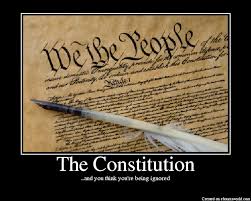
The above image links to an audio of the writer discussing the US Constitution on the Price of Business Show.

Kevin Price is Host of the Price of Business, the longest running show on CNN 650 (M-F at 11 am). Eric Bolling of Fox News and Fox Business says that Price’s Blog “is very influential and moves the blogosphere.” Steve Moore of the Wall Street Journal calls Price the “best business talk show host in the country.” Find out why and visit his blog at www.BizPlusBlog.com and his show site at www.PriceofBusiness.com.

Labels: , , ,

Friday, March 06, 2009

Ten Pillars of Economic Wisdom: Now More than Ever

During the Great Depression the size of government grew exponentially and many believed that the United States had lost those essential principles that made this country the most prosperous on the face of the earth. It was during this time that an organization was formed, called the American Economic Foundation (AEF), and they put together the following “Ten Pillars”* to remind Americans what works in an economy. If people wondered if a policy was good and beneficial to everyone concerned, than it would stand the test of these Pillars.

In the 1990s, I was a Senior Fellow at AEF and I conducted seminars in the former Soviet Union about these principles and how they could be a guiding light to that region that suffered from decades of Communist totalitarianism. Today, we are about to slip into a command economy of our own where the government will seek to be in charge of all things. Today, with the Obama Administration, this country needs to be reminded of these principles now more than ever. You are going to see these principles frequently in my blog, in the Price of Business pages, and on the radio. These principles are a guiding light towards a free economy.

1. Nothing in our material world can come from nowhere or go nowhere, nor can it be free: everything in our economic life has a source, a destination, and a cost that must be paid.

Simply put, there is no such thing as a free lunch. Everything has a cost regardless of promises from politicians.


2. Government is never a source of goods. Everything produced is produced by the people, and everything that government gives to the people, it must first take from the people.

Recently, 25 percent of Americans who were asked in a survey how the government pays for its programs said it was because the US "has its own money." Those people need to be familiar with this Pillar. The bailouts we have seen cost plenty and will have a profound impact on our economy.


3. The only valuable money that government has to spend is that money taxed or borrowed out of the people’s earnings. When government decides to spend more than it has thus received, that extra unearned money is created out of thin air, through the banks, and, when spent, takes on value only by reducing the value of all money, savings, and insurance.

Much of the new spending we have seen by Obama (and Bush) is being financed by fiat money (essentially counterfeit) and will result in rampant inflation. Other parts of the spending will be paid for by future generations. Finally, some will be paid by foreign governments who invest in such debt (making us dependent on regimes, like China).

4. In our modern exchange economy, all payroll and employment come from customers, and the only worthwhile job security is customer security; if there are no customers, there can be no payroll and no jobs.
Labor unions have long tried to create an economic world that is detached from reality. If labor wants job security, they must accommodate customers. There is no other way to assure long term job stability.


5. Customer security can be achieved by the worker only when he cooperates with management in doing the things that win and hold customers. Job security, therefore, is a partnership problem that can be solved only in a spirit of understanding and cooperation.
Unions often want an adversarial relationship with business, but job security can only come if the two are partners pursuing customers together.


6. Because wages are the principal cost of everything, widespread wage increases, without corresponding increase in production, simply increase the cost of everybody’s living.

An example of this is minimum wage. When it goes up, so do prices, and if the job isn't worth the wage, it will be lost. This solves the mystery as to why minimum wage increases are both rare and devastating.


7. The greatest good for the greatest number means, in its material sense, the greatest goods for the greatest number which, in turn, means the greatest productivity per worker.
Production is the best way to keep an economy strong, and those who participate in it growing financially. The best way to encourage productivity is for a government to keep the costs of production as low as possible. This is done through a stable money supply, low taxes, and few regulations.


8. All productivity is based on three factors: 1) natural resources (NR), whose form, place and condition are changed by the expenditure of 2) human energy (HE) (both muscular and mental), with the aid of 3) tools (T).

This is straight forward enough. These three factors make up the totality of the economy. As a formula, this is seen at NR + HE x T = Man's Material Welfare.


9. Tools are the only one of these three factors that man can increase without limit, and tools come into being in a free society only when there is a reward for the temporary self-denial that people must practice in order to channel part of their earnings away from purchases that produce immediate comfort and pleasure, and into new tools of production. Proper payment for the use of tools is essential to their creation.

Tools are the only one of these that can increase without limit. An example of this is agriculture, which was the dominant industry in the late 1700s and early 1800s, with the majority of our population working in that area. Today, the number who work in it are in the single digits and the abundance of food could not be greater. Tools are what have changed everything.


10. The productivity of the tools--that is, the efficiency of the human energy applied in connection with their use--has always been highest in a competitive society in which the economic decisions are made by millions of progress-seeking individuals, rather than in a state-planned society in which those decisions are made by a handful of all-powerful people, regardless of how well-meaning, unselfish, sincere and intelligent those people may be.

The genius of the many individuals when it comes to economic prosperity is always greater than the few or even the majority that would impose its view of "fairness" on the economy. This is the "invisible hand" that Adam Smith spoke of so eloquently in his The Wealth of Nations.

These Pillars are factual, logical, and without a political agenda. They provide excellent benchmarks on what works in the economic system. Pass this tool on to others who are trying to figure out the headlines and let freedom ring!


Kevin Price is a syndicated columnist whose articles frequently appear at ChicagoSunTimes.com, Reuters.com, USAToday.com, and other national media. Kevin Price is Host of the Price of Business (M-F at 11 AM on CNN 650) and Publisher of the Houston Business Review. Hear the show live and online at PriceofBusiness.com. Visit the archive of past shows here.


*An internationally accepted working paper developed by The American Economic Foundation

Labels: , , , , , , , ,

Tuesday, February 24, 2009

Barack Obama: More Pork than Promise

Recently, AOL did a survey of the 10 people that are admired most. The list wasn't limited to modern times or the United States. In fact, Jesus Christ himself made the list and he was second only to Barack Obama. With those kind of ratings, expectations are very high.

So, tonight, when "the Messiah" entered the Halls of Congress, the American people were expected to get "wowed!" What that got was a lengthy list of promises that stand contrary to his commitment to cut the deficit in half in four years (one of his more recent commitments). The following are some "highlights" of what the President intends to do in order to not only "improve the economy," but to also fundamentally change the way we are governed.


The following are two examples in the Obama agenda of why only 13 cents of every dollar actually goes to job creation and raises concerns that the American people have bought into a questionable bill of goods.


Education


"Because of this (recovery) plan, families who are struggling to pay tuition costs will receive a $2,500 tax credit for all four years of college. And Americans who have lost their jobs in this recession will be able to receive extended unemployment benefits and continued health care coverage to help them weather this storm. "


This is the kind of aggressive spending program that will do little to add to jobs, but will do a great deal to add to the deficit. Getting a college education in this country is already more achievable than many other parts of the world, which is why we have so many people from around this planet in our universities. Some financial burden in pursuing a degree will heighten the "ownership" attitude of those who are pursuing it. Don't get me wrong, I can tell one first hand that this has been a challenge for my family (my wife and I have eight children). Some times they start at community college, they have to take a little longer to finish, but all of these things lead to better students and, I believe, a better education system. Besides being costly, adding tax credits like this will also cheapen the educational system.


Health Care


"This budget builds on these reforms. It includes an historic commitment to comprehensive health care reform - a down-payment on the principle that we must have quality, affordable health care for every American. It’s a commitment that’s paid for in part by efficiencies in our system that are long overdue. And it’s a step we must take if we hope to bring down our deficit in the years to come... I suffer no illusions that this will be an easy process. It will be hard. But I also know that nearly a century after Teddy Roosevelt first called for reform, the cost of our health care has weighed down our economy and the conscience of our nation long enough. So let there be no doubt: health care reform cannot wait, it must not wait, and it will not wait another year."


His vision of Health Care Reform is socialized medicine. Besides being terribly inefficient (I have an aunt and grandfather who died as a direct result of the British health care system, these programs are expensive. The Health Systems Innovations Network (HSI) "estimates the Obama plan would cost $452 billion per year, or more than $6 trillion over a 10-year period. The dramatic difference between this estimate and others is largely a result of HSI's assumption that under Obama's mandate to cover children, the federal government would subsidize virtually the full cost of coverage. Also, HSI finds that the employer mandate would add sizable costs to the federal government."


Obama has been saying that we have reached "the beginning of the end" of government as we knew it and he is right. Instead of a country that gave some regard to economic freedom and individual responsibility, we are becoming wards of a nanny state that plans on taking care of us through systems that are too costly, inefficient, and fundamentally opposed to the values that made us great.


Kevin Price is a syndicated columnist whose articles frequently appear at ChicagoSunTimes.com, Reuters.com, USAToday.com, and other national media. Kevin Price is Host of the Price of Business (M-F at 11 AM on CNN 650) and Publisher of the Houston Business Review. Hear the show live and online at PriceofBusiness.com. Visit the archive of past shows here.

Labels: , , , , , , ,

Monday, February 23, 2009

The Bad Ride in the Markets and Main Street

Since September the federal government has been busy. Very busy. But it has very little to show for all its efforts when it comes to Wall Street's and Main Street's reaction. Back in September, when Congress got together to roll up its sleeves and to heal the economy's woes, Wall Street was worried by the volatility of the market. Back then, the market strongly worried investors as it stood at the brink of going below 10,ooo points. Slightly 4 months later and we are threatened by a market that could (and likely, should) go below 7,000 points. The irony is that the plummeting market was a direct response to the government's "best efforts" to placate Wall Street's concerns. Instead of getting better, it has gotten markedly worse and has now reached 11 year lows.

Main Street has responded in a similar fashion. 2008 began with unemployment at a remarkably low 4.9 percent, which many economists describe as "full employment," when you consider seasonal and other factors that make "zero unemployment" an impossibility. Unemployment hovered around 5 percent through much of the year until about a month before the huge minimum wage increase (yes, there is a connection), in which it solidly went into the 5 to 6 percent area around that time. By September it had broken 6 percent and showed no interest in going back. This rise in unemployment joined the drop in the Market in leading to Washington coming "to the rescue." Main Street has responded to the massive bailouts of September and the "stimulus" of January by laying off even more people -- over 500,000 in the last couple of months alone. Main Street has responded to the Obama agenda by casting a new ballot -- pink slips -- and now unemployment is squarely in the 7 percent area and is moving its way towards double digits.


So why have both Main Street and Wall Street reacted so negatively? It is because both of these sectors are in the arena of enterprise. They fundamentally know that the more government controls things, the less efficient and productive those things become. The Bank of America is now on the brink of having 40 percent of its ownership be in the hands of government. Banks running like typically inefficient government institutions have done little or nothing to bolster consumer, financial, or business confidence. Fundamentally, I believe that at some level Americans know better. Free enterprise, limited government, and private property -- the founding principles of this Republic -- are better values than government control and ownership. There is a very good possibility that the businesses today are suffering from rather serious buyers remorse. I hope the government gets that message.


Kevin Price is a syndicated columnist whose articles frequently appear at ChicagoSunTimes.com, Reuters.com, USAToday.com, and other national media. Kevin Price is Host of the Price of Business (M-F at 11 AM on CNN 650) and Publisher of the Houston Business Review. Hear the show live and online at PriceofBusiness.com. Visit the archive of past shows here.

Labels: , , , , , , , , , ,

Sunday, February 15, 2009

It is not About Doing Something, but the Right Thing

The majority I speak to are excited about Barack Obama and his sweeping legislation that is going to possibly change this economy for decades to come. They are excited because they argue that something -- anything -- needed to be done. This type of logic does not serve well in any other aspect of our lives. For example, we don't praise the heroic efforts of the person who poured gasoline on a burning building, or the person who avoided rush hour traffic by driving on a shoulder, or the person who attempts to forget about his problems through alcohol. In the real world, we know there are rules to almost everything. There are also rules to the economy: some things work, other things do not work.

There are two basic views of government. One sees the best government doing as little as possible and being focused on protecting individuals from other individuals and our country from foreign adversaries. The opposite extreme is that government should play a pervasive role in every aspect of our lives and that it should be the primary driver of our economy and society. The vast majority who have an opinion fall some where in between. Far more than those with an actual opinion have no real view at all. Those people are my concern here.


This uniformed majority are the same people who are driving Barack Obama's extremely high approval ratings. They don't really know what they are doing, or what they believe, they are merely very sincere. They think some action is, at least, action. But the actions of this administration will take generations to pay off and they promise to make things far worse than better.


The majority of countries around the world are moving away from more government as an answer to economic problems. Although still Communist, China's economic success has been due to areas of decentralization. This is true, also, for India's famous bureaucratic country. Maybe the best example to the United States is Ireland.


For decades, Ireland was little more than a Third World country. It was uncommon for Europeans to face starvation in the 19th century, but it was a major problem on the Emerald Island. On the economic front, Ireland had the highest tax rates among industrialized nations. This is not the case any more. Ireland dramatically lowered its highest tax rates to around 10 percent and for over a decade it has had one of the fastest growing economies in the world. Countries that have moved towards government solutions and high taxation are only seeing more economic problems. Japan has had chronic economic problems for over two decades (and the highest corporate tax rates in the world). The US now has the second highest and we are quickly catching up in terms of economic woes.


We all know that businesses have to work hard to attract customers, and states have to work hard to attract businesses, but don't countries have the same responsibility as well? Ireland seems to understand that and, in light of the "something" our government did this past week, it is clear the US does not.
Kevin Price is a syndicated columnist whose articles frequently appear at ChicagoSunTimes.com, Reuters.com, USAToday.com, and other national media. Kevin Price is Host of the Price of Business (M-F at 11 AM on CNN 650) and Publisher of the Houston Business Review. Hear the show live and online at PriceofBusiness.com. Visit the archive of past shows here.

Labels: , , , , , , , ,

Monday, December 01, 2008

The Squeeze on Entrepreneurs

Over 80 percent of all businesses in this country are created by small business and over 90 percent of all jobs are created by such entrepreneurs, according to the Small Business Administration. It seems that this important engine of economic growth is under a constant state of siege by the government that continually taxes these companies without limits in order to subsidize those in poverty on the one end extreme and to bailout some of America's wealthiest businesses on the other. I cannot recall a time in this nation's recent history where small businesses have been under such pressure and yet have also been more important to the economy's future.

How important are small businesses? According to the SBA, entrepreneurs:
  • Represent 99.7 percent of all employer firms.

  • Employ about half of all private sector employees.
  • Pay nearly 45 percent of total U.S. private payroll.
  • Have generated 60 to 80 percent of net new jobs annually
    over the last decade.

  • Create more than half of non farm private gross domestic
    product (GDP).

  • Hire 40 percent of high tech workers (such as scientists,
    engineers, and computer workers).

  • Are 52 percent home-based and 2 percent franchises.

  • Made up 97.3 percent of all identified exporters and produced 28.9 percent of the known export value in FY 2006.

  • Produce 13 times more patents per employee than large
    patenting firms; these patents are twice as likely as large
    firm patents to be among the one percent most cited.

The logic behind bailing out failed auto companies and financial institutions is because these type of companies individually employ large numbers of people. If a Ford or a GM go under, tens of thousands (or even hundreds of thousands) will be instantly unemployed and the ripple effect will be more like a tidal wave. However, if the local movie rental place, the convenience store, and sandwich restaurant go under, that only translates into a dozen or so positions. However, thousands of these small businesses going down, on the other hand, paints a much different picture.

The lessons we are learning from government is that obsolescence and a lack of competitiveness are only a problem if your business is small. The larger a company is, the more resistant it can afford to be to necessary change, the less important it is too make tough decisions, and the more likely that company will receive a free pass for poor performance. What type of companies are we going to have if they are not allowed to fail? Companies that are destined to fail at a huge cost to taxpayers who keep them up for years. The biggest victims will be the huge entrepreneurial class who more than carries its own in job creation, but also has among the biggest tax burden.

The government control, subsidy, and even ownership of large businesses has historically been known as fascism. We don't like the term because we think of our enemies during World War II. Unfortunately, if the shoe fits, we are destined to wear it. What is most striking is that this desire to accommodate the most massive of businesses at the expense of small ones seems to transcends party lines. Both McCain and Obama joined George Bush in propping up many big businesses begging to fail. I wonder, at what point, will these small businesses that have a big impact will simply declare "enough!"

Kevin Price is a syndicated columnist whose articles frequently appear at ChicagoSunTimes.com, Reuters.com, USAToday.com, and other national media. Kevin Price is Host of the Price of Business (M-F at 11 AM on CNN 650) and Publisher of the Houston Business Review. Hear the show live and online at PriceofBusiness.com. Visit the archive of past shows here.

Labels: , , , , , , ,