m

Thursday, May 06, 2010

Why Economic Freedom Matters

Economic freedom is one of my favorite topics and the one that is discussed the least by politicians in this country. Everyone on every news channel discusses all types of "freedoms" -- many without Constitutional legs, but the one that is clearly seen in our governing document (by the Tenth Amendment and the limited powers in Article I, Section 8) is largely ignored. Politicians do not discuss economic freedom and those in the media have no idea why such even matters.

The National Center for Policy Analysis (NCPA) brought some excellent information on this topic from several different resources to my attention. The Federal Reserve Bank of St. Louis has released a new study called "Economic Freedom and Economic Growth in the US States." That report notes that there is a definite link between such freedoms and employment growth. Other studies have come to similar conclusions, but Michael D. LaFaive (Director of the Mackinac Center's Morey Fiscal Policy Initiative) notes that the thing that makes the Federal Reserve's study significant is its findings on labor markets. The authors write: "In addition, we find that less restrictive state and national government labor market policies have the greatest impact on employment growth in U.S. states."

Having had come from Michigan originally, I am always saddened by stories of that state's continuous decline. LaFaive states that the findings of the study only translates into more bad news for the Great Lakes State. Michigan has one of the worse labor environments in the country. It is not only a closed union shop state, but the epitome of big labor out of control. It is simply much easier for a business to move capital (and jobs) than to subject itself to the highest wages, biggest employee benefits, and toughest "pro-labor" regulations of any state in the Union. These type of policies have forced businesses to leave the state, which has created a revenue shortage, and has led Michigan to answer that problem by raising taxes even higher. Its $1.4 billion tax increase has made Michigan and even less friendly place for doing business, according to LaFaive.

These factors are among the reasons Michigan has consistently suffered from the highest unemployment in the country. The Fraser Institute and Pacific Research Institute have also chimed in on the decline of economic freedom in Michigan. In 2004, Fraser ranked Michigan 32nd among states in economic freedom. By 2009, it had dropped to 39th. Meanwhile, the Pacific Research Institute pointed out that the state fell from 27th in 1999 to 34th in 2004, and most recent, to 43rd (in its 2008 report). This rapid decline of freedom in Michigan has translated into economic ruin for the once great manufacturing giant.

LaFaive suggests several steps in reversing Michigan's economic slide, including:

  • Put a halt on the state's new tax increases. Michigan has to develop ways of being more competitive in some areas than other states. Currently, Ontario, Canada does commercials boasting a lower tax rate than Michigan. That has to change if that state is going to attract job creators.
  • The state should end entirely its repressive business tax and replace that with real spending cuts and other reforms. Again, the state has to develop ways to attract new businesses. Ending such a tax would certainly help.
  • Forbes Magazine notes that all but one of the ten most prosperous states are right-to-work states. Michigan has to make it easier to fire and control employee expenditures, if that state is interested in businesses hiring more and increasing payrolls.
  • Finally, Michigan has environmental laws that are among the most aggressive in the country. Michigan has to get its regulations in line with other states, if it is interested in job growth.

Michigan is in a state of crisis. Many other states are following a similar path (as is the nation, seen in businesses taking capital and move to other countries). It is imperative for policy makers on every level of government to recognize the relationship between economic freedom and jobs.

Kevin Price is a syndicated columnist whose articles frequently appear at ChicagoSunTimes.com, Reuters.com, USAToday.com, and other national media. Kevin Price is also host of the Price of Business (M-F at 11 AM on CNN radio). Hear the show live and online at PriceofBusiness.com. Visit the archive of past shows here.

Labels: , ,

Thursday, March 18, 2010

Government Chooses Green Policies over Job Creation

Every day we see news stories that discredit the hysteria of "Global Warming." Winters have been colder for the past five years and those of us who grew up in the 1960s and 1970s remember when the fear was another "ice age." To make matters worse for "green" advocates, thousands of discovered emails written by Global Warming scientists show the agenda was more about control and politics than improving the environment. Add to the fact that the barriers between people and jobs are so numerous, the last thing you would think that policy makers would want to do is add regulations and taxes in pursuit of a green economy, but that appears to be the priority of the Obama Administration.

President Obama has made the creation of green jobs one of the biggest priorities of his energy and environmental agenda. Becoming the "leader in developing the clean energy technologies that will lead to the industries and jobs of tomorrow"' is described by Obama and his Administration as "'critical to the future of our country." They are investing billions in pursuit of this goal, according to Carrie Lukas of the Independent Women's Forum.

The stimulus bill of 2008 and 2009 had huge amounts allocated to "'green"' enterprises, including:

  • $6 billion for a loan program targeted for "green" industry.
  • $5 billion for weatherization aid, and $11 billion for "'smart grid"' technology and modernized high-tech transmission lines
  • $500 million to help train workers for "green-related" careers.
  • The new budget doubles down with similar "'green"' investments.

In addition, the subsidies allocated hundreds of millions for the research and development of new technologies in the energy field. There are also billions of tax breaks for companies investing in projects that pursue clean energy. Finally, you will find $74 million for initiatives to encourage young people to pursue careers in clean energy.

Taxpayers should be warned that creating a "'green job"' is not affordable, says Lukas:

  • State and local "green job" creation efforts have cost in excess of $100,000 per position.
  • Instead of creating domestic "green job" industries, much of the dollars for such projects are actually being sent overseas. For example, ABC News has reported that nearly 80 percent of the almost $2 billion in the stimulus bill dedicated to wind power, went directly to foreign manufacturers for wind turbines.

In the end, what may be of greatest concern are policymakers who know that direct government spending alone will not usher in a new "'clean"' economy, so they are also pursuing a more deliberate path to "'green"' job creation -- driving up the costs of traditional energy sources either through regulation or a costly cap-and-trade system that acts as a carbon tax. Essentially, the government will try to force businesses to use "green" fuels at the expense of their international competitive edge. This will mean that average American families will find that these policies cost them thousands of dollars as the price of everything from food (transported by gas power vehicles) to fuel itself, rises. Something with this kind of cost should generate "green" jobs, but will likely do so at the lost of many traditional jobs. Businesses will be forced to put more resources into cutting energy costs rather than on business expansion or job creation. The US already has the highest unemployment it has experienced in a quarter of a century. One has to wonder what our economy will look like after the radical health care agenda and an environmental plan that is simply not needed.

Kevin Price is a syndicated columnist whose articles frequently appear at ChicagoSunTimes.com, Reuters.com, USAToday.com, and other national media. Kevin Price is also host of the Price of Business (M-F at 11 AM on CNN 650). Hear the show live and online at PriceofBusiness.com. Visit the archive of past shows here.

Labels: , , ,

Monday, March 15, 2010

Obamacare will Harm Working Americans

There is something that is clearly seen in the policy changes that will come with Obama's radical health care agenda, but is largely being ignored by the mainstream media. It is being called by some health care watchers as "the President's dirty little secret." Essentially, Obama's policies will wage a war on America's labor markets, says Benjamin Domenech who was a political appointee at the Department of Health and Human Services and is now the managing editor of Health Care News.


The United States is suffering from the highest unemployment in a quarter of a century and in such an economic environment you would think the government would do everything in its power to soften or eliminate the barriers between people and jobs. Instead, Obama's health care legislation will place millions of American workers out of work or move them to contract employees. This, in turn, will only create turmoil for families that are already concerned about one of the weakest economies in US history.The President promised a health care bill that would allow one to keep their private insurance and give business owners some needed relief (such as in taxes and mandates) to make it more affordable. Thanks to record deficits and the largest percentage of government spending in the Gross Domestic Product since the Great Depression, there will not only be any additional relief, but there will be a dramatic increase on the costs for business owners when it comes to health care.


In fact, the President's legislation is full of pitfalls and paradoxes when it comes to the President's goal of making health care more available. These include:


  • Obama's proposal actually punishes employers for not providing health insurance. These type of provisions will lead to layoffs or the shifting of employees to contract status.

  • Meanwhile, the president will subsidize the health care of employers without employer-provided insurance. These dollars will largely come from employers, which will further create barriers between people and jobs.

  • This strange series of policies will essentially allow workers to receive the same compensation package they have today (assuming they can keep their jobs), but with Uncle Sam paying the health benefits of the bill, employers will have neither the need or the incentive to make up the difference in cash.

  • On paper, this proposal looks great for low income workers (those making less than $17,000 a year), but there is a terrible thing called reality, because the layoffs and other issues that will follow.

The heart of liberal policies is that they are filled with, what appears to be, good intentions, but are plagued with terrible consequences. Domenech notes that small businesses that employ lower-income workers will not find it sensible, economically, to offer health insurance. Any business that does so will virtually always fail because of the higher costs they will suffer compared to competitors.

Obama's health care agenda is full of paradoxes and odd agendas that, in the end, will make health care cost more, or lead to higher unemployment, or foster a less stable economic environment, or all the above. Solutions to health care problems continue to be found in the market and not in government.

Kevin Price is a syndicated columnist whose articles frequently appear at ChicagoSunTimes.com, Reuters.com, USAToday.com, and other national media. Kevin Price is also host of the Price of Business (M-F at 11 AM on CNN 650). Hear the show live and online at PriceofBusiness.com. Visit the archive of past shows here.

Labels: , , ,

Friday, March 05, 2010

Who Loses from Minimum Wage Increases?


We have all heard the saying that "The Road to Hell is paved with good intentions." This saying could not be more true than when it comes to minimum wage. Liberals determine whether a policy is "good" entirely on what it should do, rather than what it actually does. Liberal policy makers decide they want to raise the incomes of individuals (salaries), when they should seek to increase the spending power of individuals (which would happen from increased productivity and the lower costs that follows).

Increasing the minimum wage, which is intended to raise the living standards of millions of Americans holding unskilled and entry level positions, finds itself playing a much different role. Instead of making individuals more financially well off, minimum wage increases always lead to massive layoffs. In fact, a new study from Ball State University suggests that the most recent minimum wage increase may have led to the elimination of 550,000 jobs. This level of lost jobs makes an eloquent case for opening up the possibility that such wage levels should be reconsidered.

Part-time workers monitored by the Bureau of Labor Statistics (from 1999 to 2009) found that raising the minimum wage to its current high of $7.25 during this recession, contributed to many businesses reducing the number of jobs they have available through attrition or to eliminate them entirely, according to Michael J. Hicks of Ball State's Center for Business and Economic Research (CBER).

The findings of the study did not end there:


  • The youngest and least qualified Americans are those who suffer the most from minimum wage laws. Approximately 67 percent of teenagers and young adult minimum wage workers are members of households with incomes that are at least twice the poverty level (for example $44,000 for a family of four). This means that the vast majority of these jobs do not "make or break" a household's income, but are important ways for people to get the tools they need to get better jobs in the future. But if the job costs too much due to the government, the opportunity will never arrive.

  • Adult workers working at minimum wage have limited skill. Raising the salary, in many cases, will force employers to consolidate many positions and eliminate many of these jobs. No one benefits from this kind of result.

  • About two-thirds of all adult minimum wage workers have a high school degree or less. Frankly, the preparation of these workers are commiserate with their skill, training, and abilities.

  • One benefit of a lower minimum wage is that it provides individuals the incenive to be more compeitive in the job market. Artificially high wages would reduce incentives to improve ones situation, would lead to higher prices for goods made, and leads to the elimination of many jobs. Minimum wage has many down sides, but not many causes for enthusiasm.

The study goes on to make several "real world" recommendations:


  • The development of a "sub-minimum" wage that would lead to the creation of lower minimum wages for students and new hires would be assisted in keeping jobs.

  • A student minimum wage would allow employers to hire seasonal workers without having to pay the full cost of adult employment.

  • Introducing a tenure-scaled minimum wage would give employers an incentive to "take a chance" on less skilled and unskilled workers.

In addition, there are several aggressive steps that could be taken on the minimum wage front. The most important, in my opinion, is eliminating the current minimum wage entirely, but instead have he federal government mandate the states to have minimum wages of their own. This would allow states like Michigan, Ohio, and Nevada to be able to tackle their massive unemployment problem in creative ways that make sense to their particular circumstances. For example, they could have a different minimum wage for cities with disproportionately high unemployment, in order to make them more competitive.


Surveys show that unemployment is the most pressing issue facing voters today. Our current double digit unemployment puts us at a level we have not seen in a quarter of a century. The American people are looking for Congress to take serious steps to eliminate the barriers between people and jobs. Reforming minimum wage is an excellent place to start.

Kevin Price is a syndicated columnist whose articles frequently appear at ChicagoSunTimes.com, Reuters.com, USAToday.com, and other national media. Kevin Price is also host of the Price of Business (M-F at 11 AM on CNN 650). Hear the show live and online at PriceofBusiness.com. Visit the archive of past shows here.

Labels: , , , , ,

Saturday, November 14, 2009

Obamacare's war on the Poor

There are, in public policies, these inconvenient things called the "secondary effects." These are the unintended consequences of even the best intended laws. Critics of Obama's national health care program have questioned its intentions from day one. Few doubt the program will lead to a serious rationing of health care (adding 40 million on the system and allegedly lowering spending will have that impact) and will lead to increase taxes for millions of Americans.

According to public opinion surveys, the number one issue of most voters is unemployment. This sentiment is backed up by the hard fact that unemployment recently broke into double digits, increased employment is still dragging, and the numbers added to the dole are still in the hundreds of thousands each month. One of the main deterrents to the creation of jobs is taxes. Obamacare is nothing short of a direct tax on labor and the cheapest labor in particular.

Writer Eric Staib has spent some serious time with this massive legislation that will change health care and the economy forever. He points out that "According to pages 269-273 of the gargantuan bill, employers of full-time workers will be required to cover at least 72.5 percent of the premium of the least expensive health-insurance plan available that fulfills the bill's minimum criteria of 'acceptable coverage.' In cases in which family coverage is provided, 62.5 percent of the premium is to be borne by the employer. Depending on the specific plan and other variables such as location, this amounts to a direct labor tax of approximately $300 per month for an individual, or nearly $700 for family coverage." Simply put, that means an additional cost of $300 a month for adding an employee and more than twice that if he or she has a family. This, of course, leads to discrimination of potential employees if they have a family.

To make matters worse, if adding $300 or $700 to a preexistent employee and the return being given back to the company is worth less than that, he or she might be laid off or find themselves part time. That leads to another problem, Obama's bill leaves the definition of part-time in terms of the health care bill to Obama's Czar on the subject and not the Department of Labor. The lower the number of hours are used in defining part-time, the fewer the hours people will have at a job. It will create a devastating cycle.

The political left claims to hate regressive taxes (those that get higher as you make less income), but that is exactly what this bill promises to be. The less productive (lower paid) employee will be the one in the business decision makers' crosshairs. Instead of improving the lot of those who are in need of national health care, this legislation promises to do them more harm by also making them unemployed or under employed.

Another unintended consequence of this bill, but certainly tied in to it, will be the continued growth of outsourcing to foreign countries as a viable way of doing business. Cheap labor that is around the world will be a more attractive source for getting things done. Instead of helping the working poor and those who aspire to rise up the economic ladder, Obamacare promises to make the "working poor", simply "poor."


Kevin Price is Host of the Price of Business, the longest running show on AM 650 (M-F at 11 am) in Houston, Texas and on AOL Radio. His articles often appear in Chicago Sun Times, Reuters, USA Today, and other national media. Steve Moore of the Wall Street Journal calls Price the “best business talk show host in the country.” Find out why and visit his blog at www.BizPlusBlog.com and his show site at www.PriceofBusiness.com. You can also find Price on Strategy Room at FoxNews.com.

Labels: , , ,

Wednesday, October 07, 2009

Stock Market grows with Unemployment Numbers

The United States have seen monthly increases in unemployment of hundreds of thousands of people each month for several months in 2009. In fact, the US has experienced the largest increase in unemployment in a quarter of a century. What was Wall Street's response? A remarkable increase in the growth of the stock market numbers. In fact, in March of this year the market had plummeted to just above 6,000 and has gained approximately 80 percent of that since that time.

There is a clear divide between the short term interests of the public and business in general and an even bigger gap between the average person and Wall Street. The latter is all about profits and bottom lines. They could not be happier about the Draconian steps being taken by businesses these past months for several reasons:


  • When economic environments get to this point, there is nothing that Wall Street desires more than action. Often "retreat" (cutting costs and employees) is one of the most attractive actions in the eyes of investors.


  • There is no quicker way to cut costs than to cut employees. Employees are one of the most expensive aspects of doing business and so Wall Street is particularly excited by such cuts. The more harsh, the better.


  • Wall Street has been waiting for the market to capitulate. They have been waiting to see investors hit bottom (the DJA is now roughly half of what it was a year ago) and another indicator that the decline has plateaued is when you start to see massive layoffs. Such job losses are horrific for the recipient of the pink slip, but is great news for those who are investing in those businesses.


I don't believe the job cutting is over. Virtually every publicly owned company is going to seek ways to increase investor confidence in their companies. There is no quicker way to achieve that following a decline in profits than through layoffs. Those who have not cut yet are watching the Market's response favorably and you can expect many more to jump on board. Furthermore, many of the companies that have had layoffs also have vendor relationships that are dependent on them. As we see these companies lay people off, expect many more businesses that are dependent on them to do the same thing.

Unfortunately this ugly trend will continue, in my opinion, until there is a decidedly different approach to policy. Cutting taxes on job creators (AKA, the affluent and business owners), restoring moral hazard (e.g., allowing businesses to fail), and resisting the temptation of regulating our businesses out of existence are just a few of the steps that are needed to restore fiscal responsibility and to encourage a stable economy.

Kevin Price is Host of the Price of Business, the longest running show on AM 650 (M-F at 11 am) in Houston, Texas and on AOL Radio. His articles often appear in Chicago Sun Times, Reuters, USA Today, and other national media. Steve Moore of the Wall Street Journal calls Price the “best business talk show host in the country.” Find out why and visit his blog at www.BizPlusBlog.com and his show site at www.PriceofBusiness.com. You can also find Price on Strategy Room at FoxNews.com.

Labels: , ,

Wednesday, September 02, 2009

"Stimulus" will fail to create long term Job Growth

Both last year and in the early part of this year there was great enthusiasm by some (mainly in government) about the prospects of huge numbers of jobs that were going to be created by "stimulus" packages. Furthermore, voters were warned that, failure to provide such would lead to significant job loses and an unemployment rate as high as 8.5 percent. We were even told about police departments that would lose personnel short of serious government action.

Fox News reported of just such an example, but also provided the "rest of the story." "One hundred days ago President Obama signed his $787 billion stimulus package into law. On February 17 in Denver, Colorado he said the plan, 'includes aid to state and local governments to prevent layoffs of firefighters or police recruits — recruits like the ones in Columbus, Ohio, who were told that instead of being sworn in as officers, they would be let go.' On March 6, the president traveled to Columbus, Ohio to watch the recruits being sworn in as officers. He said jobs, 'all across Ohio will now be saved because of this recovery plan.' But it appears he spoke too soon. The Columbus Dispatch reports if voters turn down a proposed income tax hike in August, nearly 300 police officers would lose their jobs. The 25 new officers who shook the president's hand would be among the first to go. White House press secretary Robert Gibbs acknowledged the Columbus situation during today's briefing, admitting the recovery plan is temporary."

This strikes at the heart of the problem. Every job created by government "bailouts" and "stimulus packages" are all temporary without continuous funding. This is the beauty of market created jobs. Employment created by profit is typically long term employment and self-generated. Jobs that creates profits for the ones that created them, gives those employers an incentive to create more jobs. It is simple economics. The debate on stimulus should have focused on the real source of jobs. That would lead to the passage of competitive tax rates that would make the US the most attractive country in the world for job creation and not through excessive government programs that would lead to burdensome taxes on wealth (and thus job) creation.
Kevin Price is Host of the Price of Business, the longest running show on AM 650 (M-F at 11 am) in Houston, Texas and on AOL Radio. His articles often appear in Chicago Sun Times, Reuters, USA Today, and other national media. Steve Moore of the Wall Street Journal calls Price the “best business talk show host in the country.” Find out why and visit his blog at www.BizPlusBlog.com and his show site at www.PriceofBusiness.com. You can also find Price on Strategy Room at FoxNews.com.

Labels: , , , , ,

Friday, August 21, 2009

Economic Agenda based on Realities

After a few weeks of euphoria in which it appeared that the economy was on an up turn we are receiving reports that unemployment has seen a remarkable increase. AFP reports that "US jobless claims in surprise jump for second week." The article goes on to point out that "The Labor Department said that initial jobless claims increased by 15,000 to 576,000 in the week to August 15, which happens to be the survey week for the monthly non-farm payrolls report, seen as one of the best indicators of economic momentum."

While the President and his Administration are making health care the single most important, millions of Americans are trying to figure out how to make the next payment on their home, their car, or their meal. Do they think health care is important? Maybe, but they think a job is imperative.

The largest unemployment rate in recent history. Forget about the 9.5 percent touted by the Obama Administration, economists on both the right and left say it is more, much more. Many

economists are projecting an unemployment as much as double of that when you factor in the untold numbers who have given up on the idea of finding a job.

It appears this Administration believes that the best way to solve our unemployment problem is by excessively taxing those who create jobs.. The majority of jobs comes from people who make $250,000 a year or more, yet this group is being singled out to pay more taxes. It has never been easier to move capital and with US tax rates the second highest among industrialized countries in the world, you can expect a flight of capital and jobs that comes with such.

Obama should distance himself from the fantasy that people are pounding the doors for socialized medicine when there are millions pounding the pavement for health care.

The Obama Administration should reduce barriers between people and jobs. This isn't through temporary government jobs that will run out with the subsidies, but through real jobs that create revenue for them to grow in number and in quality. The federal government should mandate the states to have a minimum wage law in each state of the union and allow them to set them based on the needs of the people and the cities. This would not cost the federal government a penny, but would spur economic activity immediately.

We should restore the competitiveness of US businesses and eliminate any temptation for jobs to be exported by relieving corporations of the burden of being a tax collector. Taxes are a fixed cost for doing business, plain and simple. If taxes are too high, businesses have no choice but move to places where the rate is less so they can lower prices and be competitive. This alone would have a profound impact on the creation of jobs. This policy would also encourage an increase in productivity and soften the blow of inflation.

The word "crisis" is often over used, but seems very appropriate in light of our current situation.
Obama is a modern version Nero, playing his fiddle of health care while the nation is in flames over unemployment.

Kevin Price is Host of the Price of Business, the longest running show on AM 650 (M-F at 11 am) in Houston, Texas and on AOL Radio. His articles often appear in Chicago Sun Times, Reuters, USA Today, and other national media. Steve Moore of the Wall Street Journal calls Price the “best business talk show host in the country.” Find out why and visit his blog at www.BizPlusBlog.com and his show site at www.PriceofBusiness.com. You can also find Price on Strategy Room at FoxNews.com.

Labels: , , , , ,

Saturday, June 27, 2009

It is time for Economic Triage

You know medical triage, the idea of a procedure used in emergency rooms to determine who gets treated first. When Barack Obama was running for President and, shortly after he was elected, we were daily lectured about the urgency of the situation facing our economy.

What we have seen is a massive subsidy primarily benefitting the richest corporations in America passed first by Bush in the fall of last year and part 2 (arguably worse) in January of 2009. It was interesting that the very liberal and very conservative Members of Congress voted against this legislation. The left clearly saw the corporate welfare involved and the right saw both that and the obvious disregard of the Constitution. We were told that action was needed "now!" If not, we were looking at unemployment of around 8.5 percent in 2009. We have that unemployment rate and more with "stimulus" and the situation is getting worse.


There are several serious challenges facing Americans today:


  • The largest unemployment rate in recent history. Forget about the 9.5 percent touted by the Obama Administration, economists on both the right and left say it is more, much more. Bill Clinton's former Secretary of Labor and a huge fan of Obama, Robert Reich, says the actual uemployment is closer to 15 percent.

  • Excessive taxation of the job creators. The vast majority of jobs comes from people who make $250,000 a year or more, yet this group is being singled out to pay more taxes as a form of economic genocide. It has never been easier to move capital and with US tax rates the second highest among industrial countries in the world, you can expect a flight of capital and jobs that comes with such.

  • Hyperinflation. On one day, the federal government pumped $1.4 trillion in the money supply in order to pay some of its recent bills and to "jump start" the economy. This type of policy leads to hyperinflation as too much money chases too few goods.

Obama should approach our situation with these realities in mind, and as a doctor in triage, he should be driven by the mandate to "do no harm."


  • Eliminate barriers between people and jobs. This isn't through temporary government jobs that will run out with the subsidies, but through real jobs that create revenue for them to grow in number and in quality. The federal government should mandate the states to have a minimum wage law in each state of the union and allow them to set them based on the needs of the people and the cities. This would not cost the federal government a penny, but would spur economic activity immediately.

  • Eliminate taxes on corporations because they do not pay taxes, they are tax collectors. Taxes are a fixed cost for doing business, plain and simple. If taxes are too high, businesses have no choice, but move to places where the rate is less so they can lower prices and be competitive. This would have a profound impact on high quality job creation. This policy would also encourage an increase in productivity and soften the blow of inflation.

  • They should end taxes on wealth creation and replace income tax with a sales tax. This would eliminate the economic genocide against job creators and would more fairly spread the financial burden of government on all economic groups.

Our situation is dire, the answers to our problems are in the market place and not in the halls of government. These kind of actions would encourage problem solving where it belongs -- in the hands of the people.


Kevin Price is Host of the Price of Business, the longest running show on AM 650 (M-F at 11 am) in Houston, Texas and on AOL Radio. His articles often appear in Chicago Sun Times, Reuters, USA Today, and other national media. Steve Moore of the Wall Street Journal calls Price the “best business talk show host in the country.” Find out why and visit his blog at www.BizPlusBlog.com and his show site at www.PriceofBusiness.com. You can also find Price on Strategy Room at FoxNews.com.

Labels: , , , , , ,

Friday, June 19, 2009

Why We Can Expect Another Jump in Unemployment

Unemployment is about to experience another significant jump in the next few weeks. This isn't the speculation of an Obama critic, but the simple observation of someone who has been watching economics for years. The contributing factor to the next jump is the increase of minimum wage from $6.55 (an increase we had in July of 2008) to $7.25 in July of this year.

We are all familiar with the high unemployment that we have experienced over the last year. We can discuss the economic collapse of financial institutions all day long, but the first big jump that we had seen in years began in June of 2008. According to the Bureau of Labor Statistics, unemployment had largely been below 5 percent for years until the summer of 2008. What happened then? The Congress had raised the largest increase in the minimum wage in 16 years. In July of 2009, that minimum wage will jump again to over $7 an hour.

These incremental increases were passed in May of 2007. At that time we had near full employment (considering seasonal, new entrepreneurs, and other factors) as unemployment was only 4.5 percent. Today, it is doubtful the economy can sustain such an increase and as a result, the federal government should consider an alternative approach, which is to eliminate the federal minimum wage entirely because it is an obvious drag on job creation. Our current unemployment is more than twice the rate it was when the increase passed (current unemployment is 9.4 percent). Unemployment has changed and so should the policy.

The federal government should immediately mandate the states to have its own minimum wage without a mandated basement...let the state determine the level. Smart states should, in turn, let cities have minimum wages at a lower level if they desire (which would be particularly helpful to cities like Detroit, Camden, and East St. Louis). There is an old saying, "when your neighbor loses his job it is a recession, when you lose your job it is a depression." The number in the latter category has doubled in just two years. This is urgent and unlike many policies from Washington today, this is an action that won't cost the taxpayer a penny.

Kevin Price is Host of the Price of Business, the longest running show on AM 650 (M-F at 11 am) in Houston, Texas and on AOL Radio. His articles often appear in Chicago Sun Times, Reuters, USA Today, and other national media. Steve Moore of the Wall Street Journal calls Price the “best business talk show host in the country.” Find out why and visit his blog at www.BizPlusBlog.com and his show site at www.PriceofBusiness.com. You can also find Price on Strategy Room at FoxNews.com.

Labels: , , , , ,

Friday, June 05, 2009

Under Obama, Ten Percent Unemployment is Described as Prosperous Economy

It seems like just yesterday when George Bush's unemployment rating of around 5 percent was described as symptomatic of a "weakening economy." Meanwhile, a CBS affiliate website just declared that the "Unemployment Rate Shows Hope" rather than the more logical slug of "Unemployment is at its worse rate in 25 Years."

The positive spin today versus the "horrible" scenario of a couple years ago simply don't make sense, especially when you look at the numbers from 2006:
  • Consumer confidence stood at a 2 1/2 year high. People were buying more and feeling better about their economic future.

  • Regular gasoline sold for $2.19 a gallon. This price is far too high, but less than today and certainly better than the direction it is going. "Cap and Trade" is just another name for gas taxes.

  • The unemployment rate was 4.5%. Economists define this as "full employment." This economy was surprisingly strong and the demand for quality employees was at an all time high.

  • The Dow Jones hit a record high. 14,000 and higher. Americans were optimistic about the future on both Wall Street and Main Street.

The raging optimism by the media about the future of the US economy is running rampant. In a story that would almost make one laugh because of how outlandish it sounds, CNN Money is reporting a headline stating that "Wal-Mart CEO: 'Our customers will stay with us.'" The subtitle goes further: "Citing a 'new normal' in shopping behavior, (Mike) Duke promises shareholders that the discounter will not lose customers even after economy rebounds." Rebounds? One recent upbeat Consumer Confidence survey and nearly ten percent unemployment translates into "rebound?"

I keep hearing from experts that, "no matter what, this economy will get better." If this Administration continues to pursue policies that tax and regulate job creation out of existence, job growth will be more of a dream than a reality. Government can either encourage job creation or deter it. This government is taking the latter approach.

The media intends to continue its course of being a cheerleader, rather than a force to hold the government and others accountable. You can see it in the headlines:


  • The Kansas City Star argues that "The Good News on Jobs Cloaked in Bad News." In other words, "ignore the ten percent unemployment, the worst job numbers in a quarter of a century, and your own gut instincts...everything is fine."

  • Reuters takes an odd, but up beat approach by staying that "Jobless Data Bad, But Better."

  • The Houston Chronicle is even more optimistic: "Report Adds Hope to Recovery."

  • Finally, the Associated Press states "Layoffs Slow as Recession Eases."

The stock market is still around half its high, unemployment is higher than it has been in a quarter of a century, and many new taxes and regulations that have a history of cooling off an economy have not yet gone into effect. Reports of an economy on the mend are quite exaggerated.

Back during the stimulus package debate, the Obama Administration warned that if the bill didn't pass, we would have 8.8 percent unemployment. With the package, we currently have 9.5 percent. It is amazing that this fact is large being ignored by the media.

The job of the media is to report, not promote. It is to ask tough questions, not be a mouth piece for those who would use it. The media today is responsible for "making history" instead of being a witness to it. As a result, it has so much invested in the Obama Administration, we will find it very unlikely that the media will hold this President accountable on the public policy front.

Kevin Price is Host of the Price of Business, the longest running show on AM 650 (M-F at 11 am) in Houston, Texas and on AOL Radio. Eric Bolling of Fox News and Fox Business says that Price’s Blog “is very influential and moves the blogosphere.” Steve Moore of the Wall Street Journal calls Price the “best business talk show host in the country.” Find out why and visit his blog at www.BizPlusBlog.com and his show site at www.PriceofBusiness.com. You can also find Price on Strategy Room at FoxNews.com.

Labels: , , , , ,

Thursday, June 04, 2009

The Party of Diversity should Support Diversity of Power

There is something funny going on. The "narrow minded" people on the Right are sounding more like their liberal counterparts when it comes to the issue of diversity. "Diversity" has been the battle cry of the left for decades. It has been (oddly) the driver behind multiculturalism and political correctness and has long been held among the most important of "liberal values."

Unfortunately, limiting diversity to the way we view ethnic and other social groups is only scratching the surface. Diversity is defined as "the state or fact of being diverse" "difference," "unlikeness," "variety," and "multiformity." In other words, "diversity" stands for more, much more.

Diversity can be used in the way we approach virtually every issue. In the name of diversity, we should allow each state of the Union to develop its own minimum wage policies. Michigan, for example, may want to help the city of Detroit and let them develop a minimum wage that is lower than the rest of the state in order to combat its 20 percent plus unemployment. Same with East St. Louis, Il (30 percent unemployment); Camden, NJ (32 percent), and others. I would be fine with the Federal Government ending minimum wage laws entirely. Short of that, the Feds should mandate the states to create their own minimum wage laws and let the problem solving begin. It is insane to have a federal government on the other side of the country set a minimum wage for areas that are desperate in attracting employers and opportunity.

Environmental regulations would be another great place to move back to the states. Instead of a "Super Fund" designed to clean polluted areas devised by the Feds and (according to the National Center for Policy Analysis) 80 percent of the dollars going to lawyers, or "one size fits all" regulations that put small business into bankruptcy, the states should be the leader in establishing regulations. They would set rules that would protect wildlife and nature, while placing humans and employment as the number one priority. From the competition of the states in public policy we would learn the best ways to develop sound policies.

This is exactly what the Founding Fathers had in mind. They saw the United States as a "nation of nations." This is why they developed the Tenth Amendment and limited the federal government to only seventeen powers in Article I, Section 8 of the Constitution. They believed this dispersion of power would not only protect our freedoms, but lead to the best ideas to solve problems, having the best opportunity to be developed. Other states would voluntarily adopt policies that worked and would avoid those that didn't. Furthermore, this diversity of power would protect all the states from becoming too big. If taxes became too high and regulations too oppressive, people would leave such states in mass. It is the ultimate example of "checks and balances."

Diversity should not be preserved in a monolithic federal government, but promoted through fifty unique and strong states. Advocates of diversity should be fighting for states' rights more than any other special interest group.

Kevin Price is Host of the Price of Business, the longest running show on AM 650 (M-F at 11 am) in Houston, Texas and on AOL Radio. Eric Bolling of Fox News and Fox Business says that Price’s Blog “is very influential and moves the blogosphere.” Steve Moore of the Wall Street Journal calls Price the “best business talk show host in the country.” Find out why and visit his blog at www.BizPlusBlog.com and his show site at www.PriceofBusiness.com. You can also find Price on Strategy Room at FoxNews.com.

Labels: , , , , , ,

Sunday, March 29, 2009

"Morning in America" Replaced by "Nightmare on Main Street"

In 1980 and through out his two terms in office, the theme of the Reagan Administration was "Morning in America" and it could not be more accurate. I think back to the late 1970s when I was a teenager growing up under Jimmy Carter. In the late 1970s more countries had fallen to Communism than at any time since immediately after World War II. So called “unaligned” countries, particularly in Africa and South America fell under the grips of Communism. On the economic front, Americans were facing multiple demons: double digit inflation, double digit unemployment, and double digit interest rates. When Communist tyrants invaded Afghanistan, the US response was to not play games with the Soviets in the Olympics, a choice that punished our athletes and the untold number of Americans who would love to see them compete. Carter would try to make us feel better about our plight by doing fireside chats wearing a sweater (his subtle way of reminding us there was an energy crisis as well) and spending his time blaming Americans for our various problems. The crisis, we were told, was “a malaise” that had become rampant among the American people. Americans had become depressed and needed to believe in themselves again in order to be great again.

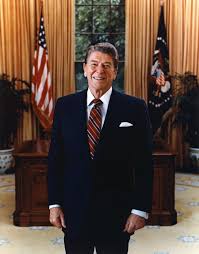
Ronald Reagan brought significant change to the American landscape. On the domestic front, Americans had been plagued by a welfare state that expanded under the Johnson Administration a couple of decades before. Those who did not want to work, did not have to. Government was entitled to as much of the public's money as it deemed necessary. Paying excessive taxes was considered "patriotic" and complaining about them was un-American. Democrats at this time enjoyed the jovial position of being the Santa Claus of the Welfare State and Republicans were relegated to being the scrooges financing government programs. It was no surprise that the Republican Party had been the minority party since 1932.

Ronald Reagan said to work was noble and to not work was a disgrace if one was able. Ronald Reagan declared that the government was taking the people's money and that is was the Congress, not the American people, that needed to be held accountable. His massive tax cuts in 1981 led to the longest period of prosperity since the booming 1920s. More importantly, Reagan changed the way people thought about government and became to believe that monies kept in the hands of the public was always better than money in the hands of government. In no time Republicans became the party of defenders of the taxpayer and Democrats became seen as thieves for those unwilling to work for themselves. In 1980 more than 30% described themselves as “card carrying Democrats.” By the end of the Reagan Administration, this number was down to single digits. Reagan changed America’s political demographics more than any person with the exception of Franklin Roosevelt or Abraham Lincoln.

Today, "Morning in America" almost seems like ancient history. Instead we are facing a "Nightmare on Main Street." Barack Obama is socializing medicine, destroying the energy industry, spreading a cancer through out the banking industry, destroying incentives for those who work, and is increasing entitlements for those who will not work. He is raising taxes on those who make $250,000 a year and more, as well as on those who drive cars, smoke cigarettes, use health care, have a job, or use money (thanks to his inflationary policies).

The Obama Administration promises to create a situation very similar to the one that catapulted Reagan into the White House. Even today, friends of liberty are wondering who could help fill the void. The challenge for us is to end the nightmare and usher a new era of prosperity and freedom that we have not seen in years. The time to begin that process is now.

Kevin Price is Host of the Price of Business, the longest running show on CNN 650 (M-F at 11 am), AOL Radio, and CBS Radio. Eric Bolling of Fox News and Fox Business says that Price’s Blog “is very influential and moves the blogosphere.” Steve Moore of the Wall Street Journal calls Price the “best business talk show host in the country.” Find out why and visit his blog at www.BizPlusBlog.com and his show site at www.PriceofBusiness.com.

Labels: , , , , , , ,

Wednesday, March 18, 2009

Obama takes from Vets to Expand Welfare Rolls

If it were any other President at any other time, I would be shocked. For Barack Obama, the latest announcement is nothing more than business as usual. Recently, members of the Obama administration (including the President) met with members of several veteran organizations, including the largest of such groups -- The American Legion. Leaders of that organization are up in arms because of what they heard and it is for good reason.

In a press release from the organization, we learn that the leader of the Legion (Commander David K. Rehbein) is "deeply disappointed and concerned” after a meeting with President Obama today to discuss a proposal to force private insurance companies to pay for the treatment of military veterans who have suffered service-connected disabilities and injuries. The Obama administration recently revealed a plan to require private insurance carriers to reimburse the Department of Veterans Affairs (VA) in such cases. " The release goes on to point out that Obama "is looking to generate $540-million by this method, but refused to hear arguments about the moral and government-avowed obligations that would be compromised by it."

Finally, the Legion points out that "This reimbursement plan would be inconsistent with the mandate ‘… to care for him who shall have borne the battle…’ given that the United States government sent members of the armed forces into harm’s way, and not private insurance companies." To saddle private insurance companies with this cost could lead to discrimination towards those who served in the military when they consider covering vets. Furthermore, since policy have financial limits, this policy could take away coverage for other family members who might need it. On a broader note, many fear this type of policy is part of Obama's larger objective to burden private insurance companies with higher costs in order to weaken them as part of the Administration's on going objective to make a case for socialized medicine. Insurance companies will be forced to raise premiums in order to pay for this additional liability. Obama will point to this situation as an indicator of inefficiencies among insurance companies.

The irony is that, while Obama is trying to increase the burden of those fighting men and women who have protected our country, this Administration is also pressuring governors to increase the welfare rolls by allowing people who are not even seeking employment to receive benefits. For example, Gov. Haley Barbour noted, that if his state of Mississippi wanted to receive $54 million in increased unemployment benefits from the Obama "stimulus" package, they will have to expand the benefits to include those not actively looking for employment or even willing to take a job if offered. If Barbour didn't take it, he will receive only 4 billion of the expanded benefits. It is clear why governors would be resistant to such a bizarre policy approach. Obama is single handily restoring the welfare policies that wereso pervasive before 1996, when a bipartisan approach was used to reform a system of economic dependency.

Obama wants to harm our veterans and benefit those who will not work. What a strange world we live in today.


Kevin Price is Host of the Price of Business, the longest running show on CNN 650 (M-F at 11 am). Eric Bolling of Fox News and Fox Business and says that Price’s Blog “is very influential and moves the blogosphere.” Steve Moore of the Wall Street Journal calls Price the “best business talk show host in the country.” Find out why and visit his blog at www.BizPlusBlog.com and his show site at www.PriceofBusiness.com.

Labels: , , , ,

Monday, March 16, 2009

Is There an Upside to Obama?

Friends of liberty everywhere are up in arms over the dangerous rise of Barack Obama. People are storing up guns, discussing relocation to other countries, and are even stashing away cash in anticipation that things will likely get worse instead of better under this Administration. In fact, I'm one of many who believe that Obama wants things to get worst so that he can promote an ever expanding role for government.

With all the alarm, is there an upside to Barack Obama as President? I think so and here are a few examples:
  • Barack Obama is one of the most polarising politicians in US history. For the first time in decades, the political camps have been very well defined. This creates clarity that I believe is long over due.

  • Because we have Obama and his Democratic colleagues in Congress, it will be very easy for the American people to determine who is responsible for the direction we are going. Obama owns this economy and the direction the nation is going as a whole.

  • I, for one, am delighted to not have faux Conservative in the White House. I have long stop defending Bush, but the media continually described Bush as someone who represents the Right. His insane and at times unAmerican policies were often projected as "Conservative," which could not be further from the case. Let the Democrats defend Obama for while!

  • This situation is forcing politicians to define who they are and what they believe in like we haven't seen in years. This was painful for many, an epiphany for others. We need many to have life changing experiences and we need more to be accountable.

  • This is forcing true believers in liberty to stop being co-dependents to liberal Republicans who have destroyed our reputation, if not our integrity. It appears we are not taking it any more. It is about time.

In spite of all this "up side," those who support free enterprise, limited government, and pro-family values have plenty to make them concerned. Surviving Barack Obama and over coming the obvious addiction the general population has of government will be no small task. But instead of being at the end of America's greatness, our best days may be yet to come. In 1979 I was getting involved in politics as a teenager at a time that seemed to me was our darkets hour. Our international reputation was laughable, inflation and unemployment were at double digits, and another country seemed to be falling under Communist influence every few months. At the time it seemed like the sun was falling on a great nation. In reaitly, it was a dawn of a new era. Our best days could still be ahead of us. That choice is ours.


Kevin Price is Host of the Price of Business, the longest running show on CNN 650 (M-F at 11 am). Eric Bolling of Fox News and Fox Business and says that Price’s Blog “is very influential and moves the blogosphere.” Steve Moore of the Wall Street Journal calls Price the “best business talk show host in the country.” Find out why and visit his blog at www.BizPlusBlog.com and his show site at www.PriceofBusiness.com.

Labels: , , , , , ,

Thursday, January 29, 2009

The States and Minimum Wage

Unemployment is rising fast and Americans are looking for quick answers. Currently, President Obama is looking for the federal government to solve that problem and, frankly, that level of government is the primary reason why we are in this mess. The federal government ended the multi-year supply-side tax cut that kept the US going and growing in spite of wars and the implications of September 11th and has continually turned to failed "bail outs" that are not only not working, but will likely lead to hyperinflation like we have only read about in history books.

I think that the President should draw on the wisdom of the Founding Fathers and look towards state solutions to the unemployment crisis. The federal system created by our nation's early leaders points to the virtues of the states as a resource for answers. I think it is exactly where the President should go for employment answers and the place to start is minimum wage.


For some reason, the minimum wage issue has not even been discussed by our policy leaders, but I believe it may be as big as a contributor to our current situation as are some of the other factors that are debated about daily. According to the Bureau of Labor Statistics, unemployment has largely been below 5 percent for years until the summer of 2008. What happen then? The Congress had raised the largest increase in the minimum wage in 16 years. In July of 2009, that minimum wage will jump again to over $7 an hour. It is doubtful the economy can sustain such an increase and as a result, the federal government should consider an alternative approach, which is to eliminate the federal minimum wage entirely because it is a deterrent to job creation.

I know, it sounds radical, but instead of the federal government in Washington, DC telling states, often thousands of miles away, where they should keep their minimum wage; the US government should simply mandate the states to set their own basements. This would create competition among the states and give them a tool to radically change their own economies. Some states (like California) would likely keep the minimum wage at the same rate. Other states might set their own minimum wage but permit cities to have lower wages still if their economies demand such. For example, Camden, NJ; East St. Louis, MO; and Detroit, MI have suffered from long term depressions long before the national recession. This would give them what they need to turn their economies around.

For years states and cities have set minimum wages that are higher than the federal mandate (for example, San Francisco's is around $9 an hour). Minimum wage is not brain surgery and there is nothing about it that would make it necessary for the federal government to set it. It makes perfect sense for it to be determined by the people who are most profoundly affected by it and those are the states and the cities through out this country.


Kevin Price is a syndicated columnist whose articles frequently appear at ChicagoSunTimes.com, Reuters.com, USAToday.com, and other national media. Kevin Price is Host of the Price of Business (M-F at 11 AM on CNN 650) and Publisher of the Houston Business Review. Hear the show live and online at PriceofBusiness.com. Visit the archive of past shows here.

Labels: , , , , , , ,

Thursday, January 22, 2009

Only Barack Obama Could Pull this Off and it Would Cure Economic Woes

Every week we here of increasingly higher jobless numbers and policy makers are dumbfounded as to what to do about it. Approximately one year ago we had virtually full employment at around 5 percent unemployment. At current trends, it will likely be ten percent or higher by the end of the year, unless something miraculous happens.

However, we are not hearing about any stroke of genius, but rather traditional government "solutions" to economic problems. We are hearing about "make work" programs and "bailouts" that have government at the center of the solution. It is interesting that Barack Obama, who was marketed as an agent of change, would find his solutions in the waste bin of government created work, for answers. He needs to go deeper, he needs to pursue an entire paradigm shift.

Obama campaigned as a candidate who supported transparent government, but there is nothing more deceptive than our current tax system that discourages wealth creation and places businesses in the role as tax collector. Remember, businesses don't pay taxes, they are merely tax collectors. Taxes are a fixed cost of doing business. If taxes on businesses were eliminated, consumers would enjoy the savings over night because businesses couldn't afford to be reluctant to transfer the savings due to competition. These taxes on businesses are the single force undermining job creation today. They force businesses to find countries that are cheaper for doing business, be it in labor, taxes, or other factors. Currently, the US has the second highest tax rate of any industrialized country in the world and we do not even want to compete with cheap salaries (nor can we). Eliminating dishonest business taxes would restore some transparency to government and create many more jobs. It is as simple as that.

But those taxes would have to be replaced with others and the only honest place to raise those revenues are directly on the people and on their consumption (rather than income), however challenging to pursue. This is contrary to Obama and the Democrats class conflict philosophy, but it is the most honest, efficient, and the least damaging on all job creation (in fact, it would generate more jobs). Obama could make history with these realities.

No one, but an anti-Communist like Richard Nixon, could open relations with the Chinese. If any President who had a history of being "soft" on Communists open these doors, they would have been denounced and dismissed. Nixon brought an element of surprise that made the move possible. So, too, was the case with Bill Clinton who truly did end "welfare as we know it." It took a progressive Democrat to break the cycle of poverty that was holding the poor hostage. If a Republican President had proposed such a policy he would have been dismissed as being "cruel" and "heartless." To change our tax code towards a consumption system would require a similar element of surprise and would need to be done by someone who has promoted himself as a champion of the poor. That describes Obama very well.

With such a policy, the only serious challenge he would face is among his fellow Democrats in Congress. However, if he continues to pursue policies that destroy jobs, he will likely have a Republican Congress in 2011. This is a similar situation that Bill Clinton had in the 1990s in which a Republican Congress played a role in getting his reform passed. Clinton's welfare reform is one of the greatest policy achievements of the second half of the 20th century. A change in the way we collect taxes by Obama could be one of the greatest policy achievements of the 21st century and it is one many would love for him to seriously consider. Especially those facing unemployment.

Kevin Price is a syndicated columnist whose articles frequently appear at ChicagoSunTimes.com, Reuters.com, USAToday.com, and other national media. Kevin Price is Host of the Price of Business (M-F at 11 AM on CNN 650) and Publisher of the Houston Business Review. Hear the show live and online at PriceofBusiness.com. Visit the archive of past shows here.

Labels: , , , , , , , , , , , ,

Monday, November 17, 2008

US Businesses Vote with Their Pink Slips

Before President-elect Barack Obama had a chance to resign from the US Senate there was an out pouring of pink slips through out US industry. Some may argue that they would have happened regardless of who won, but I found it interesting that these businesses held on to these many employees until after the election either to boost Republican hopes for reelection or to make a protest statement if things didn't turn out favorable for business.

We already knew that the job creators -- businesses of all sizes -- were supporting McCain and it wasn't even close. According to CEO Magazine's survey, over 80 percent of CEOs favored McCain over Obama. McCain's support or the fear of Obama was overwhelming.

However, a majority of Americans didn't seem to care. They desired a "tax cut" over a job (although we are now told that being employed will be a requirement for such a cut). It appears that many of them will enjoy neither.

Barron's notes that "A week ago, we got word that the number of unemployed Americans in October shot up by 603,000, the second largest increase in 28 years! Today, the Labor Department tells us the deterioration actually accelerated in the first days of November. The number of people seeking unemployment benefits surged by 516,000 in the week ended Nov. 8. This is the largest weekly increase since immediately after Sept. 11 and the second biggest in 16 years. At this point, more Americans are collecting unemployment insurance than at any time in a quarter century, with some 3.9 million on the dole as of Nov. 1, a 51% increase from a year ago."

The timing of these layoffs and the elections are more than coincidental to me. They are directly connected. I have been told by business owners for months that if Obama was elected, jobs would have to go. We don't know if the new President will keep his promises, but business owners certainly have. Businesses through out the country are having a second election and it is costing Americans their jobs. I don't blame American enterprise, however, but the new Administration that has a predatory view of it.

The current scenario reminds me of a mild version of Ayn Rand's Atlas Shrugged. In the Objectivist philosopher's book, she describes a scenario where the "men of the mind" go on strike and stop contributing to commerce, art, culture, inventions, etc. In that book the people that drive the economy grow tired of being mistreated by the excesses of government and they simply stop working. No, we are not quite there yet, but give us time.

Who knows, Obama might be the pragmatist he claims he wants to as he has stated in a recent interview. The media, however, isn't buying it and in light of his rhetoric and record, I cannot blame them.

Kevin Price articles frequently appear at ChicagoSunTimes.com, Reuters.com, USAToday.com, and other national media.

Kevin Price is Host of the Price of Business (M-F at 11 AM on CNN 650) and Publisher of the Houston Business Review. Hear the show live and online at PriceofBusiness.com. Visit the archive of past shows here.

Labels: , , , , , , ,

Tuesday, October 07, 2008

2008 Elections as a Referendum for Democrats

Thanks largely to the media, Senator Barack Obama and his fellow Democrats have succeeded at making the 2008 election a referendum on George Bush and (by party affiliation) Senator John McCain. We are told that the current economic challenges we face are directly related to the policies of George W. Bush. However, to do such, would be to presume we live in some monarchy without checks and balances. Congress is, in our Constitution, the first branch of government and the President cannot do anything without that legislative body.

In 2007, the members of the Legislative Branch, in both Houses, went from a majority of Republicans to a majority of Democrats. Interestingly, those were not the only changes that transpired.


In 2006, with Republicans in the White House and in both Houses of Congress...


  • Consumer confidence stood at a 2 1/2 year high. People were buying more and feeling better about their economic future.

  • Regular gasoline sold for $2.19 a gallon. This price is far too high, but would be a dream price compared to current levels.

  • The unemployment rate was 4.5%. Economists define this as "full employment." This economy was extremely hot and the demand for quality employees was at an all time high.

  • The Dow Jones hit a record high. 14,000 and higher. Americans were optimistic about the future on both Wall Street and Main Street.

In 2008, with Democrats now in the majority of both Houses of Congress...


  • Consumer confidence has reached a low that it hasn't seen in years

  • Gasoline is hovering around $3.50 a gallon

  • Unemployment is up to 6 percent -- a significant jump.

  • Americans have seen their home equity drop by over $10 trillion nationwide

  • Approximately one percent of American homes are in foreclosure.

  • The Dow Jones has dropped to below 10,000 points for the first time in four years.

I do not want to overly simplify. I know there are plenty of guilty parties in both parties. However, the United States was clearly better off with Republican majorities in both Houses of Congress and in the White House. My vote in this race will be every bit as much a referendum on the Congress as it will be on the White House.


Kevin Price articles frequently appear at ChicagoSunTimes.com, Reuters.com, USAToday.com, and other national media.


Kevin Price is Host of the Price of Business (M-F at 11 AM on CNN 650) and Publisher of the Houston Business Review. Hear the show live and online at HoustonBusinessShow.com. Visit the archive of past shows here.

Labels: , , , , , , ,

Wednesday, May 14, 2008

Houston Area Job Board

Recently dBusinessNews released the following announcement:

Kevin Price, Host of the Houston Business Show (M-F at 11 AM on CNN 650) announced the addition of a new jobs board on HoustonBusinessShow.com. "The job board is new to the Houston Business Show, but is powered by one of the most powerful companies on the Internet when it comes to finding jobs and employees." From day one individuals will find 1.5 million jobs online.


In addition to over a million jobs in thousands of areas, the site offers numerous additional tools including:

* How to Make Your Resume Stand Out

* Find Out What Your Background Shows

* How to Get your Resumes in Front of Hiring Managers

* How to Get More Exposure to Employers

* And Get a Free Salary Report (learn what others in your field are making.

Many of the resources on this site are free and tools are available for both those looking for a job and looking to hire.

I am, of course, delighted by this addition and wanted to share it with my readers. The great thing about it is that you can post to find a job or an employee anywhere.

Listen to a helpful audio program on dealing with job loss by clicking here. It is an interview with Kathie Bowersox of Quantum Leap Success Coach.

Labels: , , ,