m

Friday, August 07, 2009

Tax Policies in a Small World

The cliché that the "world is small" has increasingly become fact and not merely a clever statement. In fact, one of the most important books on the changes the world has faced in recent years is "The World is Flat" by Thomas Friedman. In it, Friedman points out that the lag time between information and decision making is at a all time low. Not only do people know where the best places are for the best deal on a car or a TV, they know the best states and countries for doing business.

Ireland went from what was practically a "third world" country in Europe to one of the fastest growing economies in the world. That was directly linked to its efforts of pursuing the lowest corporate tax rates in the industrialized world. Meanwhile, in the same time frame, Japan's economic situation has only become more dire as it continued to pursue high tax policies and garnering the dubious distinction as having the worse tax environment for business among modern economies.

The problem facing governments is simple, because in addition to being able to find our information fast on changes in government policies, people are able to move capital at a more rapid rate than any time in history. This is particularly true for the very wealthy (who have the resource to move money), who are always a popular target for high tax policies. The problem is not only among countries, but among regional or state governments (depending on the country).

Take the problem facing Maryland. The Wall Street Journal notes that the state of Maryland was in a terrible fiscal crisis and the government decided to saddle the deficit on the backs of the rich and "created a millionaire tax bracket, raising the top marginal income-tax rate to 6.25%. And because cities such as Baltimore and Bethesda also impose income taxes, the state-local tax rate can go as high as 9.45%. Governor Martin O'Malley, a dedicated class warrior, declared that these richest 0.3% of filers were 'willing and able to pay their fair share.' The Baltimore Sun predicted the rich would 'grin and bear it.'" The article goes on to point out that a year after the tax increases, "One-third of the millionaires have disappeared from Maryland tax rolls. In 2008 roughly 3,000 million-dollar income tax returns were filed by the end of April. This year there were 2,000, which the state comptroller's office concedes is a 'substantial decline.' On those missing returns, the government collects 6.25% of nothing. Instead of the state coffers gaining the extra $106 million the politicians predicted, millionaires paid $100 million less in taxes than they did last year -- even at higher rates."

There is no doubt that the recession is playing a role in the problem of less revenue coming into the states. However, the amount of revenue that Maryland is losing far out paces the majority of the states in the union. The rich are people and not blocks of wood. Unlike an inanimate object, when people are attacked (in this case "the rich" in the form of high taxes) they "fight" (which is why they join the many other income groups adversely affected by government in protests) or they "flight" (capital leaving to find safer or more profitable places).

Obama has waged a war on those he deems affluent. This is beginning to include those who make less than $250,000 a year as seen in cigarette taxes and Cap and Trade. Even before many of Obama's policies have been put into law, businesses are responding. USA Today reports that Federal tax revenue "plunged" by the largest amount since 1981." There is no question that many of the dollars disappeared due to the recession, but there appears that much may have taken "flight" to safer places.

If the US is serious about increasing its revenues, it will need to develop tax policies that allow it to compete with other countries that are fighting to improve their economic circumstances. Just as companies have to compete with low prices, countries now have to compete with lower taxes.

Kevin Price is Host of the Price of Business, the longest running show on AM 650 (M-F at 11 am) in Houston, Texas and on AOL Radio. His articles often appear in Chicago Sun Times, Reuters, USA Today, and other national media. Steve Moore of the Wall Street Journal calls Price the “best business talk show host in the country.” Find out why and visit his blog at www.BizPlusBlog.com and his show site at www.PriceofBusiness.com. You can also find Price on Strategy Room at FoxNews.com.

Labels: , , , , ,

Monday, July 13, 2009

Richard Shelby has Candid Discussion about the Fed Chair on Fox Business

For the vast majority of Americans, being told that we are having a "jobless recovery" is the same as saying we are having no recovery at all. "Recovery" means employment, job growth, opportunity, job security (even if it is not the one you are in, it is the knowledge that there are plenty available). "Recovery" without jobs, means prosperity only for the "haves" in an economy. This is something that seems to persist no matter what is going on in the larger picture.

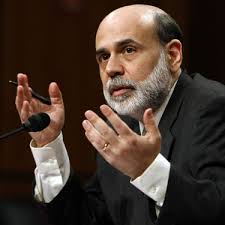
In a startling interview on the Fox Business Network, Sen. Richard Shelby (R-AL), the ranking Republican on the Senate Banking Committee, stated that he was informed by Federal Reserve Chairman Ben Bernanke that we might be dealing with a "jobless recovery."

Here are excerpts from the interview with Sen. Shelby on his very candid discussion with Chairman Bernanke:


What does Chairman Bernanke say about the recovery? "He thinks when there will be a recovery—basically his words—it will be a jobless recovery, and that’s not good for America.” Again, for the vast majority of Americans, this is no recovery at all.

What about giving the Federal Reserve more regulatory power? “We talked about the regulatory structure that we will be debating this year up here, and the Fed basically as a regulator failed the American people. Why should we give them more power now? That’s the question I asked. He didn’t say they didn’t fail. He didn’t admit it, but he didn’t say otherwise.” Alas, we have seen how much the shift in power to the Federal Reserve has "benefited" the larger economy to date. No wonder many members of Congress are skeptical.

What about the pace of an economic turn around? “The answer was basically muddle… He was very careful with what he was saying even to me, a member of the banking committee.” I find the word "even" to be a little humorous. Seeing the insane things that have happened from this Administration and the total lack of transparency of those that are governing, you would almost think Sen. Shelby would say "especially to me." The last thing the Fed wants is more accountability, in my opinion.

Has the economy made a turn around the corner? “He couldn’t really answer that. He thinks some of our financial crisis has stabilized, but it’s not over.” I guess one of the "jobs saved" so far is Bernanke's. That is a sign of recovery, isn't it?

As I have said before, being hungry is crucial, no matter what business you are in, including cable news. Consistently, Fox Business, even with its relationship with the largest name in cable news, Fox News, demonstrates a desire to beat others to the most important business news stories of the day, as seen in this breaking news story on Shelby. I don't mean to sound like Neal Cavuto, but if you don't get Fox Business, make sure you contact your cable provider. In the mean time, you might consider regularly visiting FoxBusiness.com for the latest in videos and other information.

Kevin Price is Host of the Price of Business, the longest running show on AM 650 (M-F at 11 am) in Houston, Texas and on AOL Radio. His articles often appear in Chicago Sun Times, Reuters, USA Today, and other national media. Steve Moore of the Wall Street Journal calls Price the “best business talk show host in the country.” Find out why and visit his blog at www.BizPlusBlog.com and his show site at www.PriceofBusiness.com. You can also find Price on Strategy Room at FoxNews.com.

Labels: , , , , , , ,

Saturday, June 27, 2009

It is time for Economic Triage

You know medical triage, the idea of a procedure used in emergency rooms to determine who gets treated first. When Barack Obama was running for President and, shortly after he was elected, we were daily lectured about the urgency of the situation facing our economy.

What we have seen is a massive subsidy primarily benefitting the richest corporations in America passed first by Bush in the fall of last year and part 2 (arguably worse) in January of 2009. It was interesting that the very liberal and very conservative Members of Congress voted against this legislation. The left clearly saw the corporate welfare involved and the right saw both that and the obvious disregard of the Constitution. We were told that action was needed "now!" If not, we were looking at unemployment of around 8.5 percent in 2009. We have that unemployment rate and more with "stimulus" and the situation is getting worse.


There are several serious challenges facing Americans today:


  • The largest unemployment rate in recent history. Forget about the 9.5 percent touted by the Obama Administration, economists on both the right and left say it is more, much more. Bill Clinton's former Secretary of Labor and a huge fan of Obama, Robert Reich, says the actual uemployment is closer to 15 percent.

  • Excessive taxation of the job creators. The vast majority of jobs comes from people who make $250,000 a year or more, yet this group is being singled out to pay more taxes as a form of economic genocide. It has never been easier to move capital and with US tax rates the second highest among industrial countries in the world, you can expect a flight of capital and jobs that comes with such.

  • Hyperinflation. On one day, the federal government pumped $1.4 trillion in the money supply in order to pay some of its recent bills and to "jump start" the economy. This type of policy leads to hyperinflation as too much money chases too few goods.

Obama should approach our situation with these realities in mind, and as a doctor in triage, he should be driven by the mandate to "do no harm."


  • Eliminate barriers between people and jobs. This isn't through temporary government jobs that will run out with the subsidies, but through real jobs that create revenue for them to grow in number and in quality. The federal government should mandate the states to have a minimum wage law in each state of the union and allow them to set them based on the needs of the people and the cities. This would not cost the federal government a penny, but would spur economic activity immediately.

  • Eliminate taxes on corporations because they do not pay taxes, they are tax collectors. Taxes are a fixed cost for doing business, plain and simple. If taxes are too high, businesses have no choice, but move to places where the rate is less so they can lower prices and be competitive. This would have a profound impact on high quality job creation. This policy would also encourage an increase in productivity and soften the blow of inflation.

  • They should end taxes on wealth creation and replace income tax with a sales tax. This would eliminate the economic genocide against job creators and would more fairly spread the financial burden of government on all economic groups.

Our situation is dire, the answers to our problems are in the market place and not in the halls of government. These kind of actions would encourage problem solving where it belongs -- in the hands of the people.


Kevin Price is Host of the Price of Business, the longest running show on AM 650 (M-F at 11 am) in Houston, Texas and on AOL Radio. His articles often appear in Chicago Sun Times, Reuters, USA Today, and other national media. Steve Moore of the Wall Street Journal calls Price the “best business talk show host in the country.” Find out why and visit his blog at www.BizPlusBlog.com and his show site at www.PriceofBusiness.com. You can also find Price on Strategy Room at FoxNews.com.

Labels: , , , , , ,

Friday, June 05, 2009

Under Obama, Ten Percent Unemployment is Described as Prosperous Economy

It seems like just yesterday when George Bush's unemployment rating of around 5 percent was described as symptomatic of a "weakening economy." Meanwhile, a CBS affiliate website just declared that the "Unemployment Rate Shows Hope" rather than the more logical slug of "Unemployment is at its worse rate in 25 Years."

The positive spin today versus the "horrible" scenario of a couple years ago simply don't make sense, especially when you look at the numbers from 2006:
  • Consumer confidence stood at a 2 1/2 year high. People were buying more and feeling better about their economic future.

  • Regular gasoline sold for $2.19 a gallon. This price is far too high, but less than today and certainly better than the direction it is going. "Cap and Trade" is just another name for gas taxes.

  • The unemployment rate was 4.5%. Economists define this as "full employment." This economy was surprisingly strong and the demand for quality employees was at an all time high.

  • The Dow Jones hit a record high. 14,000 and higher. Americans were optimistic about the future on both Wall Street and Main Street.

The raging optimism by the media about the future of the US economy is running rampant. In a story that would almost make one laugh because of how outlandish it sounds, CNN Money is reporting a headline stating that "Wal-Mart CEO: 'Our customers will stay with us.'" The subtitle goes further: "Citing a 'new normal' in shopping behavior, (Mike) Duke promises shareholders that the discounter will not lose customers even after economy rebounds." Rebounds? One recent upbeat Consumer Confidence survey and nearly ten percent unemployment translates into "rebound?"

I keep hearing from experts that, "no matter what, this economy will get better." If this Administration continues to pursue policies that tax and regulate job creation out of existence, job growth will be more of a dream than a reality. Government can either encourage job creation or deter it. This government is taking the latter approach.

The media intends to continue its course of being a cheerleader, rather than a force to hold the government and others accountable. You can see it in the headlines:


  • The Kansas City Star argues that "The Good News on Jobs Cloaked in Bad News." In other words, "ignore the ten percent unemployment, the worst job numbers in a quarter of a century, and your own gut instincts...everything is fine."

  • Reuters takes an odd, but up beat approach by staying that "Jobless Data Bad, But Better."

  • The Houston Chronicle is even more optimistic: "Report Adds Hope to Recovery."

  • Finally, the Associated Press states "Layoffs Slow as Recession Eases."

The stock market is still around half its high, unemployment is higher than it has been in a quarter of a century, and many new taxes and regulations that have a history of cooling off an economy have not yet gone into effect. Reports of an economy on the mend are quite exaggerated.

Back during the stimulus package debate, the Obama Administration warned that if the bill didn't pass, we would have 8.8 percent unemployment. With the package, we currently have 9.5 percent. It is amazing that this fact is large being ignored by the media.

The job of the media is to report, not promote. It is to ask tough questions, not be a mouth piece for those who would use it. The media today is responsible for "making history" instead of being a witness to it. As a result, it has so much invested in the Obama Administration, we will find it very unlikely that the media will hold this President accountable on the public policy front.

Kevin Price is Host of the Price of Business, the longest running show on AM 650 (M-F at 11 am) in Houston, Texas and on AOL Radio. Eric Bolling of Fox News and Fox Business says that Price’s Blog “is very influential and moves the blogosphere.” Steve Moore of the Wall Street Journal calls Price the “best business talk show host in the country.” Find out why and visit his blog at www.BizPlusBlog.com and his show site at www.PriceofBusiness.com. You can also find Price on Strategy Room at FoxNews.com.

Labels: , , , , ,

Friday, March 06, 2009

What we can Learn About Business From Forrest Gump

One of my favorite films is Forrest Gump. It is full of great values on family, friends, morality, and life. Although its principal character is fairly cut and dry in terms of his integrity, this movie is not a simple fairy tale. It is a strong statement on how the choices people make matter.

During the film, Gump promises to go into the shrimp business with his good friend Pvt. Benjamin Buford “Bubba” Blue. Unfortunately, Blue died in the war, but Gump was a man of his word and he decided to go full speed ahead in making a company in his buddy’s name as soon as he got the money. In a turn of events that only Forrest could enjoy, Gump found himself in business and out on a boat trying to make a living catching shrimp. Unfortunately, Gump was late to coming to this market and found he was struggling to make ends meet. All the old timers knew the best place to find shrimp and poor Forrest was out cold. He didn’t give up, however, and through determination and prayer he found himself prepared for the opportunity of a lifetime.

However, it didn’t look like the opportunity of a lifetime when it came upon him. Instead, it looked like the end. A massive storm hit his port city and the vast majority of the competition hid from it and put their boats on the shore. They had a “bunker” mentality and a “buckling down” attitude and the result was the destruction of virtually all the ships. This was not the case for Forrest Gump who stayed on the boat and on the water; his aggressive attitude made him one of the only survivors of the storm.

Today, more people are interested in marketing than any point I have ever seen. The era of low hanging fruit is over and people know they have to go after potential clients. The question is how to do it. I have friends telling me about phenomenal marketing opportunities and can’t make a decision. They are simply stuck. What is preventing these people from making a decision? The biggest reservation is time commitment. They understand that virtually all marketing has a ramp up period before it reaches its effectiveness, but don’t know about committing for six months or more. My question is, “what do you plan on doing in six months?”
Those who do nothing will find themselves like those poor souls that were competitors of Forrest Gump. Their customers will disappear in this stormy economy while those who are aggressive will prosper. Unless you honestly plan on doing something else for a living a year from now, consider your marketing as a long term prospect and not a short term action. This economy will go to the brave and the bold, not to the faint of heart.


This article originally appeared at CNN650.com, part of the CBS Radio Network.

Kevin Price is Host of the Price of Business, the longest running show on CNN 650 (M-F at 11 am). Eric Bolling of Fox News and Fox Business and says that Price’s Blog “is very influential and moves the blogosphere.” Steve Moore of the Wall Street Journal calls Price the “best business talk show host in the country.” Find out why and visit his blog at www.BizPlusBlog.com and his show site at www.PriceofBusiness.com.

Labels: , , , ,

Saturday, February 28, 2009

Future Success Stories in a Painful Economy

I have been involved in politics and business for decades and I have not seen a situation like we are in today since the late 1970s and early 1980s. It is simply a challenging time and people are having a difficult time determining what to do next.

The Stock Market is now worth less than half of its all time high and unemployment is on its way towards double digits, with the number of people filing for benefits swelling by over 500,000 in just a few months.

One of the earliest and biggest problems of such rough times is the focus of news and other business information from what works and what is positive, to some of the most negative content you can find. An excellent recent example has been the laying off of Donny Deutsch by CNBC. The reason why? The network decided that people don’t want to hear success stories (a big focus of his program) in such a dismal economy. I think they could not be more wrong. The reality is, CNBC was in financial trouble and laid off several hundred employees (including Deutsch) in a money saving effort. People don’t merely want bad news and negative information. They are demanding inspiration. I am planning on providing more such positive information on the Price of Business show in the months to come.

The reality is we are going to have some excellent things come from the currently hard times. This country is made up of entrepreneurs and many (if not most) of the 500,000 who recently loss their jobs will be providing future success stories of people who brought new products and services to the market place. They will choose entrepreneurship instead of wallowing in their difficult circumstances.

Do you have a success story? If so, I want to hear from you. Send me an email and tune into the Price of Business every weekday at 11 am on CNN 650 and on AOLRadio.com (central time).


This article originally appeared on CNN650.com, part of the CBS Radio Network.

Kevin Price is a syndicated columnist whose articles frequently appear at ChicagoSunTimes.com, Reuters.com, USAToday.com, and other national media. Kevin Price is Host of the Price of Business (M-F at 11 AM on CNN 650) and Publisher of the Houston Business Review. Hear the show live and online at PriceofBusiness.com. Visit the archive of past shows here.

Labels: , , , , ,

Saturday, January 31, 2009

HOLLYWOOD RAGS FIND ECONOMY A DRAG!

I remember the old black and white movies and the Variety newspaper headlines they would show about the celebrity character in the film. They were big (usually all caps) and often highlighted with an exclamation point. With that, I couldn't resist giving homage to this old style when I learned recently that some of the movie industries biggest newspapers are facing serious troubles.

Mediabistro notes that "for more than 75 years, Daily Variety and The Hollywood Reporter have battled to be the movie industry's top newspaper, but recent layoffs due to the recession and competition from Internet blogs has Hollywood wondering if it will soon become a one paper town."


Advertising revenues are plummeting, even during the Oscars season where it is very common for the movie studios to spend big money on full page ads to get their films the recognition they believe is deserved. There are few things more powerful than an Oscar to get people into the movies. The public relations value is without compare. Furthermore, although Variety and the Reporter are expensive to buy ad space, they are less expensive than ads in publications that have larger audience. So with those ads movie makers can hit their target constituents hard to get the statue, but this year they are not doing it.


Don't worry though, the studios are still promoting their films, but they are using bloggers and other online media rather than spending big budgets on forms of promotion that often solicits skepticism rather than interest. Here are a few factors working against the Hollywood newspapers:


  • People are more influenced by the opinions of others than they are ads. Ads are insincere, "you mean they think you should watch their movie?" This is not a surprise and the movie makers are becoming aware of this reality.

  • The Hollywood set are more technically savvy than the larger population. These people are less likely to wait for a newspaper or look for one when they know the absolute latest information is on their laptop or mobile. News is about currency and that is exactly what print newspapers lack. The suffering that is rampant among old media in general is even greater in Hollywood news.

  • Although Hollywood fairs better than other industries in times of recession, everyone including tinsel town is operating with far more caution.

Increasingly print media is simply losing its relevance. People want what they want, when they want it. This does not bode well for print media, no matter the industry.


Kevin Price is a syndicated columnist whose articles frequently appear at ChicagoSunTimes.com, Reuters.com, USAToday.com, and other national media. Kevin Price is Host of the Price of Business (M-F at 11 AM on CNN 650) and Publisher of the Houston Business Review. Hear the show live and online at PriceofBusiness.com. Visit the archive of past shows here.

Labels: , , , , , , , ,

Saturday, December 27, 2008

Strange Sightings in Retail Land

"It was day after Christmas and all through the stores, not a creature was stirring, not even a sales hunter." It wasn't that bad, but I was really surprised by the very small numbers of people I am seeing out in the stores. In recent years, the days immediately following Christmas have been as busy as those immediately before. In my personal experience, that wasn't the case in 08.

On Christmas morning in our huge family, many of our family members had things that didn't fit, didn't work, or wasn't exactly what was wanted. I thought that I would be hauling at least 6 or 7 in the Suburban, but fear of the lines led to trading and making due for most. That lead to only four, with me driving. We had four stops on our list -- Academy (sporting goods), Sports Authority (sporting goods), Kohls, and JC Penny.

Even with the small number in our group, I was convinced that this mission would take hours, if not days. In reality, if the wife didn't go, we would have been done in less than two hours. She figured out how to make it last much longer.

The Sports Authority was nearly empty when we got there. There was around twenty in the entire store. At no time there was no more than two or three in the checkout lines. When we were ready to leave, our check out was empty.

Kohls was slightly better, but certainly nothing for management to get excited about, although the sales should have made it quite the attraction. The prices were extremely low on many items and you would think it would have attracted a crowd. We were checked out in no time.

I received a gift card to Academy and was ready to go, and the specials were really impressive. I walked out with a couple of college shirts representing my son's shool and a baseball cap for my Astros for less than $30. I even had dollars to spare. In spite of the low prices, the lines and crowds were typical of pre-Thanksgiving. They were not big at all.

Finally there was JC Penny. The sales weren't as strong and neither were the crowds. Very disappointing indeed!

According to Master Card, which monitors retail sales in general and not merely their own, Christmas sales plunged by at least 2 to 4 percent. In a business environment that demands an annual increase in sales on Christmas, this is unacceptable. This is expected to be a difficult year for retail indeed.

Kevin Price is a syndicated columnist whose articles frequently appear at ChicagoSunTimes.com, Reuters.com, USAToday.com, and other national media. Kevin Price is Host of the Price of Business (M-F at 11 AM on CNN 650) and Publisher of the Houston Business Review. Hear the show live and online at PriceofBusiness.com. Visit the archive of past shows here.

Labels: , , , , , ,

Wednesday, December 24, 2008

Ominous Signs for Gift Card Tuesday

We all know about Black Friday -- the day after Thanksgiving where people finally buy enough to put businesses in "the black." In recent years we have had Cyber Monday (the Monday following Thanksgiving in which people make most of their holiday online purchases) and I have been talking about Gift Card Tuesday both on the radio and online.

On the first Tuesday of February 2009, retailers will announce how much they made from gift cards sold in November of this year. Companies don't know based on the cards sold, ironically, but from the purchases that comes from the cards. Gift Card Tuesday will not be very pretty this time I am afraid.

This is due to several reasons. The first reason is obvious -- spending has reached a new low for consumers on this holiday season. People are extremely fearful about their finances and are reducing costs at every opportunity.

A second reason is closely associated with the first and that is the concern about the large number of retail businesses that are going under. There is sense that many more will go under right after Christmas and people will be stuck with cards that have little to no value. What could keep these companies in business -- an influx of new customers buying cards -- may not happen because consumers believe these business may become history. One of those interesting paradoxes of business. Because of this paradox, many more businesses may join the ranks of Circuit City (see video above) that are now out of business.

With the many other more urgent and pressing headlines, we haven't seen much about the economic impact of gift cards lately. I am sure we will in February.

Kevin Price is a syndicated columnist whose articles frequently appear at ChicagoSunTimes.com, Reuters.com, USAToday.com, and other national media. Kevin Price is Host of the Price of Business (M-F at 11 AM on CNN 650) and Publisher of the Houston Business Review. Hear the show live and online at PriceofBusiness.com. Visit the archive of past shows here.

Labels: , , , , ,

Monday, November 17, 2008

US Businesses Vote with Their Pink Slips

Before President-elect Barack Obama had a chance to resign from the US Senate there was an out pouring of pink slips through out US industry. Some may argue that they would have happened regardless of who won, but I found it interesting that these businesses held on to these many employees until after the election either to boost Republican hopes for reelection or to make a protest statement if things didn't turn out favorable for business.

We already knew that the job creators -- businesses of all sizes -- were supporting McCain and it wasn't even close. According to CEO Magazine's survey, over 80 percent of CEOs favored McCain over Obama. McCain's support or the fear of Obama was overwhelming.

However, a majority of Americans didn't seem to care. They desired a "tax cut" over a job (although we are now told that being employed will be a requirement for such a cut). It appears that many of them will enjoy neither.

Barron's notes that "A week ago, we got word that the number of unemployed Americans in October shot up by 603,000, the second largest increase in 28 years! Today, the Labor Department tells us the deterioration actually accelerated in the first days of November. The number of people seeking unemployment benefits surged by 516,000 in the week ended Nov. 8. This is the largest weekly increase since immediately after Sept. 11 and the second biggest in 16 years. At this point, more Americans are collecting unemployment insurance than at any time in a quarter century, with some 3.9 million on the dole as of Nov. 1, a 51% increase from a year ago."

The timing of these layoffs and the elections are more than coincidental to me. They are directly connected. I have been told by business owners for months that if Obama was elected, jobs would have to go. We don't know if the new President will keep his promises, but business owners certainly have. Businesses through out the country are having a second election and it is costing Americans their jobs. I don't blame American enterprise, however, but the new Administration that has a predatory view of it.

The current scenario reminds me of a mild version of Ayn Rand's Atlas Shrugged. In the Objectivist philosopher's book, she describes a scenario where the "men of the mind" go on strike and stop contributing to commerce, art, culture, inventions, etc. In that book the people that drive the economy grow tired of being mistreated by the excesses of government and they simply stop working. No, we are not quite there yet, but give us time.

Who knows, Obama might be the pragmatist he claims he wants to as he has stated in a recent interview. The media, however, isn't buying it and in light of his rhetoric and record, I cannot blame them.

Kevin Price articles frequently appear at ChicagoSunTimes.com, Reuters.com, USAToday.com, and other national media.

Kevin Price is Host of the Price of Business (M-F at 11 AM on CNN 650) and Publisher of the Houston Business Review. Hear the show live and online at PriceofBusiness.com. Visit the archive of past shows here.

Labels: , , , , , , ,

Monday, October 20, 2008

Jobs that Could Be in Trouble

The economy appears to be in trouble and everyone is wondering what industries will suffer the most from the up coming recession. When dollars get tight, people focus on cutting costs and buying necessities. So, anything that can be described as "waste" are most vulnerable. Currently, unemployment is now above 6 percent and some fear it could reach double digits.

The following are a few examples of industries that could be hardest hit:


  • Supermarkets and fast food establishments could be the first to see a negative impact. The latter is for obvious reasons, because people will simply refrain from eating out as often. Supermarkets, on the other hand, will find themselves in a battle over pricing that we hadn't seen in years. The large volume leaders -- Walmart, Costco, and Sam's -- will be the likely winners of that battle. AOL Money & Finance points out that "Aside from Supervalu, which has already said it is struggling, Kroger and Safeway could be affected as well. These three largest chains have more than 750,000 workers. If same store sales drop sharply and a large number of outlets are closed watch for as many as 50,000 people being out of work.This does not take into account the scores of smaller chains and tens of thousands of individual food retailers around the country." On the fast food front, 10,000 jobs have already departed from Starbucks. That will only be the beginning.


  • An industry that has been perceived as some what recession proof -- the Internet and E Commerce -- could be falling on hard times. The way these industries will be hit is if the damage is widespread throughout the business market place and it has a ripple effect on these areas. To some companies, E commerce and web businesses are an option, not a necessity. If that is the case, they too could suffer.


  • E companies could find themselves in pain. My company's own web platform of over 90 websites has seen a slight decline in pay per click advertising revenue (fortunately we have seen a rise of other advertisiers). People are getting their ads for less because there are fewer competing to place them. What type of business are vulnerable? Google, Yahoo, eBay, and Amazon, just to name a few. Combined, these four employ over 75,000 employees. Yahoo seems the most vulnerable and could easily layoff 20 percent of its 15,000 employees.


  • Software firms are also very vulnerable and I am sure that Bill Gates and his friends at Microsoft are among the most concerned. The largest of these companies employ over 600,000 combined. If these firms start laying off, it will have a trickle effect through out the entire economy since so many businesses are dependent on them.


  • The hot industry in my neighborhood is energy and even it is vulnerable to cut backs. The price per barrel has dropped from a high of nearly $150 to around $70. Those prices are still high, historically, but the days of the fatted calf may be fading. Some are projecting a cut of as many as 5 percent of the labor force in these industries.


  • Not surprisingly, media companies are taking a significant hit at this time. Everyone seems to be trying to lower expectations, including Viacom and CBS. The six largest media companies -- including Time Warner, Disney, and GE -- employ over 400,000 employees. If they start laying off the ripple effect could be huge.

What over shadows these dire concerns is the fact that thing Wall Street loves to see it that, when a business hits a hard time, the decision makers are tough and willing to make unpopular decisions. This is often best demonstrated in layoffs. In fact, the Stock Market has a history of rewarding companies with higher returns as they let employees go.


Kevin Price articles frequently appear at ChicagoSunTimes.com, Reuters.com, USAToday.com, and other national media.

Kevin Price is Host of the Price of Business (M-F at 11 AM on CNN 650) and Publisher of the Houston Business Review. Hear the show live and online at PriceofBusiness.com. Visit the archive of past shows here.

Labels: , , , , , , , , , , , ,

Monday, May 19, 2008

That Stubborn Recession

That stubborn recession. Won't it ever come? What? Surely we are in one? You have to wonder in light of a recent press release from the Conference Board which provides updates of economic activity. The problem is simple. It takes two quarters (six months) of continued economic decline to have a recession. We have been crying "recession" for almost a year, but have struggled to tie together months of decline. It has been really difficult for the doomsayers.

The Conference Board today has only made it even tougher. In a recent press release they point out that there has been an 0.1 percent increase in the Composite Index of Economic Indicators in April and this is the second month in a roll that we have seen such an increase. In March it went up 0.4 percent. It doesn't bode well for those who celebrate decline. The index measures the following ten areas (from Investopedia.com):


1. the average weekly hours worked by manufacturing workers


2. the average number of initial applications for unemployment insurance


3. the amount of manufacturers' new orders for consumer goods and materials


4. the speed of delivery of new merchandise to vendors from suppliers


5. the amount of new orders for capital goods unrelated to defense


6. the amount of new building permits for residential buildings


7. the S&P 500 stock index


8. the inflation-adjusted monetary supply (M2)


9. the spread between long and short interest rates


10. consumer sentiment


The most recent report average a net increase in the above areas. Read the complete release for more details.


I admit, I have seen indicators that the economy is a little softer than I would normally like to admit and I know places other than my Houston have been hard hit. I have seen office space available longer than most would prefer, I have seen a jump in the price of our family's gallon of milk, and other signs of struggle. But this is a remarkably resilient economy and seems to be quietly proving that in spite of headlines with a really negative message.


According to recent surveys on marketing, most advertising attracts sellers (others who want you to buy more ads) and not buyers. Do you want to know why? Email info@HoustonBusinessShow.com and put "marketing audio" in the subject line and we will get it to you.


Kevin Price is Host of the Houston Business Show (M-F at 11 AM on CNN 650) and Publisher of the Houston Business Review. Hear the show live and online at HoustonBusinessShow.com. Visit the archive of past shows here.

Labels: , , ,

Sunday, March 16, 2008

Declaring a Recession to End a Recession

It appears that virtually every major player in politics and government are now declaring a recession. Republicans and Democrats, Members of Congress and senior Executive Branch officials, and now, senior leaders of the Federal Reserve. They are all declaring a recession.

The academic definition of a recession is economic decline over two quarters -- that's six months for those of us who don't like calendars -- of economic decline. We barely have had two months, but virtually everyone is surrendering to the "R" word.

So the question is why? Why are we so anxious to enter a recession? Charles Payne of Wall Street Strategies and a regular feature on Fox Business and Fox News as well as the Houston Business Show, has said that although it may be too soon to declare a weaker economy, there are specific strategies we can take in event of such. It seems to me that we are pursuing such policies (e.g., pumping money into the economy to encourage growth) and it actually seems to be making matters worse. Payne agrees as do most sensible economic analysts. If we keep these inflationary policies up, we will be looking at the bad old 1970s again.

There seems to be a consensus that, if we declare a recession, that we can move on to greater economic heights. So far it isn't working and, if anything, it is actually making matters worse. We will have to wait and see whether the negative rhetoric produces economic growth.
For a copy of the free report, "Why Your Marketing Isn't Working," email Info@HoustonBusinessShow.com and put "marketing" in the subject line.
Kevin Price is Host of the Houston Business Show (M-F at 11 AM on CNN 650) and Publisher of the Houston Business Review. Hear the show live and online at HoustonBusinessShow.com. Visit the archive of past shows here.

Labels: , , , ,

Monday, January 21, 2008

Eagerly Waiting Recession

I love the movie "The Matrix." It is smart and imaginative. Yes, it's violent, but even that seemed to have a purpose. I love the scene where Agent Smith tells Neo the truth about the world he has always known. He tells the hero that in earlier attempts the machines attempted to make a perfect virtual world so that humans would be happy while they waited to be batteries for the machines. Smith goes on to say that it made the humans miserable and they had to give us the current world plagued with challenges and problems in order to make us content. We lived for bad things, he argued, and the Matrix accomodates such.

I like to consider myself an optimist, but there is a part of this story rings true. One of my earliest posts was on the "Real Economy." Back in July of 2006, when the economy was booming, I wrote that "any way, the news isn't good, but the economy keeps on chugging along at excellent levels." In spite of the news today, we only have a very slight drop in the economy over the last month. According to economists, it takes six months of decline to be called a "receission." But believe me, we will keep hearing recession talk, even if February shows a dramatic up swing. The media business is actually the bad news business. They thrive as long as the media is bad, in their opinion.

I'm not ready to buy the recession rhetoric, regardless of how strongly it is pushed down my throat. A recession requires six month of economic decline. We have only seen a soft month. I believe we had years of recession rhetoric, yet continued prosperity. We should continue to determine our economic destiny.
Kevin Price is Host of the Houston Business Show (M-F at 11 AM on CNN 650) and Publisher of the Houston Business Review. Hear the show live and online at HoustonBusinessShow.com. Visit the archive of past shows here.

Labels: , , , ,