m

Saturday, January 23, 2010

Warren Buffett on the Business and Government Connection

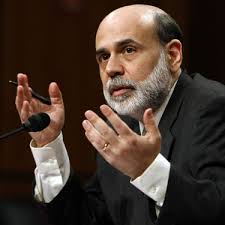
Warren Buffett rolled up his sleeves on the Fox Business Network in a very candid interview with the channel's Liz Claman, in which he discussed CEOs of failing banks, reconfirming Ben Bernanke, and his Berkshire company.

On the Bank Situation

"You'll always have banks that are too big to fail. We can't operate in this world without very big banks…If they are toppling the government will have to do something about it." This is contrary to conventional wisdom and of this writer. After a year we see that banks had more money than expected (witnessed in the pace in which they paid off their bailouts) and these government programs have done little to increase the pace of loans, since banks have found a way to get "money for nothing." Why risk their resources if they are washed in capital from Uncle Sam?


Furthermore, these policies have only undermined moral hazard at a time it is so greatly needed. The US cannot be in the business of rewarding bad decision making."If I were running things if a bank had to go to the government for help, the CEO and his wife would forfeit all their net worth…I think you have to change the incentives. The incentives a few years ago were try and report higher quarterly earnings. It's nice to have carrots, but you need sticks. The idea that some guy who's worth $500 million leaves and only has $50 million left is not much of a stick as far as I'm concerned." This was actually the highlight in the Buffett interview. We need a restoration of moral hazard in banking and that will only come when those responsible for bad decision making suffers for those choices."The CEO has to be the chief risk officer for a bank." This is a great observation and a view that needs to be restored. This is best achieved, in my opinion, by letting banks fail. Any executives behind such will find themselves looking for something else to do for a living.

On members of Congress who feel Ben Bernanke should not be reconfirmed:

"They ought to get down on their knees every night and thank the Lord that Bernanke was there through this. He took some unprecedented actions…He took the actions that were necessary to prevent panic from paralyzing this country." "Unprecedented" often means unconstitutional and has led to the expansion of government like we have never seen in our history, even in the Great Depression. What he has done is created instability in our monetary policy by pumping dollars into the economy at a pace we have never seen. Furthermore, his bailouts of large corporations have undermined the normal functions of a free market economy, such as moral hazard. He has created an economy without risk, which is far from free market in design. What he has done is criminal...two thumbs up for those members of Congress who wish to see him go.

On the future of Berkshire Hathaway's business acquisition

"We'll keep buying businesses, as long as I'm alive we'll keep buying businesses…we'll try to buy them for cash, sometimes we may have to use some stock, but we'll use as little stock as possible." If the US economy continues to reel from the unstable monetary and fiscal policies of the Obama administration, large corporations like Berkshire Hathaway will continue to benefit from them. It should be no wonder that, when questioned about Tim Geithner, he replied "I think he's terrific." Maybe for Buffett, but not the rest of the country.


Kevin Price is a syndicated columnist whose articles frequently appear at ChicagoSunTimes.com, Reuters.com, USAToday.com, and other national media. Kevin Price is Host of the Price of Business (M-F at 11 AM on CNN 650) and Publisher of the Houston Business Review. Hear the show live and online at PriceofBusiness.com. Visit the archive of past shows here.

Labels: , , , , ,

Monday, July 13, 2009

Richard Shelby has Candid Discussion about the Fed Chair on Fox Business

For the vast majority of Americans, being told that we are having a "jobless recovery" is the same as saying we are having no recovery at all. "Recovery" means employment, job growth, opportunity, job security (even if it is not the one you are in, it is the knowledge that there are plenty available). "Recovery" without jobs, means prosperity only for the "haves" in an economy. This is something that seems to persist no matter what is going on in the larger picture.

In a startling interview on the Fox Business Network, Sen. Richard Shelby (R-AL), the ranking Republican on the Senate Banking Committee, stated that he was informed by Federal Reserve Chairman Ben Bernanke that we might be dealing with a "jobless recovery."

Here are excerpts from the interview with Sen. Shelby on his very candid discussion with Chairman Bernanke:


What does Chairman Bernanke say about the recovery? "He thinks when there will be a recovery—basically his words—it will be a jobless recovery, and that’s not good for America.” Again, for the vast majority of Americans, this is no recovery at all.

What about giving the Federal Reserve more regulatory power? “We talked about the regulatory structure that we will be debating this year up here, and the Fed basically as a regulator failed the American people. Why should we give them more power now? That’s the question I asked. He didn’t say they didn’t fail. He didn’t admit it, but he didn’t say otherwise.” Alas, we have seen how much the shift in power to the Federal Reserve has "benefited" the larger economy to date. No wonder many members of Congress are skeptical.

What about the pace of an economic turn around? “The answer was basically muddle… He was very careful with what he was saying even to me, a member of the banking committee.” I find the word "even" to be a little humorous. Seeing the insane things that have happened from this Administration and the total lack of transparency of those that are governing, you would almost think Sen. Shelby would say "especially to me." The last thing the Fed wants is more accountability, in my opinion.

Has the economy made a turn around the corner? “He couldn’t really answer that. He thinks some of our financial crisis has stabilized, but it’s not over.” I guess one of the "jobs saved" so far is Bernanke's. That is a sign of recovery, isn't it?

As I have said before, being hungry is crucial, no matter what business you are in, including cable news. Consistently, Fox Business, even with its relationship with the largest name in cable news, Fox News, demonstrates a desire to beat others to the most important business news stories of the day, as seen in this breaking news story on Shelby. I don't mean to sound like Neal Cavuto, but if you don't get Fox Business, make sure you contact your cable provider. In the mean time, you might consider regularly visiting FoxBusiness.com for the latest in videos and other information.

Kevin Price is Host of the Price of Business, the longest running show on AM 650 (M-F at 11 am) in Houston, Texas and on AOL Radio. His articles often appear in Chicago Sun Times, Reuters, USA Today, and other national media. Steve Moore of the Wall Street Journal calls Price the “best business talk show host in the country.” Find out why and visit his blog at www.BizPlusBlog.com and his show site at www.PriceofBusiness.com. You can also find Price on Strategy Room at FoxNews.com.

Labels: , , , , , , ,

Tuesday, March 24, 2009

Sweden, US, and Answering the Socialism Question

The economic lessons the vast majority of us received in high school and college is grossly inadequate. Most people can't answer the simple question as to whether the US is making a dramatic move towards socialism. In fact, most can't even explain what socialism is. Socialism is simply defined as "government control or ownership of the means of production." What are the means of production? You and I are, of course, as are the businesses we own and work for.

Recently and with questionable Constitutional authority, the Congress has financed (largely through fiat money) the massive taking over of numerous financial institutions. So ambitious is the government's reach, Congressional leaders are "naming names" of individuals who received bonuses from companies that garnered a bailout to an angry mob and retroactively taxing these executives in an effort to punish the businesses they claimed a commitment to protect.


Secretary of Treasury Timothy Geithner and company are not finished yet. The Associated Press are reporting that he and Federal Reserve Chairman Bernanke "sought broad new powers Tuesday to regulate tottering nonbank financial companies like insurance giant AIG, and President Barack Obama said he hopes 'it doesn't take too long to convince Congress' to grant them.'" These powers don't merely transfer to the Fed and to Treasury, but to the President himself. Furthermore "Along with the new authority to regulate and, if necessary, take over giant financial companies whose collapse might endanger the broader economy, the administration wants increased oversight and controls of previously unregulated markets such as hedge and private equity funds." The government's reach will even go into financial institutions that didn't participate in the bailout programs.


I remember when Americans were shocked back in 1979 when Chrysler successfully negotiated a bailout from the federal government that was a fraction of what GM received in January, which was a very small fraction of what the government gave in bailouts in general.


Historically, when we typically think of socialism, we think of Europe. Furthermore, the most socialistic of all the European governments is arguably Sweden, which is famous for its "cradle to grave" government programs. But recently George Bush, without Congressional approval, gave $15 billion to help bailout the Automobile industry. Sweden's government had a very different message to its struggling and iconic Saab motor company. The New York Times reported that the "enterprise minister, Maud Olofsson, put it recently, 'The Swedish state is not prepared to own car factories.'" Saab lost over $340 million last year and has begun the process of "reorganization," which is one step short of bankruptcy.


Ironically, the Washington Times has noted that "Treasury Secretary Timothy Geithner said Monday that the administration decided on its public-private plan to rescue the U.S. financial system because "we are not Sweden," the country known for nationalizing troubled banks and other sectors of its economy. We are the United States of America, we are not Sweden," Mr. Geithner said.


Geithner is right, Sweden had enough sense and, maybe a commitment to free market principles, to avoid socializing the automobile industry. One thing we know for sure is that there is no question the US is making a dramatic move towards becoming socialistic and seems to be trying to surpass, rather than merely catch up, with Europe's poster child of socialism.


Kevin Price is Host of the Price of Business, the longest running show on CNN 650 (M-F at 11 am). Eric Bolling of Fox News and Fox Business says that Price’s Blog “is very influential and moves the blogosphere.” Steve Moore of the Wall Street Journal calls Price the “best business talk show host in the country.” Find out why and visit his blog at www.BizPlusBlog.com and his show site at www.PriceofBusiness.com.

Labels: , , , , , , ,

Tuesday, August 05, 2008

Bernanke's Fateful Decision

The Stock Market is on an unusual rise, the dollar is on an up swing, and gas prices are in decline. Furthermore, we just recently learned that the economy grew in the last quarter, which means we are not in a recession (regardless of how it "feels"). All of these examples of good news should lead to better news today when Federal Reserve Chairman Ben Bernanke discusses the future of interest rates.

Bernanke has, of course, three options. He could raise rates to further curtail concerns about inflation, lower them to make sure that there is enough stimulus to keep the economy growing, or keep them the same as a reasonable response of not pouring fuel on inflation or stalling an apparent economic turn around. Bernanke's decision is very important.

If Bernanke lowers the rates, expect a continued decline in the value of the dollar, serious concerns being raised about the economy's future health in the minds of those on Wall Street (because lowering rates would be seen as the Fed still being concerned about a recession), and the simple fact that interest rates will be getting too close to zero for its own good. After all, rates can't go below zero. If Bernanke raises rates, an idea being suggested by some as a way of saying the economy is now on the mend and to stop potential inflation, the short term impact would likely be devastating. It would be seen as the pouring of cold water on an economy that is only now beginning to warm up.

The best approach, according to most economists, is to simply do nothing. This sends a message that the economy has begun to rebound and it doesn't need further stimulus. The psychological boost on Wall Street to such an approach will be very powerful. It could be argued that there is too much money in the market today any way. Doing nothing would be an excellent way to let productivity catch up with the many dollars that are floating around in the economy today. Since too much money chasing too few goods creates inflation, restraint is helpful. It will be the first time in a very long time that the Fed has shown such restraint. The physicians motto of "do no harm" should be Dr. Bernanke's as well. Let's just hope he is a good physician.

Would you like to get a periodical email of the best of Kevin Price's political and economic content? Subscribe to the Houston Business Review at Info@HoustonBusinessShow.com.

Kevin Price is Host of the Houston Business Show (M-F at 11 AM on CNN 650) and Publisher of the Houston Business Review.

Labels: , , , ,

Tuesday, August 21, 2007

Christopher Dodd's Bold Move for Exposure

Christopher Dodd (D-CT) is considered an also ran in the race for the Democratic nomination in 2008. He lacks money, he lacks supporters, he lacks political base, but he keeps on running. Desperate times call for desperate measures and he is certainly in that situation. However, this week he has been one of the most mentioned names on the news, often eclipsing Clinton and Obama.
Why the sudden interest in Dodd? Well, the Connecticut Senator is the Chairman of the influential Senate Banking Committee and he is taking the Federal Reserve Chairman, Ben Bernanke to task for doing too little, too late in the current mortgage crisis.

There is a great deal of speculation as to his objectives. Some say that he is trying to look like the champion of the lower income individuals who have been harmed by the mortgages they obtained. Others think that he is trying to curtail the independence of the Federal Reserve. I'm cynical, I think the low profile candidate of the high profile race is looking for a little media attention. He isn't going to seriously influence our monetary system. Furthermore, he won't even intimidate Bernanke in rescuing home owners (although I won't be surprise if Congress does such a bail out). He simply is trying to develop an affordable way to get his face on the evening news. This week, it worked.

Labels: , , ,