m

Sunday, June 07, 2009

Chuck Grassley Provides Signs of Life for GOP

For months, and maybe years, Republican rank and file have been seeking signs of life from a party that has been limping along for ages. The GOP has become the "me too" party, or "the light" version of the Democrats, or many other cliches that can be used for a party that has become dysfunctional.

Every once in a while, we see signs of hope. Many were excited when John McCain chose Gov. Sarah Palin as a running mate. Gimmick or not, it was nice for the dominant moderate force of the party to recognize that conservatives still matter. The latest cause for excitement has come from an unlikely source, Senator Chuck Grassley (R-IA).

I've known Grassley for decades and almost worked for him back in the 1980s (instead I worked for Sen. Gordon Humphrey of New Hampshire). He was then, and still today, anything but an "activist" Senator. He is very soft spoken and not particularly sharp witted or sharp tongued. He is a fairly typical "middle America" personality. Subdued, soft spoken, and matter of fact. He is one of only 28 Senators in history to have made more than 10,000 votes, something he wears as a badge of honor (something that I deem a little suspicious). The 75 year old has been in the Senate since 1981 and in the US House for six years before that. In other words, he has almost 35 years of working in DC behind him.

This unlikely hero for Conservatives is getting attention for taking President Obama on in a way that we are not use to seeing these days. Politics is too genteel for my liking and the US Senate even more so. This very elite club is known for treating its colleagues and the President with "kid gloves." Meanwhile, millions of Americans are looking for someone to speak up. Enter Chuck Grassley.

The Senator, in his 70s, has used an unlikely vehicle for getting the message out as well. Pulling a chapter out of Barack Obama's book, his platform, of all things, is Twitter. Today, the Senator gave the following status report, ignore the grammar, the Senator is taking typical Twitter liberties:

"Pres Obama you got nerve while u sightseeing in Paris to tell us 'time to deliver' on health care. We still on skedul/even workinWKEND."

This 140 characters (give or take a few) has started a social networking revolution and has gotten conservative Republicans excited again. It is time for the GOP to start drawing lines in the sand and holding this Administration and its minions accountable for its arrogance. That is the kind of thing that could revive the dying Republican brand.

This particular issue, the rationing of health care, is absolutely crucial in fighting to defend the greatest health care system in the world (warts and all). If Republicans want to be relevant again, they will speak with force and passion, use Twitter, Facebook, Myspace, YouTube and every other tool they can think of to win back the hearts and minds of the American people. Our freedoms and future hang in the balance.
Kevin Price is Host of the Price of Business, the longest running show on AM 650 (M-F at 11 am) in Houston, Texas and on AOL Radio. Eric Bolling of Fox News and Fox Business says that Price’s Blog “is very influential and moves the blogosphere.” Steve Moore of the Wall Street Journal calls Price the “best business talk show host in the country.” Find out why and visit his blog at www.BizPlusBlog.com and his show site at www.PriceofBusiness.com. You can also find Price on Strategy Room at FoxNews.com.

Labels: , , , , , , , , , ,

Sunday, January 13, 2008

In the Future, Not All New Media Will Be Short


I have noticed that most of the videos and audios you find online are typically very short. I've been told by media experts that the magic number is four minutes. "More than four and the viewer gets bored." This had something to do, I'm sure, with the time restrictions placed by YouTube. Wired Magazine says we live in a "snack culture" that simply doesn't want to consume anything of substance when it comes to media.


Others argue that four is too many. There is the "One Minute How To" (designed to explain how to do something), the "One Minute Tip" (on technology), the "Sixty Second Investor" and many more. The assumption is that people simply are not going to spend that much time on a single video. It is the ADHD frenzy that is pervasive in online.


I personally believe this is about to change and the new International CES validates that assumption. This electronic expo is demonstrating numerous devices that make the link between the computer and the TV is becoming much more narrow. Soon, we will all be able to simply transmit what we want to watch from our computer to the TV. If we watch online programming on our TV and continue to emphasize short programs, we will have to do a great deal of work just developing a program line up.


I envision the growth of programming that will especially for the Internet. Weekly series that our 30 minutes or an hour long. Netflix, which has movies available online that most are watching on their computers, will become increasingly more relevent as people find it easier to transfer the images on a TV screen.


Eventually the web will cover the whole scope of media in terms of size and type. I also believe that TV will become a mere display tool, but the real media will be the Internet itself.


Kevin Price is Host of the Houston Business Show (M-F at 11 AM on CNN 650) and Publisher of the Houston Business Review. Hear the show live and online at HoustonBusinessShow.com. Visit the archive of past shows here.

Labels: , , , ,

Wednesday, January 09, 2008

Time Magazine's Best Lists: Worst Business Deals

I have been summarizing my thoughts on Time Magazine's Best Lists over the last several weeks and hadn't even touched their business lists. Until now. I found the magazine's Worst Business Deals" very interesting.

* The Blackstone Group going public. It looked hot after years of some rather amazing deals, but lost 38 percent of its value in no time after going public. In my experience, VC firms are the epitome of feast and famine. It isn't the kind of place one puts the family nest egg in. However, you can't count these guys out yet. The stock market is a long term game. It is only a bad deal if you cash in from the early highs.

* DaimlerChrysler pays to unload Chrysler. After an amazing array of mathematic antics, Daimler actually paid $2 billion to unload the company to Cerberus. With mathematic geniuses like this, is there any question as to why Daimler was going broke?

* Microsoft overpays for Facebook. First it was MySpace and Murdoch, then it was Google and YouTube. Microsoft simply had to get into the social networking phenomenon. The one it bought a stake in was Facebook for $240 million. The deal gives Facebook an implied value of $17 million, but is only expected to make $30 million a year. Time Magazine fears it looks like AOL a few years ago. I agree.

* KKR and Goldman Sach's pull the plug on Harman Industries International. Time notes that "Private equity shop Kohlberg Kravis Roberts & Co. and Goldman Sachs Group's private equity unit pulled out of their $8 billion offer to buy high-end audio equipment manufacturer Harman Industries International, claiming a "material adverse change" in Harman's business. Harman's stock plummeted more than 20%." Harsh indeed!
* Bank of America dumps $2 billion dollars into Countrywide. "Better make that $1 billion — at least that's what B of A's investment was worth as of December 1. Bank of America thought it had picked an opportune time in August to invest in Countrywide's mortgage machine, but the mortgage mess hadn't bottomed out yet." Bank of America was already limping along due to its troubling approach to providing credit to its clients. This situation only makes matters worse.

Some of these stories are not as entertaining or as sexy as some of the others covered, but their implications are far reaching financially. And they are far reaching to investors, customers, and obviously the employees


Labels: , , , , , , , , , ,

Thursday, December 13, 2007

Creating the New Media

The Internet has turned the world upside down. Brick and mortar has been rapidly replaced by click and portal. People have huge businesses without a building and the hottest TV networks are online.

For example, YouTube wasn't just another "website", but was the first new major network of the 21st century. Clever websites are not purchased by companies like Google for over $1.6 billion. A completely new media platform that has the convenience of the web and the visual qualities of TV apparently are.

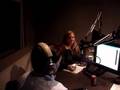
The changes going on through the Internet are becoming an obsession of mine, something I discuss on my radio show (see video above), write about in this blog, and even think about when I'm alone (while looking at websites that fuel this interest).

Adding to this Internet debate is a website I recently stumbled on called Brightcove.com. The purpose of the site is to help people and businesses to create online TV networks of their own. Their client list is impressive, including A&E and CBS News (broadcast and cable), The New York Times and The Wall Street Journal (newspapers), as well as Time and Prevention (magazines). However, the site's value isn't limited to companies in the media, but to any company trying to develop creative ways to attract and keep customers.
What is most interesting about Brightcove is that you don't have to be a mega corporation to create your own online network. Instead, they offer options that allows small businesses to have the platform at no cost and share revenue for advertisements that they can run on the site they give you (with plenty of room for additional inventory). This makes it possible to have a very powerful media platform with minimal investment.
In addition, the site offers several lengthy articles on how to make the most of this impressive tool. I've spent hours on the site and I suggest you spend time there too.
Kevin Price is Host of the Houston Business Show (M-F at 11 AM on CNN 650) and is Publisher of the Houston Business Review.

Labels: , , , , , , , , , , ,

Thursday, September 20, 2007

YouTube 101...A Good Idea?

During today's Houston Business Hour, Thursday co-host Mike Gray of Exit Complete Realty and I often watch the news during breaks on our program. You would think much of our discussion would have been on the recent arrest of OJ Simpson (YAWN). But instead, YouTube 101 at Pitzer College was the focus of much of our discussion.

It seems like one of those many silly ideas that pops up often throughout academia and such an idea is easily dismissed due to lacking substance. Unfortunately, it doesn't have to be. I feel a program such as this could have serious potential. Imagine if such a show focused on the following:

* Examined some of the tragic stories related to YouTube of kids filming kids beating each other, or adults giving toddlers marijuana to smoke, or even the silly teen trying to look like a Star Wars character and who has to deal with the long term social consequences of such a decision.

* Examine the ways YouTube is used for guerrilla marketing. I think of Andy Valadez of Marketing Dynamics and a regular participant of the Houston Business Hour who has made YouTube an integral part of his marketing. People can attract millions of people to their message without spending a penny on the distribution of that message.

* Discuss how YouTube has become the first major television network of the 21st century and will change the way people view all media in the future. They may be doing such, but I can only imagine the limited scope this course will take. YouTube is changing the way all media is conveyed.

Instead, rumor has it, the YouTube class will look at the most "interesting" videos each week and students will be asked to write reports on these subjects. I have my doubts the most serious themes will be examined and it appears this course will be a modern form of basket weaving. At some point I want to get the professor on the course and see if they are discussing the important issues surrounding YouTube or will it be just another opportunity to blow some time online.

Labels: , ,

Sunday, September 09, 2007

Sex, Advertising, and Hamburgers?

Carl's Jr. Hamburger company created a storm a couple of years ago with its commercial featuring Paris Hilton. Essentially it looks like she is making out with the car she is washing and there is no display of any burgers until the end in which she has, what appears to be, an intimate moment with beef and bun.

The response of the news media was the question, is this a bad decision? News stations discussed locally and nationally the merits of the commercial. It was viewed by hundreds of thousands on YouTube and other video sites, and was discussed over lunch by middle aged men across America. Of course, not any lunches I attended, but you get the point.

Recently I noticed on Fox News that Carl's Jr. is at it again. In the latest commercial the focus is on the new "flat bun" hamburger they have. In the "I'm Hot for Teacher" tradition of Van Halen, the class and teacher sing about the burger in a most provocative way and the news network see it as future indicators of our culture's decline. They also wonder if it is good for business. Obviously it is for Carl's, whose stock out performs McDonald's and they keep making commercials like these.

What the news networks don't understand is that companies can run such spots for a very limited time and have national attention over night due to the viral effect of people spreading the word on it. They can make a fortune off spots at the fraction of the air time budget necessary in years past. In fact, I have never seen a Carl's, Jr. commercial except on the news and on YouTube (after seeing it refereed to on the news). That may be the very thing the news networks don't like about it -- such companies really don't need the networks to be successful.
That is the power of the Internet as a marketing force and it is among the many elements of the future of marketing.

Note: Order Kevin Price's audio program The Accumulators, which explains the impact that the Internet is having on marketing and consumer behavior. It is available online here for only $10 plus p and h.

Labels: , , , ,

Wednesday, July 25, 2007

Observations on the CNN/YouTube Debates


I wish I were an artist. I can barely draw flies with honey all over my face. But if I were an artist, I would draw a picture reflecting my assessment of the recent CNN/YouTube debate and it would have the Democratic candidates all lined up and a Giant Pink Elephant (or would it be a donkey?) with a podium of his own.

The elephant would be labeled "terrorism" and, some how, it was ignored through out the entire debate. Sure, "we need to pull out of Iraq," but there was no discussion about the forces that got us there nor the series of attacks that the UK has faced in recent weeks and the unusual "home grown" activities we have seen in the US. The more they ignore this issue, the bigger the problem will become in my opinion. This will eventually haunt the Democrats in the not too distant future.

I did not like the way questions were posed to the candidates. Screeners would find a question they would like on YouTube and had individuals posing questions that were some times longer than the period of time candidates were allowed to answer.
Worse still, the questioners clearly had an axe to grind. Candidates have a hard enough time drawing the moral courage to answer honestly when questions are posed with some semblance of neutrality. The questions these candidates heard were full of agendas and the candidates clearly framed the message in a way that accommodated that bias.
YouTube is "young," "hip," and "open minded." I guess that also translates to Democratic, from the way this event was framed. They chose to be on the most liberal cable network and chose to pose questions to the most liberal party. It will be interesting to see how they conduct the Republican debate. So far, they have shown their true ideological colors, in my opinion.

Labels: , , , ,

Wednesday, June 20, 2007

Houston Business Show Develops Television Programming

Forgive me for blowing our own horn, but we are excited to announce the creation of our new "Movers and Shakers" segment on the Houston Manufactuers TV Show, produced by Phonoscope.

In addition to being seen on television in thousands of offices throughout downtown Houston, this program is also seen by thousands more online. In fact, I recently visited with the show's host, Robbie Adair, who said they received thousands of unique visitors to the show's page in the last few days alone. The numbers are comparable to the audience of many popular radio shows in town.

The future of TV is online, in my opinion. In fact, I like to call YouTube one of the first TV networks designed for the 21st century. The web, in the words of Fox's Rupert Murdoch, allows people to get what they want when they want it. Also, the Internet's increasing speed and computer screen quality make it better than the TV in many respects. If websites are going to remain relevant, they are going to need quality video content, which was a goal we had for the Houston Business Media Group in 2007 and was thrilled to have the opportunity to work with these fine partners.

We expect our video programming to expand in the weeks to come as we strive to offer more programming. We consider this a valuable tool to convey information to our growing audience.

Labels: , , , , , ,

Thursday, May 10, 2007

Geico Gets Increasingly Clever

I love the Geico Caveman commercial and I believe the company is brilliant at getting its message out. However, I'm equally excited about the new commercial on "a better way of spending 15 minutes online." In the new commercial the company shows individuals making complete fools of themselves and aspiring to be "YouTube stars." Time better spent would be finding a better rate for car insurance.

I'm fairly certain that they got the spots from YouTube and will further feed that insane frenzy. I wouldn't be surprised if Geico take this concept to the next level and create their own "YouTube" type platform or create a strategic alliance with YouTube in which Geico gives exposure to the videos and YouTube creates a special (and prominently displayed) area for people to submit them.

Increasingly advertisers are going to have to offer "more." More reasons to watch, more creative ways of making sure the message is heard, and variety in the messages. Those who recognize such will find their advertising much more successful.

Labels: , , ,

Thursday, March 15, 2007

See How They Run: Why Are They Running So Early?

This is the earliest time in US history for candidates to declare they are running for President. The question many are asking, is why? I think this can be attributed to several reasons:

* Some candidates have never stopped running. John McCain (R-AZ) has been running since 2000 when he challenged George Bush. He has continuously raised money and organized and has been biting at the bit for years. Hillary Clinton (D-NY) has been running for President since 1992 and many argue that she served many of the years her husband was in office. In order to appease their supporters and to try to deter potential competitors (this obviously didn't work), these candidates had to jump in early. Them jumping in early forced others to do the exact same thing.

* Others on the lower end of the electability scale jumped in early to build support and even an identity. Duncan Hunter (R-CA) (see photo, above), Christopher Dodd (D-CT), Mike Gravel (D-AK), and Ron Paul (R-TX), are just a few of the candidates that fill that bill. This group has different objectives. I'm sure all would love to be President, but they are also interested in merely seeing their perspectives out there, to push their opponents in their ideological direction, or to even run for a high level post once the election is over. For example, many believe Joe Biden (D-DE) is actually running for Secretary of State in a new administration or even the US Supreme Court. Others honestly believe that the big name people will actually fall on their face, creating opportunities for these lessor known candidates.
* Some have major name ID, but lack national experience. This includes Rudy Guiliani (R-NY) and Barack Obama (D-IL), both of whom are major players, neither of whom have been tested on the national scene. Many are arguing that Obama is actually running for 2012 and is building momentum and working through his mistakes now. If he is lucky, he will have the same success as Bill Clinton who many said he was doing the same thing in 1992.
* Speaking of working out mistakes, all of the candidates would like to have as much time as possible, in order to be judged in the most favorable way.

The question I have is, will all this early running help improve or hurt the electoral process? Will it excite more people or bore them to tears? My guess is that most Americans are going to be so sick of the elections, they will simply want them over with by November 2008. On the other hand, I believe candidates will increasingly early in elections to come. In fact, don't be surprised if someone announces for 2012 (keep your eye on YouTube) any day now.

Labels: , , , , , , , , , , , ,

Monday, March 12, 2007

On This Week's Houston Business Show

On this week's Houston Business Show I interviews Jim Stein of the Bank of Houston, Steve Hansen of Summit Financial Resources, and Jim O'Neill of Lone Star Sound.
Jim Stein discussed the enormous growth of the Bank of Houston and the secret of the bank's success. The Bank of Houston has gone from $20 million in assets to over $200 in just two years and he attributes that growth to its commitment to community banking. As a result it has gone from a single main location to three in just two years with future growth in mind.

Steve Hansen of Summit Financial Resources discussed an up coming speaking event for the National Association of Business Women Owners in which he will help that audience develop "a financial statement bankers will drool over." Coming up on March 22, I think any person in business will find it helpful.

Jim O'Neill, our latest business show expert discussed his new blog entry about to be added to HoustonBusinessShow.com. It is all about YouTube and how smart entrepreneurs can take advantage of that unique website to promote their business. In addition, Jim discussed a new program that we are developing to give people the opportunity to get TV ad exposure with virtually no production costs. For more information click here.

For the latest in all Houston Business Show media, visit my What's New Blog at HoustonBusinessShow.com. For information on when you can hear today's program online and to receive weekly updates on what's new, subscribe to my free newsletter at Houston Business Review.

Labels: , , , , , , , ,

Monday, February 19, 2007

Kevin Price... A Great Face for Radio

On today's show I had Andy Valadez on as a guest and he took the liberty of creating a video and placing it on YouTube. This is the kind of innovative marketing that Andy is famous for and has created quite an archive on the Internet.

In it you hear an overview of today's program and it epitomizes the type of quality content we provide each week. For an archive of recent shows visit the Houston Business Show site and follow the links to our radio programs. While you are there, visit the Houston Home Show brought to listeners by UBuildIt.

As you can clearly see, I have a great face...for radio.

Labels: , , , , ,

Tuesday, February 13, 2007

What Advertisers Could Learn from Super Bowl Commercials

I know, I'm running a little behind, but ever since the Super Bowl I have wanted to comment on an observation I have made. An observation that might unlock the secret to successful television advertising. Although recent surveys have indicated that more people watched this year for the game rather than the commercials, commercials have been a substantial driver for the big game for several years. The question is, why?

The reasons we see, read, and hear about in the news is that the companies save their best for this special occasion. We also hear about the huge amount of money being spent on these particular commercials. All of these may be true, but there is one thing that stands head and shoulders above these others -- the commercials during the Super Bowl are virtually all original and are seen for the first time during the game. Other than a few "sneak previews" in the weeks proceeding, the spots during this game have never been seen before. This is a concept that commercials can and, in my opinion, should apply as much of possible throughout the year.

Currently, two of the more successful ad campaigns are the spots for Geico and Aflac. Geico, with its current "caveman" campaign (see photo above) is providing a continuous story line that people enjoy following. Meanwhile, Aflac's spots with the duck remind me of a book a little kid would read, with each spot having a completely different storyline. What they have in common is that they both compel the viewer to check out the spot and to see what is going on in the lives of the primary characters. They are, essentially, very short TV programs with heavy product placement. The caveman is now taking his anguish of being made fun of in the Geico commercials to a therapists (the theme of the spots are that getting a rate is so easy, "even a caveman can do it") and has even defended his species on a news program. We all want to know what is going to happen next. These companies incorporate "Super Bowl" originality on an on going basis.

I believe companies should learn from Geico, Aflac, and the Super Bowl. Companies might want to turn to TV show writers or create an online forum where people could submit story ideas and make the commercials actually "customer driven." The latter could be very affordable and make perfect sense in the "YouTube" world in which we live. Consumers are very tough on media these days. They are not going to patiently trade time for programming, especially since they can increasingly get their content free online. If commercials are going to survive, they are going to have to give viewers a reason to watch.

Labels: , , , , , ,

Wednesday, January 31, 2007

TV Lovers Simply Don't Get It

For quite some time the rumor has been that TV is in trouble because of the rise of the Internet. The theory is that, with the rapid expansion of more portable devices, the growth of bandwidth in Internet connections, and the 24/7 availability of entertaining content, will make the TV increasingly obsolete. Geoff Colvin of Fortune Magazine begs to differ and believes that either in spite of the Web or because of it, more people are watching more TV than ever. Colvin argues that since (according to polls) the average American is spending over four hours a day watching TV, the box has nothing to worry about. He couldn't be more wrong.

Americans are already spending a significant amount of time watching DVDs on TV. Others are watching TV programs online, making the distinction between TV and computer time quite blurry (e.g., the average age of nightly news viewers is 60, younger viewers are getting their stories online and when they want it). In my opinion, people only spend time watching TV because the link between the computer and TV hasn't become more simplified (although it is getting there). When people begin to instantly pull what they want from the Web to their TVs, individuals will become their own program directors and will largely ignore what is being offered by broadcast or cable.

Sure, some shows and their networks will survive, but the television landscape will be changing forever. Colvin is right that the boxes and screens that we are watching today will continue to survive (and even improve), but the content that goes into them will be increasingly driven by the Web and not by the networks. And all the more the Web is driven by users. I believe the best proof of this is YouTube, which I call the first major TV network of the 21st century that happens to be on the Internet. Google knew exactly what it was doing when it purchased that site for over $1.6 billion. They know that the future of the programming you will want to watch will be driven, not surprisingly, by you.

Labels: , , , ,

Friday, December 29, 2006

WebProNews Internet Winners


WebProNews is weighing in on the 8 biggest Internet winners for 06, and I found the list most interesting and something others might wish to read. I like the list and will only add a few edits. I encourage everyone to go to WebProNews and sign up for their newsletter, it is one of my favorite sources. I tell you how they won me over, great headlines in the subject line works every time. Here's their list. What other winners and losers would you add?

1. Google. Every year for Google has been a breakout year for the eight-year-old company, but 2006 was a blockbuster. Besides adding user-generated video phenom YouTube to its roster for $1.65 billion in stock, Google remained a favorite of Wall Street, with stock catapulting over $500 per share. That spike was more than enough to cover the cost of purchasing YouTube. And then they moved in with NASA.

I couldn't agree more. Google has moved from a site, to a verb (in searches, thus googling), to a legend.

2. YouTube. If Google was a winner just for acquiring YouTube, then YouTube founders Chad Hurley and Steven Chen, who created a site and flipped it for major moolah in just a year and a half, without even demonstrating how the site could turn a profit, are the biggest table scrap winners of the year. They still run their company and still got those stock certificates.

YouTube may be the first major television network for the 21st Century. What better place for it to be than online?

3. Broadband. Dialup Internet access has become akin to having outdoor plumbing. In the US, broadband access hit nearly 80 percent of the population. Because people no longer had to begin downloading a large file and then go to dinner while it finished, they spent more time actually enjoying video and audio content on the Web.

Broadband may be number 1, because YouTube and many interactive websites needed this technology to increase the Web's relevance. Without broadband, their would be very little market for dynamic content, in my opinion.

4. Lawyers. Happy days are here again for the corporate attorney. As Internet companies become Web giants, the window for lawsuit, valid or not, frivolous or not, gets a lot bigger. Google settles with advertisers angry over click fraud for $90 million - that's $60 million in advertising credit for the advertiser and $30 million cash for the attorneys who won that case. Yahoo's lawyers are so good, all they had to say was 'sorry about that' and write a check for $5 million to the complainant's attorneys.

Since I'm not a big fan of lawyers, I'll refrain from commenting much, but they have clearly been huge beneficiaries of the legal struggles related to the Web.

5. Social Media. For the end user it's been all about friends' lists, blogs, wikis, amateur videos, vlogging, podcasting, and instant messaging. From the consumer end, it's been a communication bonanza and the official creation of the citizen media. Ideally, the elite and powerful only provide the means by which the people communicate, not control the communication itself, and the people are eating up. And for the professional media, if we hear the words "MySpace" or "YouTube" one more time...

This is obviously huge and as important as the "social" part, is the participatory part, in my estimation. It is being able to influence media that has made such sites so huge.

6. Podcasting. The word "podcast" may have been Oxford's word of the year in 2005, but nobody really knew anything about it until 2006. Now organizations of all types - newspapers, corporations, educational institutions, radio stations, kids - have started their own virtual radio stations. Though Apple made threats to those audacious enough to use the term "podcast," a trademark infringement Apple said, all it took was a tongue-in-cheek one-dollar check to Apple head Steve Jobs to get official approval to podcast at will.

This, too, may be a little low on the list. Podcasting is creating a revolution that is striking fear in the heart of traditional media. People are looking for real, uncensored, and candid media; that typically cannot be done in a government regulated world of media. Traditional media, beware.

7. The Man. In all his incarnations, in government, media, or corporate America,The Man came out far ahead of the rest, even if he were scratched and bruised on the way. The G-Man, and his DOJ minions, strong-armed all the major search engines for their search data and got it, even from Google. Phones were tapped, records were seized, and online gambling, except that which is preferred by The Man, was banned. In China, The Man again forced Google to alter its search results to match the imposed cultural hegemony.

The government certainly was a big winner when it comes to the Internet in 2006, but in the top 8? I doubt it. I personally would put Rupert Murdoch in this spot for his ability to understand the power of the Internet and to transform his massive media empire into a responsive and dynamic media machine. This is being done through his very strategic Internet purchases.

8. The Proletariat. However, The Man hasn't always won this year. Though the telecommunications industry (one of The Man's most powerful front organizations) had Congress wrapped around its green finger, there were enough grass roots to forestall any legislation without meaningful Net Neutrality protections. With a massive Republican defeat in Washington, Net Neutrality has a fighting chance. When AOL tried to impose the equivalent of an email tax, the people revolted and AOL was forced to reconsider. When Britain proposed a blogger code of conduct, again the proletariat told The Man where to shove it. When TV wasn't as entertaining, when news wasn't as neutral or biased as it needed to be, when radio was too censored, and movies were far too polished, the people took the media into their own hands, which makes The Man very, very nervous.

I agree and so does Time Magazine which has called the Web contributor the "Person of the Year." That would be you and me! The world of the media is changing daily (maybe even hourly). Some, like Murdoch, are adapting and over time his traditional media will become a giant support to his Web media (just watch and see). Others are simply dead in the water, like the canal boat industry (no pun intended) that underestimated the power of trains, many in traditional media are still trying to charge for online content or are refusing to make dynamic media available (e.g., videos). Watch many traditional media go on the auction block and sell for cheap in the next few years.

This is a great list, but I would love your comments on this year's winners and losers. I would also like to know which companies or individuals you think will win big in '07.

Labels: , , , , , , ,